Monday, April 20, 2015

GITA 6.15

GITA 6.15

If we want to know the truth of life, we have to study Gita, says Thirumazhisai Alwar. But if we want to see that truth, we have to come to this Kshetram and worship Sri Sathya Narayana Perumal. Today's [ 15th January 2008] lecture is from Sathya Pushkarini in the temple. This pond is octagonal shaped and is surrounded by compound wall and gardens. The color of the water is dark green and resembles the hue of the Lord, says Thirumangai Alwar in the pasuram says 'meyya malaiyAnais* sangkEn^thum kaiyAnai*kaithozhA* kaiyalla kaNtAmE..' (Periya Tirumozhi- 11.7.5). He says hands that do not worship this Lord are no hands. Bathing on Sundays in this pushkarini and worshiping the Lord is considered important. Once all the sacred rivers assembled and prayed to the Lord. All persons bathe in them to wash off their sins and so lots of such washed sins had accumulated in them. So, they prayed to the Lord as to where they could wash off such accumulated sins. The Lord asked them to come to this pond and get their sins removed. If, we therefore, bathe in this pond all our sins would be removed. Sri Krishna tells Arjuna that to remove sins, one has to practice yoga. Now the 14th sloka:
prashantatma vigata-bhir
brahmacari-vrate sthitah
manah samyamya mac-citto
yukta asita mat-parah
Thus with an unagitated, subdued mind, devoid of fear, completely free from sex life, one should meditate upon Me within the heart and make Me the ultimate goal of life.
"Thus, with a contented heart and controlled mind, devoid of fear, completely free from sex life, one should meditate upon Me within the heart and make Me the ultimate goal of life."


Mat para = he directs his mind [thinks] always about Me [Sri Krishna]. Person who starts practicing yoga, slowly drives his mind fully involved in Sri Krishna. Prashantatma = contented person. A person who begins yoga finds a contented heart and so is not in need of anything. If this is the state at the beginning, when yoga grows and starts yielding results, the amount of happiness is immeasurable. Prashantatma means the mind is clear and is fully satisfied. No materials can give this happiness of contentment. This can be achieved by even poor persons also. Bhi= fear, vigata = removed. In our routine life with so many struggles and stumbles, we yearn for peace and happiness and we get a fear that whether at all we would ever get these. Sri Krishna allays such fear and says that if one could practice yoga as advised by Him, fear will be removed. Brahmachari vrate sthita = he should observe brahmacharyam [celibacy]. Does it mean that yoga is not for married people? Does it imply that bachelors and sanyasins only could practice yoga? Here we have to understand things clearly. These stages are called ashram.Bachelorhood is one ashram. Married life is another and sanyasin life is yet another ashram. When a person is there in an ashram, he has to follow the rules of that ashram sincerely and correctly. Mixing of the customs will lead to chaos. In bachelorhood, the person should avoid sex life, while in married life sexual activities are permitted, according to shastras. Same shastras also say in married life when and how one could have sex. If a person follows that correctly, then even if that person is married, he is supposed to lead a bachelor life. Thinking of sex with illegal persons and at unspecified times, will make one disqualified for yoga. So, during yoga one has to follow brahmacharya vratamManas = mind, samyamya = gets controlled. Controlling means five disturbances have to be removed. they are: avidya - ignorance, ashmita - pride, raga - lust, dvesa - hatred and abinivesam - greed. Macchitta = deposits his mind in Me [Sri Krishna]. Like we keep our valuables in safety locker and remain peaceful, we have to deposit our controlled mind in Him and remain carefree. It will ensure that the mind does not drift away. '..Kanda kangal matronrinai kaanave' - says ThiruppanalwarYukta = attentively. Person who starts yoga should be attentive and remain thinking of Sri Krishna always
.
                                                                                                 (continued)

GITA 6.14

GITA 6.14

aruvichOr vENGgadam* nNIrmalai' eNnRuvaay-
veruviNnaaL* meyyam viNnavi irukkiNnRaaL,*
'peruguchIrk* kaNNapuram' eNnRu pEchiNnaaL-
urugiNnaaL,* uLmelinNdhaaL idhu eNnkolO!
. We are in Tirumeyyam Kshetram.Thirumangai Alwar, while composing 100 pasurams on Thirukkannapuram, has included this Kshetram - Thirumeyyam - in one poem. In that pasuram (Periya Tirumozhi, 8.2.3), he describes three mountains - Venkatam [Thirumala], Neermalai [Thiruneermalai,near Madras] and Thirumeyyam. In this pasuram, Thirumngai Alwar assumes a woman form and these are the words spoken by that 'woman's' mother. She says, her daughter is crying and tears are rolling like the streams from these mountains! Here we see both the mountains and the streams of water flowing from them. These two are the truth. That is God and His true devotees are the only truth in this world. All other variants we see in this world have to be removed. High -low, intellectual- ignorant, superior- inferior, all these are to be removed. If someone enquires as to who he was, it should be enough to say that he is a devotee of the Lord. This is the spirit of all the Alwars evident in their hymns. The Lord remains like the mountain and we, the devotees, should melt with devotion and flow like the streams. But the yogi, before he melts due to bhakti -devotion, remained like the mountain. Mountains do not get disturbed and remain stable. We also remain like that, till we are confronted by dangers. We get disturbed facing any bad things in life. But a mountain remains steady whatever be the condition. It is because of this, mountains are called Achalam in Sanskrit, meaning undisturbed. The Sannidhi of the Lord in the standing pose has a canopy [vimnam] over it and is called Somasangra vimanam. But the Reclining Lord is in the cave and so the mountain itself is the canopy. We should remain steady like the mountain as far as worldly matters are concerned, but melt and flow like the streams in devotion to the Lord. This is yogam. We will now see the 13th sloka:
samam kaya-siro-grivam

dharayann acalam sthirah
sampreksya nasikagram svam
disas canavalokayan
One should hold one's body, neck and head erect in a straight line and stare steadily at the tip of the nose.
"One should hold one’s body, neck and head erect in a straight line and stare steadily at the tip of the nose"


Here Sri Krishna tells how we have to keep our mind and body in control. In the previous sloka He told about place and seat. The way one has to sit in a secluded place and He explained how the surroundings and seat have to be, and these are exterior to our body. Just because we have good surroundings and the seat is firm and good, we can not conclude that we have mastered yoga. Kayam = the upper part of the body [above navel], sira = head, grivam = neck, samam = all these three parts of our body have to be in the same vertical line. Acalam = without a shake, sthira = remain stable, dharayan = concentrating. It may appear that the two words acalm and sthira convey the same meaning. Actually, acalam is unshaken or undisturbed for a short while. Sthira means remaining stable for longer durations. So, to practice yoga, we have to select a proper place and find a firm seat and we have to sit erect with our body straight and concentrate. We may have a backrest to support sitting erect. Disas = at all directions, anavalokayan = not looking, we have to keep our sight steady and not allow to look at all directions. Here, only the organ of sight- eyes- are mentioned, as it is the gate for all other organs. If we can control seeing, then all other sense activities will be controlled. Nasika = nose, agram = tip or beginning, sampreksya = look at. Eyes without looking at all directions should see only the tip of the nose. Arjuna got doubt as to whose nose we have to look at? Svam = one's own nose; that is person practicing yoga should look at his own nose tip. Keeping eyes wide open will distract attention at the happenings around. Closing the eyes may induce sleep. Both are impediments to yoga and so He says with eyes half closed or half open, just like the way Sri Andal explains in Her Thiruppavai pasuram (23) 'anganmagyala...'. While looking at nose tip, ornaments like nose stud should not be there as they will also be distractions of concentration. So in a solitude place sitting on a firm seat, and keeping his body straight , erect and steady, he should concentrate by looking at the tip of his own nose.
                                                                                      (continued)

GITA 6.13

GITA 6.13
piNtiyAr maNtai En^thip * piRarmanai thirithan^thuNNum,-
uNtiyAn* sApam theerththa oruvanoor,* ulaka mEththum-
kaNtiyUr arangkam meyyam * kassipEr mallai enRu-
maNtinAr,* uyyal allAl * maRRaiyArkku uyyalAmE?
Tirumangai Alwar praises this Kshetram in his Tirukkurundhandakam pasuram (19).Today's [11th January 2008] lecture is from the sannidhi, where the Lord graces in a standing pose. Like the Lord in Srirangam, both in the Reclining pose and in Standing pose, the Lord is facing the South. Sri Thayar, however, faces the East. This place is called Sathya Kshetram, the hill is Sathya giri and the Lord is called Sri SathyaNathan or Sri SathyaMurthy or Sri Meiyappan. There lived a sage Sathya, meditating on the Northern side of the Himalayas. Once the Lord appeared before him and he prayed for Moksham. The Lord agreed to grant him, but the sage had to wait and do penance at this Kshetram. Sage Sathya told while he was prepared to go and do as ordered, he found it very difficult to leave the surroundings he was accustomed to for so many years. Especially, he could never think of leaving behind the river Pushpa Bhadra, the rock Chitra sila and Bhadra vatam tree. The Lord replied that sage Sathya could go to this Kshetram and could also take along the river, rock and tree. Pleased the sage arrived here. The river was transformed into the Pushkarini and the rock is available nearby. 

The tree also is here. After sometime, again when the Lord appeared before the sage, and he prayed for Moksham and the Lord replied that he had to wait for some more time, but a temple had to be built on Vaikasi Pushyam. Even now the annual Brahmotsavam is celebrated for 10 days commencing on the Vaikasi (May-June) Pushyam. All devotees can come and have a wonderful experience here. The sage was wondering how he, a mere sage, could build a temple. The Lord also told the sage that He would grant Moksham along with King Pururavas. Pururavas was a Pandyan King. The Lord wanted him to build the present temple here. So, once He took a wild boar form, and with a big herd entered the town. King's srvants tried to catch them but the Boar dodged and finally, the King himself chased the Boar. The Boar led him to this place, where sage Sathya was meditating and repeatedly told the sage, 'Pruravas has come'. The Boar then disappeared. To mark this, there is a sannidhi of Sri Bhoo Varaha Perumal. Both the sage and the King prayed the Lord for Moksham. The Lord was ready to grant it at once to the sage but wanted the King to build the temple in three years and then he also would get Moksham. Thus this temple was built. In this sannidhi where the Lord is standing, unlike in all places there is no pedastal and the Lord'd feet are directly on the ground. We can see the King Pururavas and sage Sathya inside the garbagruha. On the Left of the Lord, Garuda is standing with folded hands. Garuda wanted to release his mother from slavery and so meditated here. We will now see the 12th sloka:
tatraikagram manah kritva

yata-cittendriya-kriyah
upavisyasane yunjyad
yogam atma-vishuddhaye
The yogī should then sit on it very firmly and should practice yoga by controlling the mind and the senses, purifying the heart and fixing the mind on one point.
"The yogi should then sit on it very firmly and practice yoga to get released from sins, by controlling his mind, senses and activities and fixing the mind on one point."


Atma vishuddaye= to get released from papa and get Moksham, yogam yunjyad = he shall do yogam. Tatra = in that place [the place described in the last sloka, where a solitude place is chosen and firm seat is provided], ekagram mana kritva = concentrating his mind on a single aspect [on the Atman]yata = controlled, cittam = mind, indriya = sense organs [or the organ of mind], upavisyasane= seated, perform the meditation. It is imperative that meditation is done seated. We may think why so many conditions like, neat place, firm seat, closed eyes, etc., are prescribed, and why not yoga is done wherever possible? True, yoga could be practiced in any place. But, for the beginners, these conditions are essential. A person wanting to master vocal music, requires assistance of metre and shruti, while learning. But after learning well, the person is able to sing properly even if these assistances are not there. Similarly, one has to practice yoga in silent and neat surroundings and gain experience steadily. By concentrating our mind and collecting our thought on a single entity of Atman, we should perform yoga, to get released from the bonds of papa/ punya. Many persons find it difficult to sit, but it is important we sit and do the yoga. We should give exercise to all limbs and other parts so that we are able to sit and practice. It appears about 27,000 nerves are controlled if we sit and practice yoga. By doing ashtanga yoga, it is said that, one could attain ashta maha siddhi. Ashtanga yoga prescribes yamam, niyamam, asanam, pranayamam, pratyaharam, dyanam, dharana and samadhi. So asanam - seat or sitting is very important. Sitting erect may be difficult without a backrest for some. Swami Ramanuja has permitted use of backrest if necessary.
                                                                                               (continued)

GITA 6.12

GITA 6.12
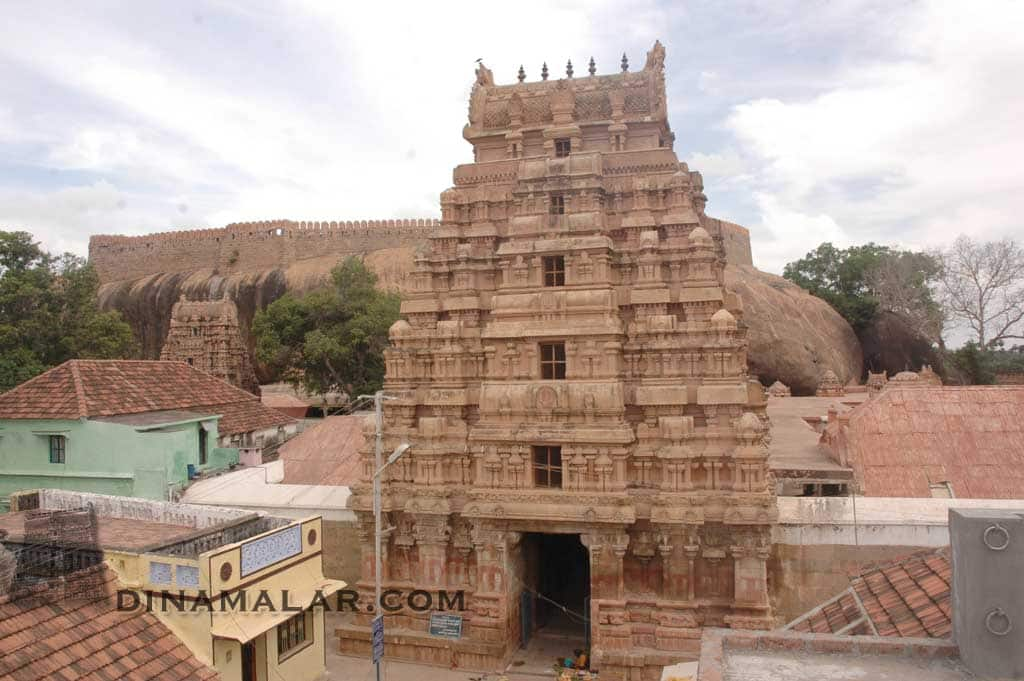
As part of Karma yoga one has to do meditation now and then. It is also called Ashtanga yogam and Sri Krishna tells how this is to be done from sloka 10, Chapter 6. We saw sloka 10 in Vanamamalai mutt. One has to select a secluded place, cut off attachments and concentrate mind and start yoga. How to sit and what type of seat has to be chosen are all going to be described by Sri Krishna. Slokas 11 and 12 describe how the outer atmosphere should be there. But slokas 13 and 14 tell how we have to control our internal mind. When we were wondering where to have the next lectures [after Vanammalai], the Lord gave us this Kshetram and we are here. This Kshetram is Thirumeyyam, one of the Pandya region Divya Desams

Here Garuda, Chandra, Adisesha and sage Satya have done meditation and so this is an appropriate place for describing Yogabyasam. What is the aim of yoga? To go after Truth, which is called Mei in Tamil and Sathyam in Sanskrit. God is Truth ans so here all are Mei and so this Kshetram is called Thirumeyyam. The Lord here is Sri Sathyamurthy or Sri Sathya Narayana. Here the Moolavar is in a reclined pose and Utsavar is in standing posture.

 In a separate sannidhi the Moolavar is seated while Utsavar is standing. 


Two big sannidhis are here in this temple. The temple is formed in a cave and is regarded as a monument by the Archaeological Department of Government of India. Sculptures and the way the cave has been formed, are all a treat to the eyes.


 Like a mountain, truth remains firm and steady. With a steady Yoga we can find the steady Lord in the steady mountain. The Lord graces the devotees with Sri Uyyavanda Nachiyar or Sri Ujjeevana Nachiyar.

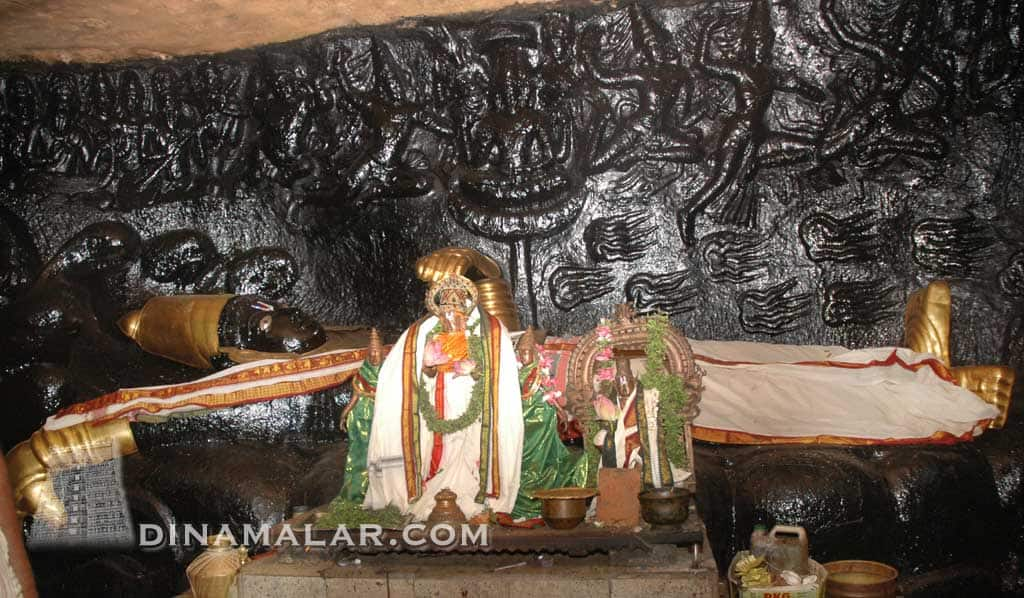
 Invoking Her blessings we will go ahead with study of Gita. Today's [10th January 2008] is from the sannidhi where the Lord is reclining on the Serpent Adisesha. Here the garbagruha is very large like a Maha mantap in other temples. Adisesha, being a serpent, felt that the rajo quality of anger was high in him and so wanted to reduce that and increase the satva quality. So, he decided to practice yoga here. He reduced his very large body and came. The river nearby is so called Pambaru [snake river]. The Lord appeared before Adisesha and enquired. Adisesha was so pleased that he offered himself as seat for the Lord and started fanning the Lord with his tongues. The jewels on his hoods were providing illumination. Afterwards, Adisesha prayed the Lord to grant him satva quality. He granted satva as well as satyam and the mountain is called Sathya giri. In the reclining pose He is granting asylum at the right foot to Sri Bhoodevi, Who was threatened by demons Madhu and Kaitapa. Sri Sridevi on the right chest of the Lord was also afraid and so the Lord as a protection is keeping the left palm in front of Her. Seeing both Sri Sridevi and Sri Bhoodevi getting threatened, Adisesha got angry and blew hot air on the demons and the demons ran away. On second thoughts, Adisesha felt ashamed and fear as he had acted without his Master's order. But the Lord comforted Adisesha, by patting the snake with His right hand. All these can be seen on the Moolavar here. He is surrounded by all the gods and rishis. Those in search of truth can make a trip to this temple. Now the 11th sloka:
sucau dese pratishthapya

sthiram asanam atmanah
naty-ucchritam nati-nicam
cailajina-kusottaram
To practice yoga, one should go to a secluded place and should lay kuśa-grass on the ground and then cover it with a deerskin and a soft cloth. The seat should neither be too high nor too low and should be situated in a sacred place. 
"To practice yoga, one should go to a neat place and should lay kusa grass on the ground and then cover it with a deerskin and a soft cloth. The seat should be neither too high nor too low and should be situated in a sacred place."


Our selection of the place for yoga is very important. We should never select a place which is surrounded by bad smell and which does not give a decent appearance. We have to avoid all such distraction. Atmana = self [the person who is going to start yoga] select, suca = clean, dese = place, sthiram asanam = on a wooden and firm seat, prathishthapya = seated. A good selection of clean place and firm seat will go a long way in the yoga. From this we have to infer that we have to keep our houses and surroundings neat and clean. Then it is possible to practice yoga anytime of the day. We should not sit on the floor but choose a seat. By the word sthiram asanam, we can interpret that wooden seat is indicated. So, we should not do yoga on mattresses and cushions. What should be the height of the seat? Asks Arjuna. Nati nicam = not too low, naty uccritam = nor too high. High seats will pose difficulties to climb and once seated will induce constant fear of falling down. Too low may cause fear of insects and serpents. Kusam = dry kusa grass [darbhai]cela = silk cloth, acinam = deer skin. On the seat we have to spread the kusa grass and over that the deer skin is to be spread. Over that the silk cloth is to be spread. On this we have to sit and practice yogaKusa and deer skin are auspicious and silk for comfort.
                                                                                                       (continued)