Monday, February 1, 2016

GITA 9.16

GITA 9.16
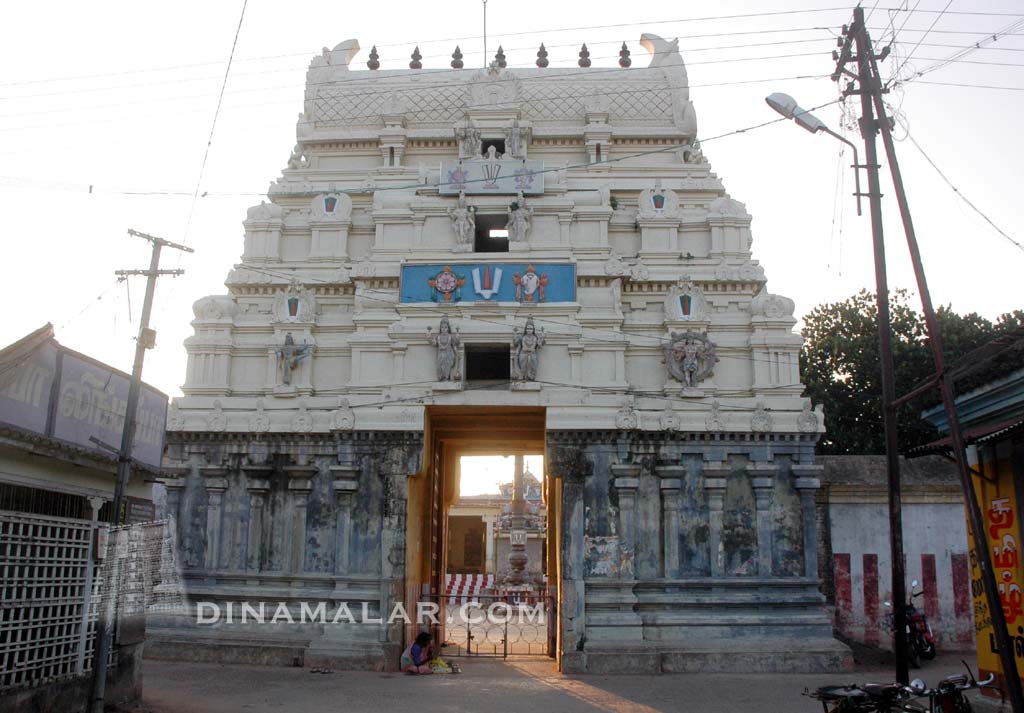
GOPURAM

We are entering the sannidhi of Sri Annan Perumal. After we cross the Gopuram, we come to Thiruvaimozhi mandapam. We can see on the top Sri Rama gracing in the Pattabhishekam pose. We can also see Swami Manavala Mamunigal along with Ashta Dhikgajangal [disciples].
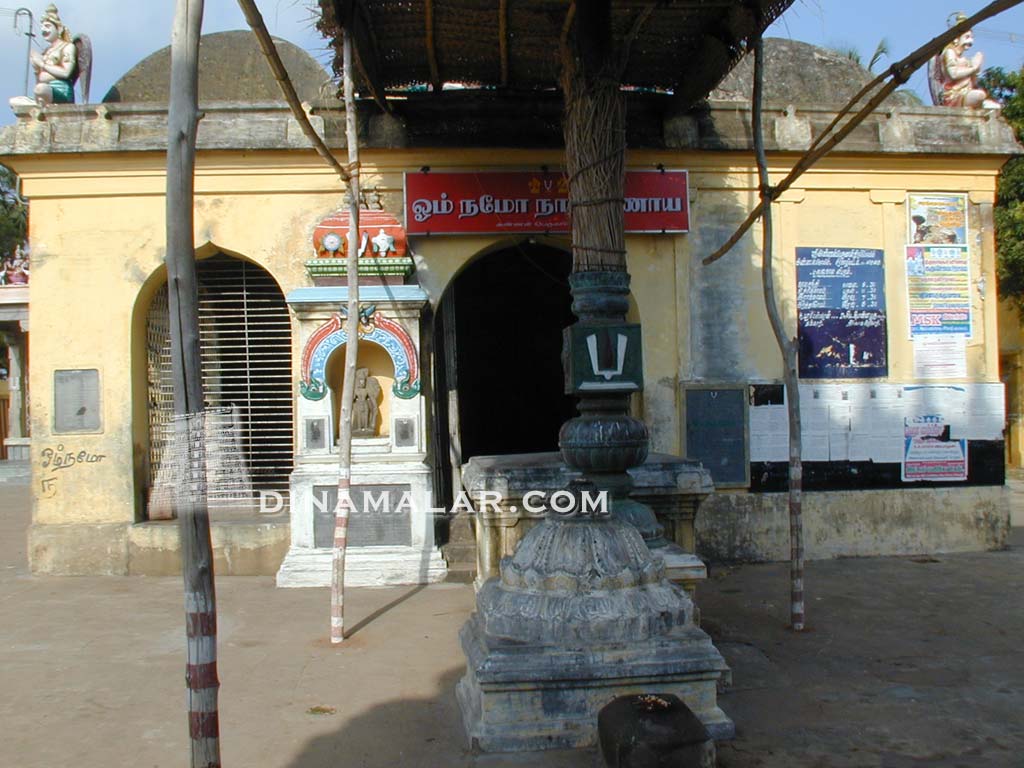
DWAJASTHAMBAM

 After crossing the dwajasthambam, a long mandapam is there and crossing that we come to ardha mandapam. Then we come to the garbhagruham of the Lord. In the month of Thai, after Amavasya, on the Prathama and Ddwithiya days, the Eleven Garuda Seva of Thirunangur Kshetrams, assemble and grace Tirumangai Alwar together. That time, the Alwar arrives here. From this mandapam, the Alwar presents himself to the Lord.
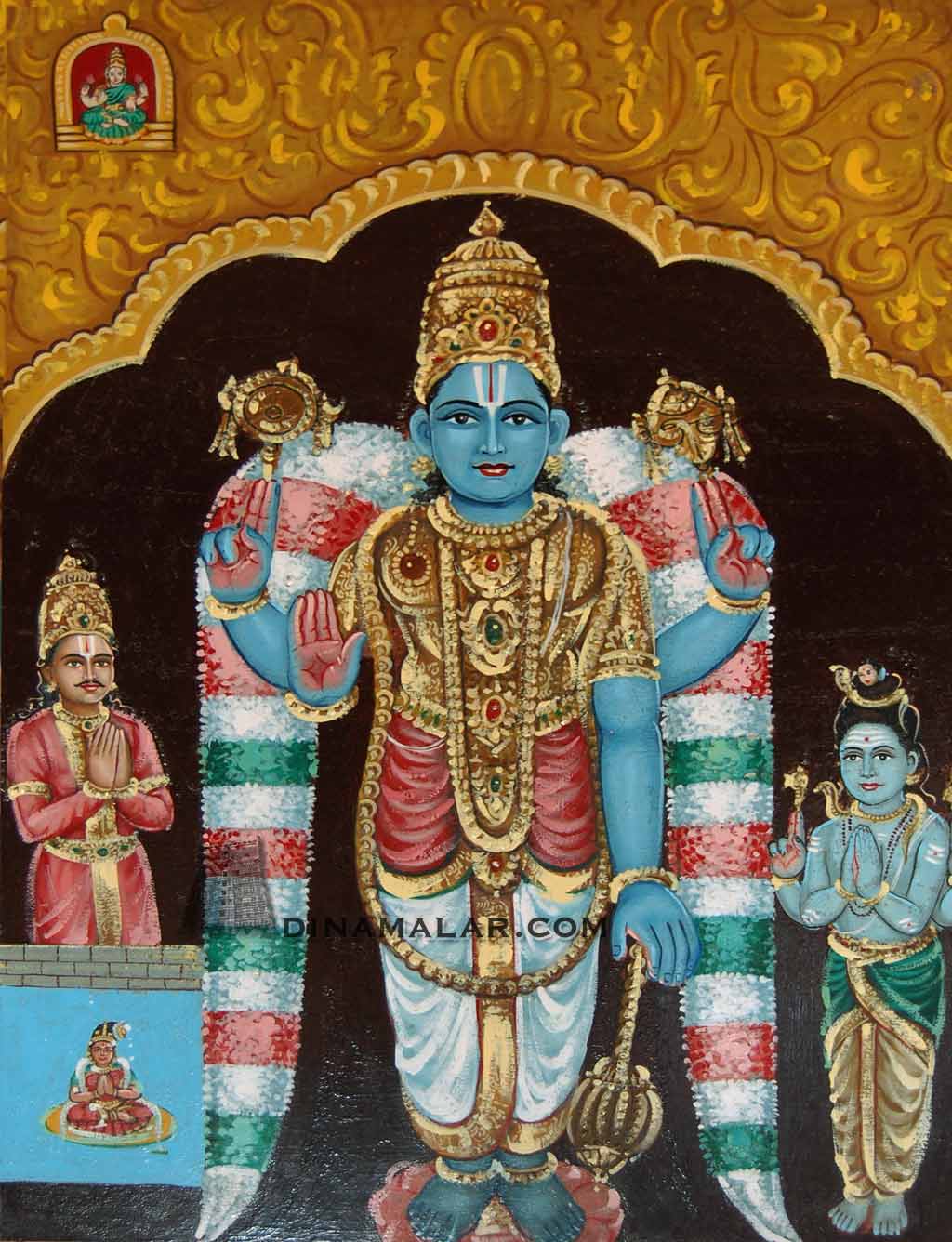
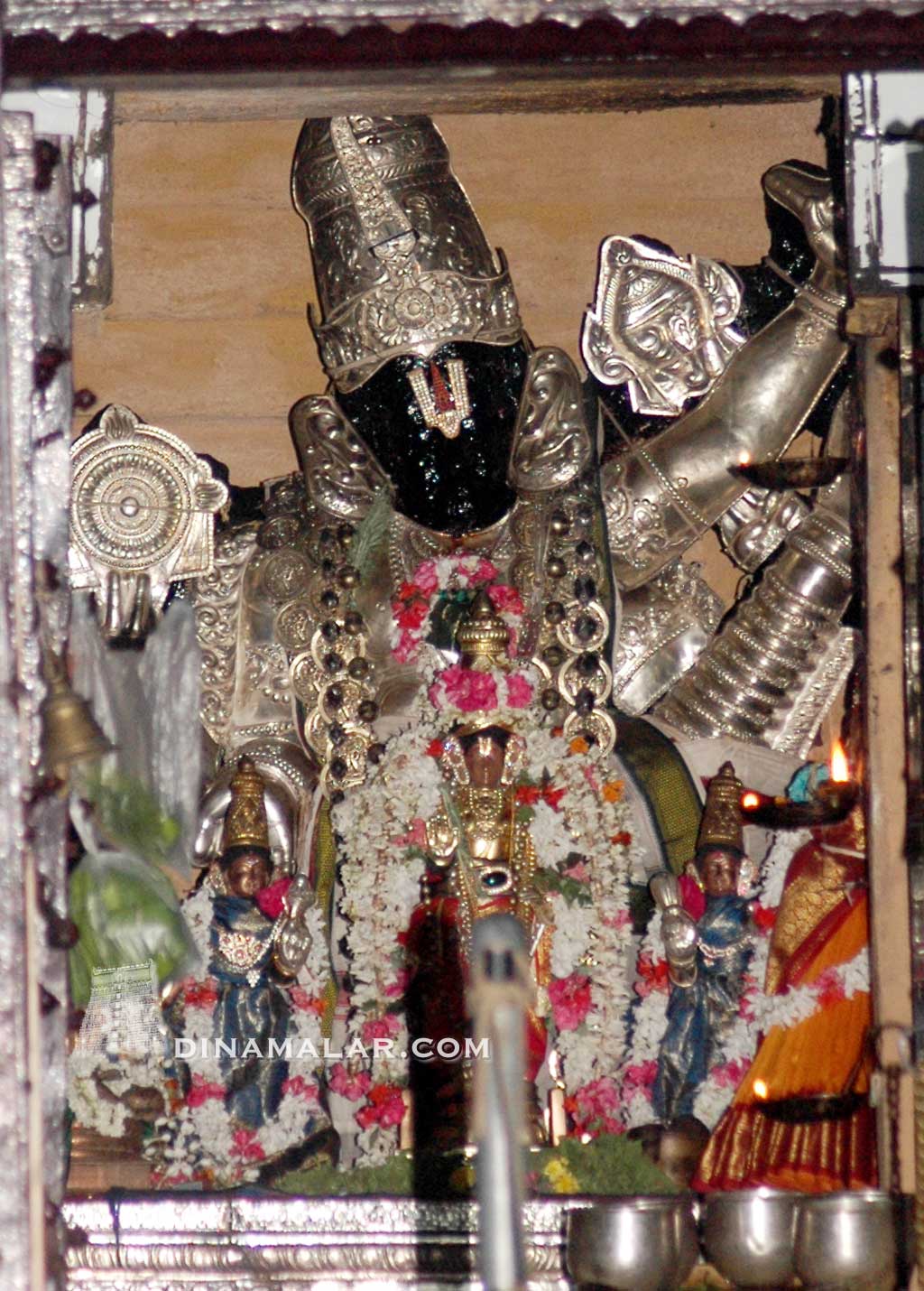
SRI ANNAN PERUMAL SRI SRINIVASAN (Moolavar in sketch)

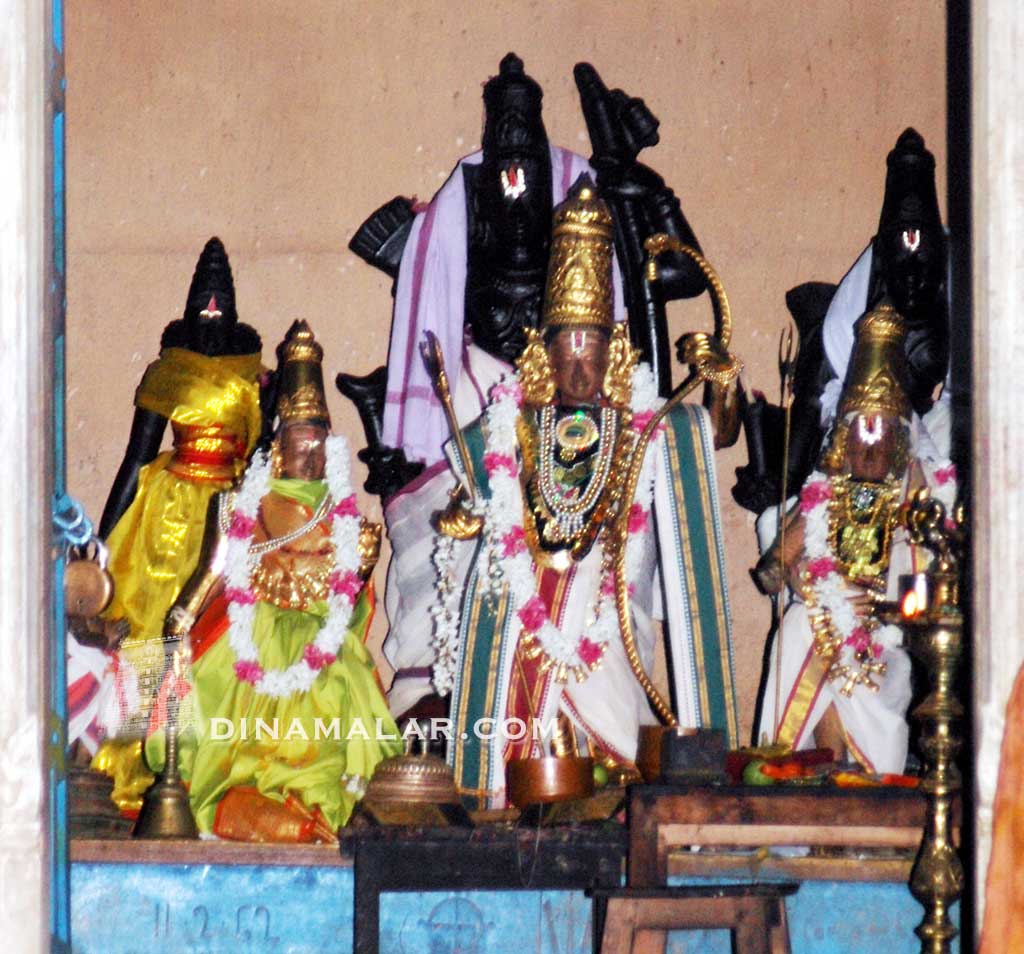
 Moolavar is in standing pose with the right arm pointing to His feet, while the left arm is on His left lap, confirming removal of all sins of the devotees who fall at His feet. Utsavar is a copy of Moolavar, and shorter.
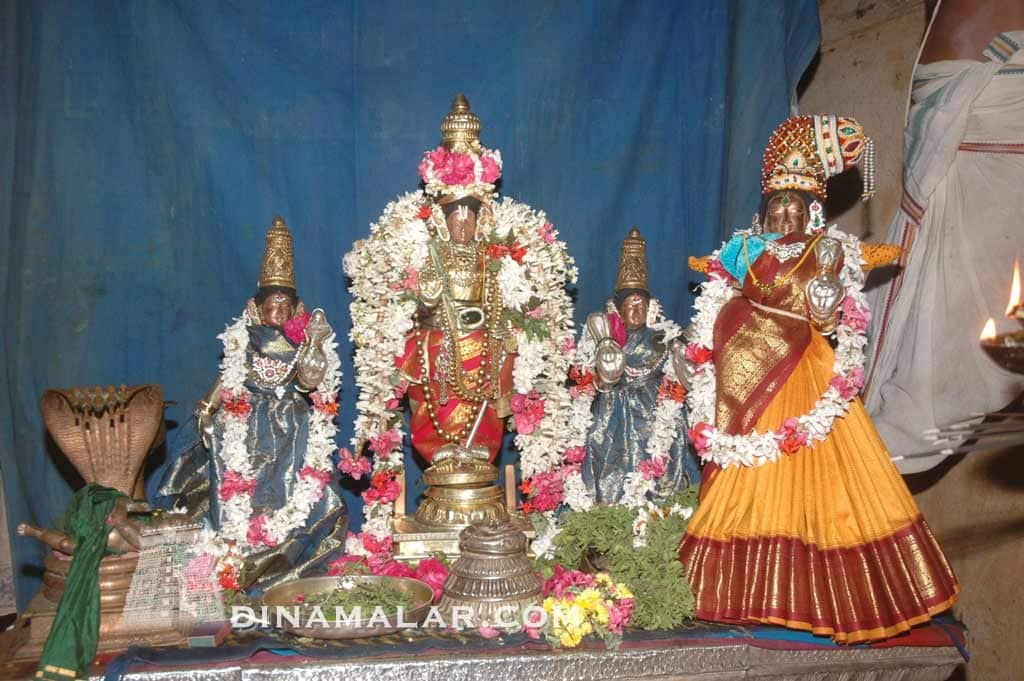
SRI UTSAVAR

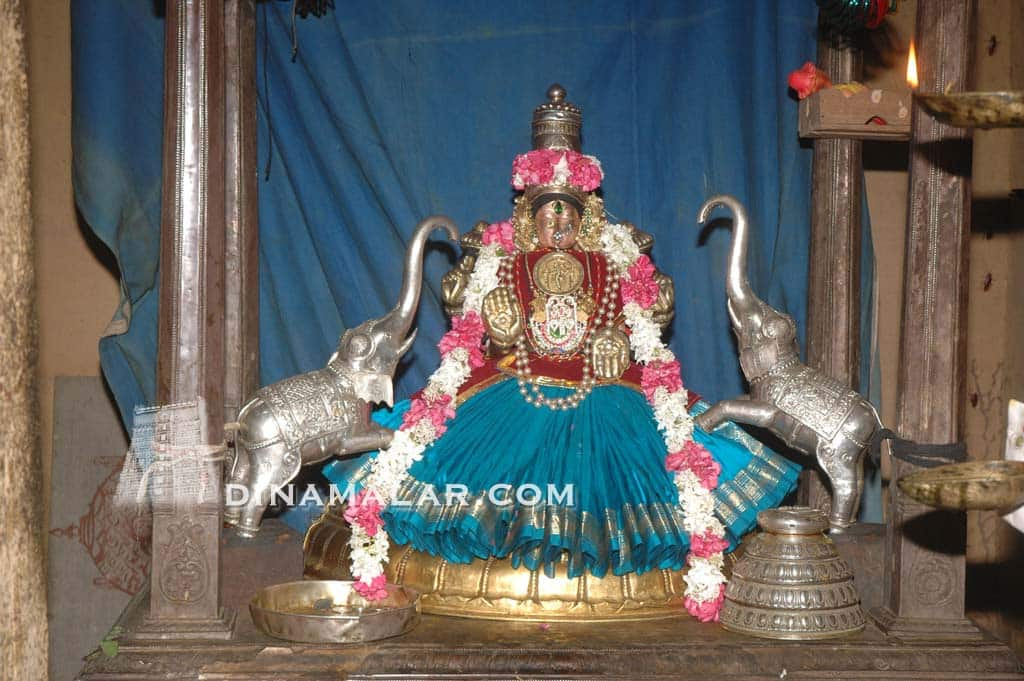
But His fame is very great. Nearby is Sri Padmavathi Thayar.
SRI PADMAVATI THAYAR AND SRI UTSAVAR

 Thirumangai Alwar calls the Lord here as well as the Lord of Tirumala as Anna! (See Periya Tirumozhi 4.7 and 1.10.1) By visiting the Lord here we can get all our miseries removed. Our relatives are all temporary, but our relationship with the Lord is permanent. He is like Father creating us and like Mother protecting us. So, He represents all possible relatives for each of us.
 In the sloka 14, the beginning phase of Bhakti, with singing, performing pooja, prostrating and meditating always, was mentioned. Now sloka 15:

jnana-yajnena capy anye
yajanto mam upasate
ekatvena prithaktvena
bahudha vishvato-mukham

"Others, who engage in addition, sacrifice by the cultivation of knowledge, worship the Supreme Lord as the one without a second, as diverse in many, and in the universal form."

The Bhakti matures. Anye api = some others, that is different from the devotees mentioned in sloka 13, who were practicing sadhya bhakti, and different from the devotees mentioned in sloka 14, who are in the initial stages of sadhana Bhakti. These devotees, jnana yajnena ca = by gyana yagna also, yajanta = perform pooja [aradhana]. The word 'also' implies that besides doing some other, these persons, perform pooja by gyana yagna. That is these persons perform gyana yagna, besides the other forms mentioned in sloka 14, viz, sankeerthanam, namaskaram, bhakti, always wanting to be with the Lord, etc. By this Lord Sri Krishna removes certain wrong conceptions we have. He told that singing His names, namaskaram, blind faith in Him, performing various services like collecting flowers and making them as garlands, sweeping the floor of temples, helping to organize festivals, etc., are all initial stages of bhakti. Se we should not conclude that gyana yoga is advanced stage of bhakti and we need not do the initial actions nor we are to continue them after practicing gyana yoga. We should not ignore them as mere rituals and practice gyana yoga only. The Lord approves bhakti only if it is blind faith, and the devotees sing and dance in praise of Him. Going around temples and doing small services like lighting lamps, cleaning and decorating, etc., are all to His liking and without these, mere Gyana yoga, the Lord does not approve. But with these initial stages, if the person also performs Gyana yoga, then he is in the advanced stage of Bhakti. Even great philosophers like Adi Shankara or Swami Ramanuja or Sri Madhwacharya, did not leave namasankeerthanam, just because they were great intellectuals. Adi Shankara says mere knowledge will never grant Moksham. Only Sri Govinda nama sankeerthanam would redeem us. Unless even a gyani melts at the listening of His stories and shed tears, he can never qualify to become a BhaktaEkatvena = in unison, here we have to add the word mam upasate [worships Me, Sri Krishna] of last sloka. Here in unison means, He is always One with everyone of us. Just as a person has many organs and parts of the body, He is regarded as one with many parts. Bahuda = in many, prithaktvena = but in separate, vishvato mukham = appear in the entire Universe. The Lord is One but appears separately in many forms in the entire Universe. Again we have to bring that word from last sloka - mam upasate. This Bhakta worships the Lord as One appearing as many, many separate entities in this Universe. This is the ultimate stage of Bhakti, when the devotee sees the Lord everywhere and in everything, though they are all separate. He is in the advanced stage of sadhana bhakti. Viswatomukham means everything is a part of the Body to the Lord. 
                                                                                                (continued)

Friday, January 15, 2016

GITA 9.15

GITA 9.15
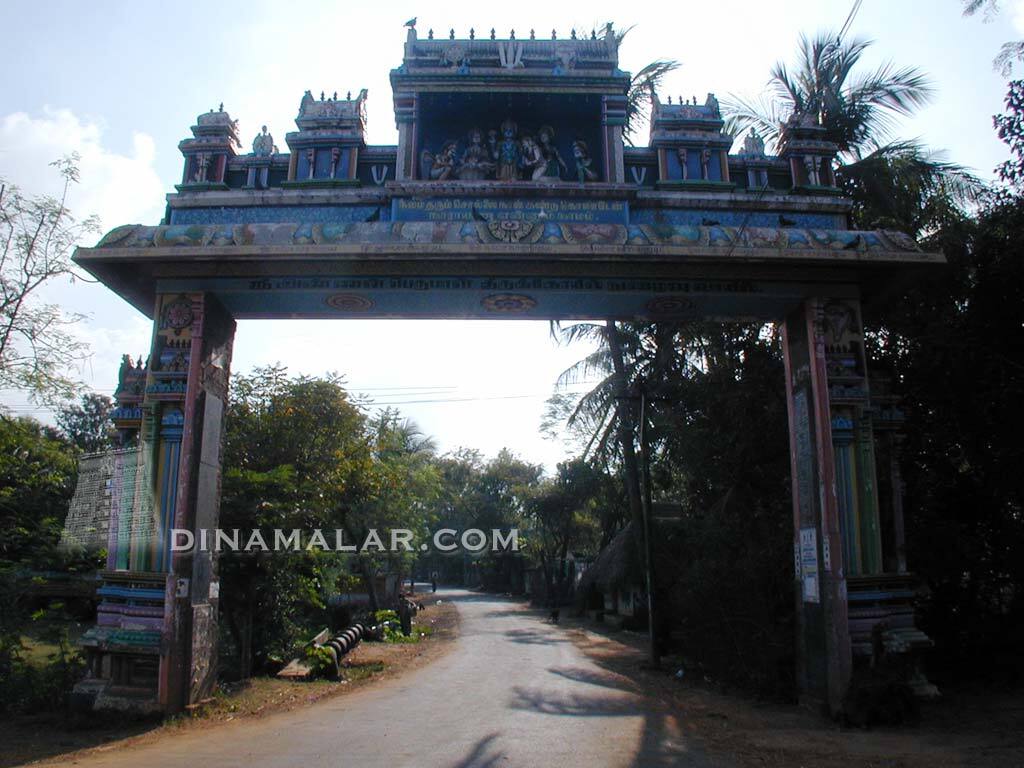
ENTRANCE TO SRI ANNAN KOIL

Parithranayasadhoonam vinasayachadushkrutham

Dharmasamsthabanarthaya sambavami yugeyuge|

These are the words of Sri Krishna. Born in every yug, protecting good people and destroying evil people, the Lord establishes Dharma. The Lord Himself is Dharma. By removing all miseries the Lord offers Himself to devotees. This happened during avatars; and now, as a representative of those Avatars, He is gracing in various temples. We have been visiting temple by temple and understanding their greatness. At the same time, we are understanding the substance of slokas of Gita. We have come to an important Kshetram. In Avatars, the Lord appears as single or with other kins. In Sri Rama Avatar, He had three brothers - Bharatha, Lakshmana and Shatrugna. The Lord was the elder brother to all. He desired to be born as a younger brother, and so in Dwapara yug, He was born as Sri Krishna, younger brother of Sri Balarama. What the Elder brother Sri Rama practised is preached by the younger brother Sri Krishna. Similarly, in Divyadesam also He is present as an Elder brother. In the Kshetram we are to see the Lord is the elder brother of Sri Venkatesa of Tirumala. Tirumangai Alwar has sung in praise of the Lord of this Kshetram and Sri Venkatesa, together; and calls the Lord here as Anna [அண்ணா]- elder brother! We are at Annan Koil [அண்ணன் கோயில்], where the Lord is Sri Annan Perumal.

TIRUVELLAKKULAM TEMPLE

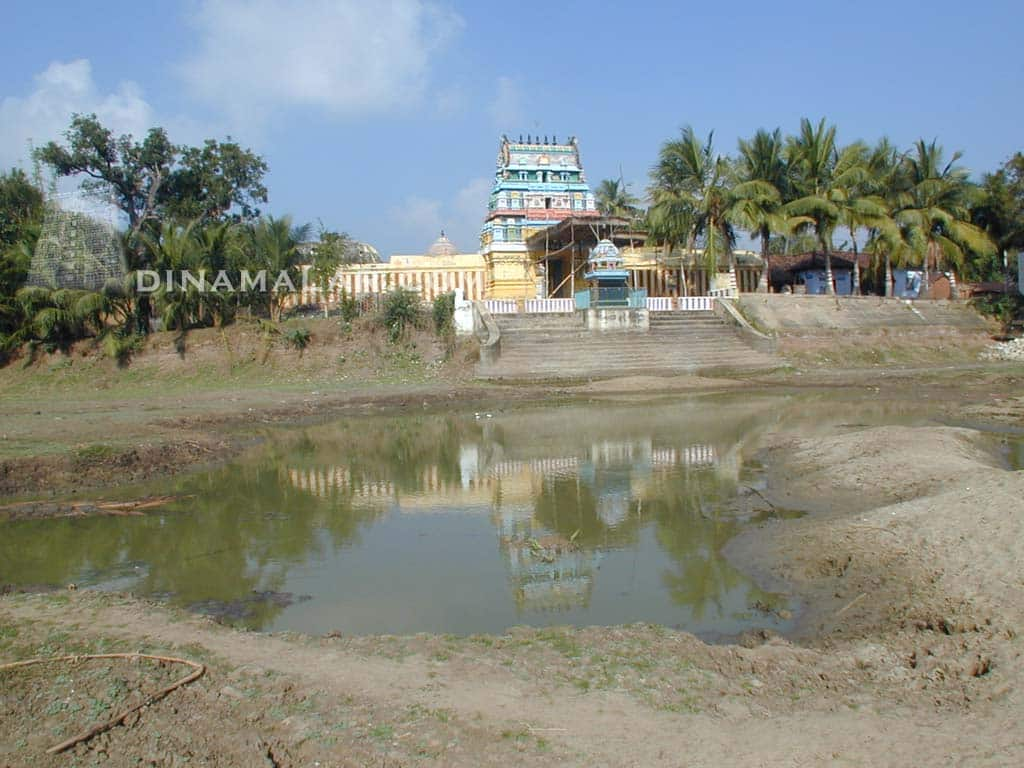
The Kshetram is also known as Thiruvellakkulam [திரு வெள்ளக் குளம்]. He is also known as Sri Srinivasa. Tirumangai Alwar says 'thinnaar madhil soozhthirvellakkulatthu anna' [திண்ணார் மதிள் சூழ் திருவெள்ளக் குளத்து அண்ணா]. He prays to get all his obstacles removed. Just like an elder brother has the duty to remove the sorrows of younger, or a master clears the obstacles for the servant, the Lord should remove his miseries, prays the Alwar. The pushkarini here is called Swetha [white] pushkarini [pond] and in Tamil, this got the name vellai + kulam.
TEMPLE POND

 Filled with lots of flowers the pond is very beautiful. On the shore of the pond is a sannidhi of Anjaneya. There lived a King, Swetha, who bathed in this pond and worshipped the Lord to remove his fear of early death and so this pond got this name. In Ikshvaku dynasty - of Sri Rama- there was a King Bindhumaran. His son was Swetha. It was predicted that this son Swetha would die at the age of 9; and as a remedy suggested by the family Guru sage Vasishta, Swetha was asked to take bath in this pond and worship the Lord, for a month. He did accordingly from Aippasi Shukla Dasami to Karthigai Shukla Ekadasi. The Lord appeared before him and asked what boon Swetha desired, who requested long life to serve the Lord. Vimanam iSwetha vimanam. Another name is Tatvadyodhaka vimanam [exposing the true entity].
SWETHA VIMANAM
In sloka 14, the Lord describes how a Bhakta like the Alwar, worships and yearns for Him. In sloka 13, the Lord told how great devotees [mahatman] worship Him. We can notice a commonality in slokas 13, 14 and 15. All the three are explaining the greatness of devotees. Of these 13th sloka tells of one type of devotion and 14 and 15 slokas tell of another type. A devotee may request the Lord for material benefits or for Moksham. Former is inferior. It is like a commercial transaction. We will leave this type of bhakti. The other type is to request for Moksham as the end result. This is called sadhana bhakti. But, some perform bhakti and they do it for bhakti's sake. This is called sadhya bhakti or swayam prayojana bhakti [devotion for its own, that is for devotion itself]. That is even Moksham is not the goal, but bhakti for His pleasure. One leaves everything to Him and even Moksham, He will grant whenever He thinks it should be granted. Sloka 14 talks of Bhakti in its initial stage, while sloka 15 describes Bhakti at its fully matured stage. But, when we see the sloka 14, we will be wondering if the initial stage is like this, how to imagine the matured stage in sloka 15. This is the rating by the Lord. Sloka 14:

satatam kirtayanto mam
yatantas ca drdha-vratah
namasyantas ca mam bhaktya
nitya-yukta upasate


"Always chanting My glories, endeavouring with great determination, bowing down before Me, these great souls perpetually worship Me with devotion."

All these people upasate = worship [the Lord], with the purpose of, nitya yukta = being always with the Lord. Satatam = always, kirtayanta = singing and chanting His names, to heart content, mam = of Me [Sri Krishna], drdha vratha = with firm determination [that He alone is the Lord], yatanta = perform Archana, pooja, etc., namasyanta = prostrate to, mam = Me [Sri Krishna], bhaktya = along with devotion. With love or bhakti, these people with a determined firm belief, worship the Lord by singing His divine names, perform various poojas, prostrate, so that they will be with Him always. Here the Lord mentions activities a bhakta does: Keertanam [singing], yatnam [performing yagna and other pooja], namasyanta [prostrating], bhakti [ love] and nitya-yukta [always being with the Lord]. All these should be with a firm determination. This is the state of the bhakti in the initial stage. We are nowhere near this. But we publicise ourselves as devotees or bhaktas. While singing His names the voice would tremble and tears should flow like a stream. All flowers are meant for the Lord. Prostrating should be sashtanga; that is eight parts should be placed before the Lord [two hands, two legs, one head, mind, intellect and faith] on the ground. Such a bhakta is going to become a mahatman, says Sri Krishna.
                                                                                                       (continued)

GITA 9.14

GITA 9.14
SRI RAMA

Aapadhamapa hartharam dhataram sarva sampatham

Lokapiramam sriramam bhuyobhuyo namamyaham.
From this sloka we understand the nature of protection of all, by Sri Rama. Though there might be many Kshetrams for Sri Rama, this Kshetram of Sri Trivikrama [Kazhi SriRama vinnagaram] is called by Sri Rama's name. Who will grant Vinnagaram [Vaikuntam] for us? Sri Rama will, as evident from Ramayana and Azhwar's pasurams. We know that those who perform Bhakti yoga or saranagathi are granted Moksham. But Sri Rama took along with Him, to Vaikuntam, evrything in Ayodhya, like a grass, tree, insect and what not? Dust from His feet fell on them to qualify for Moksham. Therefore, it is apt that this Vinnagaram is associated with Sri Rama and worshiping Him, we can also aspire for Vaikuntam. We are at the sannidhi of Sri Kothanda Rama, gracing with Sri Sita, Lakshmana, Anjaneya and Kulasekara Alwar. This place is also called Siddhasrama. In Bihar, on the banks of river Ganges, is a place called Bastar. Siddhasrama is there. Viswamitra while taking Sri Rama and Lakshmana along forests, shows this place as Sri Vamana's place. So, here also in this Siddhasrama, Sri Rama is gracing in the temple of Sri Trivikrama. Without the guidance and direction of Acharyas, we can never understand the Lord properly. Some Acharyas exist only to serve the Lord in various Kshetrams and observe pious discipline. This Kshetram is under the administration of Cholasimhapuram [Sholingar, near Arakkonam] Swami Dhoddayacharya. He is called Koil Kandhadai chandamarutham Dhoddayacharya Swami Vedanthacharya. We are to see sloka 13, and the substance of it could be understood from the history of Thirumangai Alwar. He had composed 10 pasurams on the Lord here and in the last pasuram, he has mentioned all his titles. In the pasuram 'senkamala..' [செங்கமல..Periya Tirumozhi, 3.4.10], he mentions his titles: aalinadan [ஆலிநாடன்], arulamari [அருள்மாரி], arattamukki [அரட்டமுக்கி], adayar seeyam [அடையார் சீயம்], mangai vendhan [மங்கை வேந்தன்], parakalan [ பரகாலன்] and kaliyan [கலியன்]. We may wonder why Alwar mentions all his titles. Thirugyana Sambandhar [திருஞான சம்பந்தர்] (a Saivaite saint) came to this place and met the Alwar. Both of them were good in composing Tamil poems. Sambandhar asked Alwar whether he could compose a kural. ['ஒரு குறள்' பாட முடியுமா?]. Kural in Tamil poetry consists of two lines poems, like the famous Thirukkural. Immediately, Alwar composed his pasuram starting with the words 'oru kural'. He intelligently used the word kural to mean Sri Vamana. He won the appreciation of Sambandhar and Sambandhar presented his spear to Alwar as a gift. Alwar started life as a robber but turned into a great devotee. Similarly, we can also become His devotees. In the last sloka, the Lord said that people attain rakshasa and asura character and never realise Him. Arjuna got a doubt whether there was no purpose of the Lord's avatar? If we all have these evil qualities we can never appreciate the real Lord in all temples and in all His avatars. But Lord says that what He told was about the majority; there are a few who do understand Him. These people do not know anything but Bhakti and yearn to be with Him forever. They consider singing in praise of Him as the sole purpose of their lives. In Vedas,  it is said that though all are His creations, the Lord selects a couple and appear as their Child. Dasaratha or Vasudeva are His children, like every one of us. But He chose Dasaratha and appeared as his son, Sri Rama; He chose Vasudeva and Devaki as parents and appeared as their son Sri Krishna. Sri Vamana appeared as the son of Athithi and Kashyapa. But majority feel that the Lord has real parents. Such people do not realise the correct meaning of Vedas. Person understanding Vedas properly would know the secret of His avatar.
 In the last sloka, He told that Veda ignorant persons do not understand properly. In sloka 13, He talks of persons understanding Vedas:

mahatmanas tu mam partha
daivim prakritim asritah
bhajanty ananya-manaso
jnatva bhutadim avyayam


"O son of Pritha, those who are not deluded, the great souls, are under the protection of the divine nature. They are fully engaged in devotional service because they know Me as the Supreme Personality of Godhead, Creator of all and inexhaustible."

Partha = Arjuna!, mahatmanas tu = whereas mahatman [great devotees]. That is, different from the muda [fools], He mentioned earlier. Or, these great devotees have understood the Lord properly. Mam = Me [Sri Krishna], daivim = divine, prakritim = qualities, asrita = attained. That is, they are different from rakshasas [with more tamo qualities] and asura [with more rajo qualities]. Daivim suggests more of satva qualities. How do they treat the Lord? Bhutatim = as the Cause or Creator of entire living beings, avyayam = non-destructible, jnatva = understand. They understand that He, Who is the cause for the existence of everything, is appearing as a simple Sri Krishna. Ananya manasa = without diverting mind on anything else, bhajanti = perform bhakti. Alwars pity the Lord, Who undergoes all turmoils and abuses, just to redeem us. We will now take leave of this Kshetram
                                                                                             (continued)

GITA 9.13

GITA 9.13
SRI LOKANAYAKI THAYAR

We are at the sannidhi of Sri Lokanayaki, the Queen and Consort of Sri Thadalan. She is also called Sri Mattavizhkuzhali [ஸ்ரீ மட்டவிழ் குழலி]. Alwar says that the flowers decorating the hair of Sri Thayar is fragrant and honey oozes out of them. She is closely associated with Sri Trivikrama. We may have a doubt. Emperor Mahabali captured all the three worlds from Indra. Indra prayed to the Lord for regaining his lost wealth. The Lord appeared and decided to regain the property by a donation from the Emperor. He was in the bachelor [பிரம்மச்சர்யம்] stage as begging for a donation was undignified for married ones. Swami Vedanta Desika says that since Sri Lakshmi never leaves Her place on the right chest of the Lord, He used deerskin to cover His chest. Brahmacharis or bachelors are expected to use deerskin on their sacred thread [பூணூல்]. This way the Lord hid His identity as a Married One and also hid the grace of Sri Lakshmi on the Emperor, as he was to lose all his captured wealth. Sri Vamana arrived at the yagna site and demanded three steps length of a land, from the Emperor. So, His right arm was extended to receive [dhana hastham]. When the Emperor agreed, He grew to gigantic form and with the right foot, the first step, He covered all the Universe. Then He raised His left foot upwards to measure entire upper worlds as the second step. With one more step remaining, the Lord asked which was the place, for the next step. We can see Sri Thadalan, asking for that remaining one step by showing one by His left arm.
SRI THADALAN (Moolavar)

 Thirumangai Alwar traces this in his pasuram 'oru kuralai' [ஒரு குறளாய்..Periya Tirumozhi 3.4.1]. We can appreciate the numbers 1,2,3,etc., in this pasuram. Utsava Moorthy graces with upper arms holding discus and conch, lower right arm in abhaya mudra and left lower arm holding the mace.
SRI UTSAVAR WITH SRI ANDAL

 He is accompanied by Sri Lokanayaki ThayarPushkarini is Sanka Chakra pushkarini. Vimanam is Pushkalavartha vimanam.
 Now we will see the 12th sloka. In the 11th sloka, the Lord mentioned how people mistake His simple appearance of Human form and deride Him, without understanding His true Majesty. He further explains in sloka 12, that such people are not going to attain any benefits. What is the result? is explained:

moghasa mogha-karmano
mogha-jnana vicetasah
rakshasim asurim caiva
prakritim mohinim sritah

"Those who are thus bewildered are attracted by demonic and atheistic views. In that deluded condition, their hopes for liberation, their fruitive activities, and their culture of knowledge are all defeated."

Mohinim = capable of confused or deluded; that is wrong impression about the Lord will be in them. Sritah = attain, rakshasim rakshasa behaviour and rakshasa births, asurim = asura behaviour and asura births. That is those who attain these behaviour or births will not understand the true image of the Lord and will get confused. Arjuna asks, but there are many who perform yagna and pooja, will they not attain their desires? Vicetasa = true understanding will not be. That is in the last sloka He mentioned some as muda or fools. They will never get the proper understanding of the Lord. How are they? Mogha= wasted desires [amogham = utilised or not wasted]. Sri Rama's arrows are calledamogham, as they were never wasted and every arrow did its assignment without fail. But here these persons' desires will never be fulfilled. Because they have no true understanding of the Lord. But they do some karmas like yagna or pooja. Every karma we do, we should know for whom that karma was dedicated to and who would grant the desired results. Our actions also should be sincere. For example, jyotishta homam is being performed. The person doing should know it is dedicated to Indra. But he should also realise that the results are to be granted by the Lord residing as Antharyami in Indra. Without this knowledge that karma will never get the person attainment of the desired result, namely, status of Indra. Here, not properly understanding means understanding with great contempt or maliciousness. Mogha karmana = wasted karma. They do not understand He is the yagna, He is the holy fire, etc. Mogha gyana = wasted knowledge; that is wrong and mistaken understanding. Greatest person is mistaken as ordinary; Donor is mistaken as a beggar. Emperor mistook the Lord as a Bachelor. We should know that the great Sri Trivikrama appeared as Sri Vamana. These people thus do not properly understand because of rakshasa and asura behaviour. 
                                                                                          (continued)

GITA 9.12

GITA 9.12
kalayaami kalidhvamsam kavim lOkadhivaakaram*
yaSya kObi: prakaaSaabi:* Avidhyam niHathamthama:
This verse is in praise of Tirumangai Alwar.Tirumangai Alwar is the last among Alwars. From today [23rd June 2008] onwards, we will be in Alwar's region. That is, we have entered Sirkazhi [சீர்காழி], which along with other Kshetrams of Thiru Nangoor, are all praised in his pasurams by this Alwar. This place is known as Kazhi Srirama Vinnagaram [காழிச் சீராம விண்ணகரம்]. This is a popular place and finding it is not difficult. Here, the Lord Sri Trivikrama graces as the famous Sri Thadalan [ஸ்ரீ தாடாளன்]. Sri Trivikrama measured the entire Universe with His foot, for which He begged King Mahabali to grant land. He requested for a land of length Three steps by His feet. When it was granted, He took a gigantic form and by His first step He covered the entire Universe and by the second step covered all the upper worlds. With nothing more to cover by the third step, He asked Mahabali as to where was the place for the third step. This scene is depicted in this Kshetram and the Lord graces in that pose. What one would get by reaching Vinnagaram [Vaikuntam], will be attained by coming to this Kshetram.
KAZHI SRI RAMA VINNAGARAM (SIRGAZHI)

 We normally are proud of our birth, education and status and this is called ahankaram or ego. Arriving at this Kshetram, would remove this ego. This humble feeling would be felt in Vaikuntam also. That is why this place is called Sirkazhi and reversing the words it becomes Kazhi seer. Sri Rama followed sage Viswamitra to guard the yagna the sage was to perform for six days in Siddhasrama, in present Bihar state. This Kshetram also is known as Siddhasrama and since it is connected with Sri Rama, it is called Sri Rama vinnagaram. Thus the place is called Kazhi Sri Rama vinnagaram. Later on, we will see why the Lord appeared here.
VIMANAM

 In the Vimanam we can see Thavittuppaanai Thadalan [தவிட்டுப் பானை தாடாளன்] 
THAVITTUP PAANAI THADALAN

[thavidu = husk, thavittu paanai = pot for containing husk]. How can such a gigantic Lord come into a pot? Yes, that is His greatness. Setting aside His eminence, He takes simple forms to mingle with us; but we are never caring for Him. This idol of the Lord was once worshiped by an elderly woman and she used to store the Lord in a pot. Daily she used to offer pooja and was greatly attached to the Lord. She protected the Lord from external threats and after those threats vanished, the Lord was established in the present place. Thadalan splits as per Tamil grammar into thaal [தாள்]= feet, aalan [ஆளன்]= measurer [அளப்பவன்]. Since He measured the land by three steps He is Thadalan. The Lord wanted to publicise His presence as Sri Thavittupanai Thadalan and so He enacted a drama. Once He hid Himself in the palace of Nawab of Arcot. Not finding the Lord in the usual place, all started searching. In the dream of Sudandhram Padayachi, the Lord appeared and revealed His hiding place. That devotee did not know how to bring the Lord; the Lord solved that problem also by asking him to call Him as Thavittupanai Thadalan, from near the palace compound and He would jump and come to them. They also did likewise and the Lord came back to this temple. Instead of admiring these simple appearances of a very great Person, we are confused and think that the Lord is, after all, like one of us and do not pay the respects due to Him.
 This is what is explained by Sri Krishna in the 11 th sloka:

avajananti mam mudha
manusim tanum asritam
param bhavam ajananto
mama bhuta-maheshvaram


"Fools deride Me when I descend in the human form. They do not know My transcendental nature as the Supreme Lord of all that be."

Swamy Alawandar had condensed the entire Chapter 9 in one sloka in his Gitarthasangraham. Till the sloka 10, the Lord mentioned His greatness. While appearing as a human, He establishes He is the Ultimate God, in the subsequent slokas. None recognise Him as the Lord Sriman Narayana or Paramatman, and continue to ridicule Him. Avajananti = without knowing, mam = Me [Sri Krishna], mudha = fools, manusi tanum = human body, asritam = appearance. Mama = My, Sri Krishna's, param bhavam = great qualities of, bhuta maheswaram = Leader of entire living beings in this Universe, ajananta = ignorant. Without knowing that the Lord is the Leader of each and everyone in this Universe, people are assuming that He is like one of them as He has a human form. So, they ridicule and chide Him as a cowherd, a thief stealing butter, liar, bind Him and abuse. They have never understood that the Lord has cast off all His greatness and has come in the simple form. As Sri Vamana, the Lord appeared a Dwarf; but next moment, He showed His gigantic form also. Should we deride Him as the simple Sri Thavittupanai Thadalan or admire Him for His infinite great qualities? So, we have to properly understand Him, as the first impression lasts, always. We have to first understand that He is the greatest and then look and admire simple forms He is appearing. The Creator of the entire Universe, Leader of entire Universe, Administrator appointing all various gods and Granter conferring Moksham, is not understood by fools, as He appears in human form like them. Then, why can't He appear as Sriman Narayana? With the limited power of our eyes and other organs, we can never perceive Him in that form. So, He has been kind enough to appear in a form that could be conceived by us. That way He exhibits His noble qualities of Simplicity, Oneness with a commoner and easy approach, for our benefit. Instead, we think God is simple or God does not exist. The Lord appeared here to wipe out the ego of lord Brahma, who was proud that he had the longest life cycle. Sage Romasareera, prayed the Lord to remove this pride. The Lord gave a boon that, with the falling of every hair from the body of the sage, the life-time of lord Brahma would reduce; and this way, Brahma's ego was clipped. We should also avoid ego and understand the Lord's greatness and worship Him here. He is the Lord in Human form.
                                                                                               (continued)