Saturday, August 15, 2015

GITA 7.33

GITA 7.33
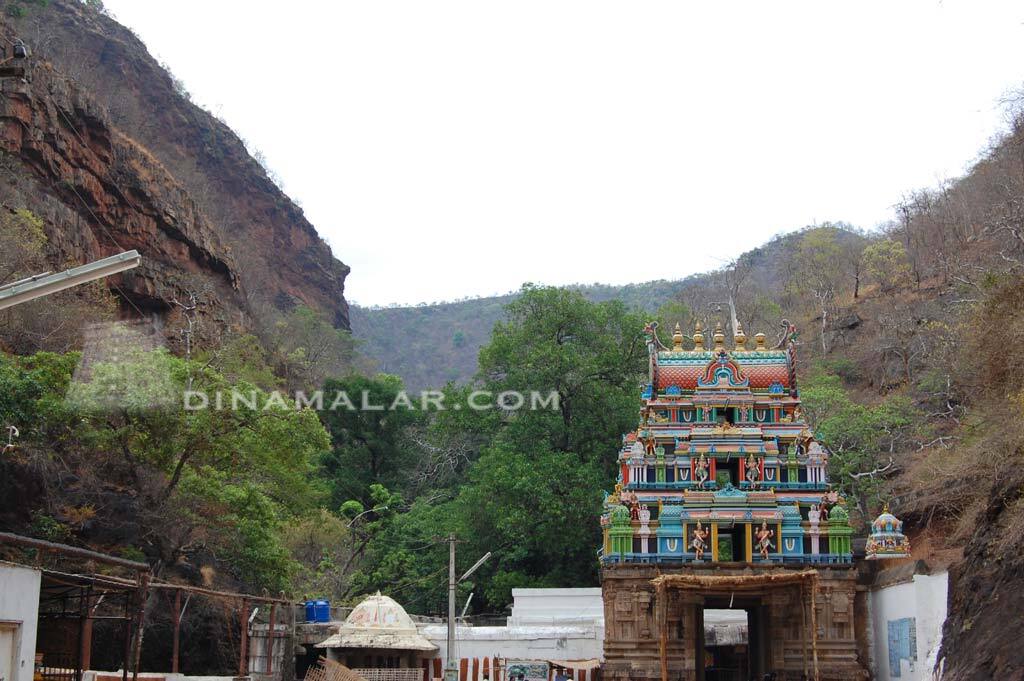
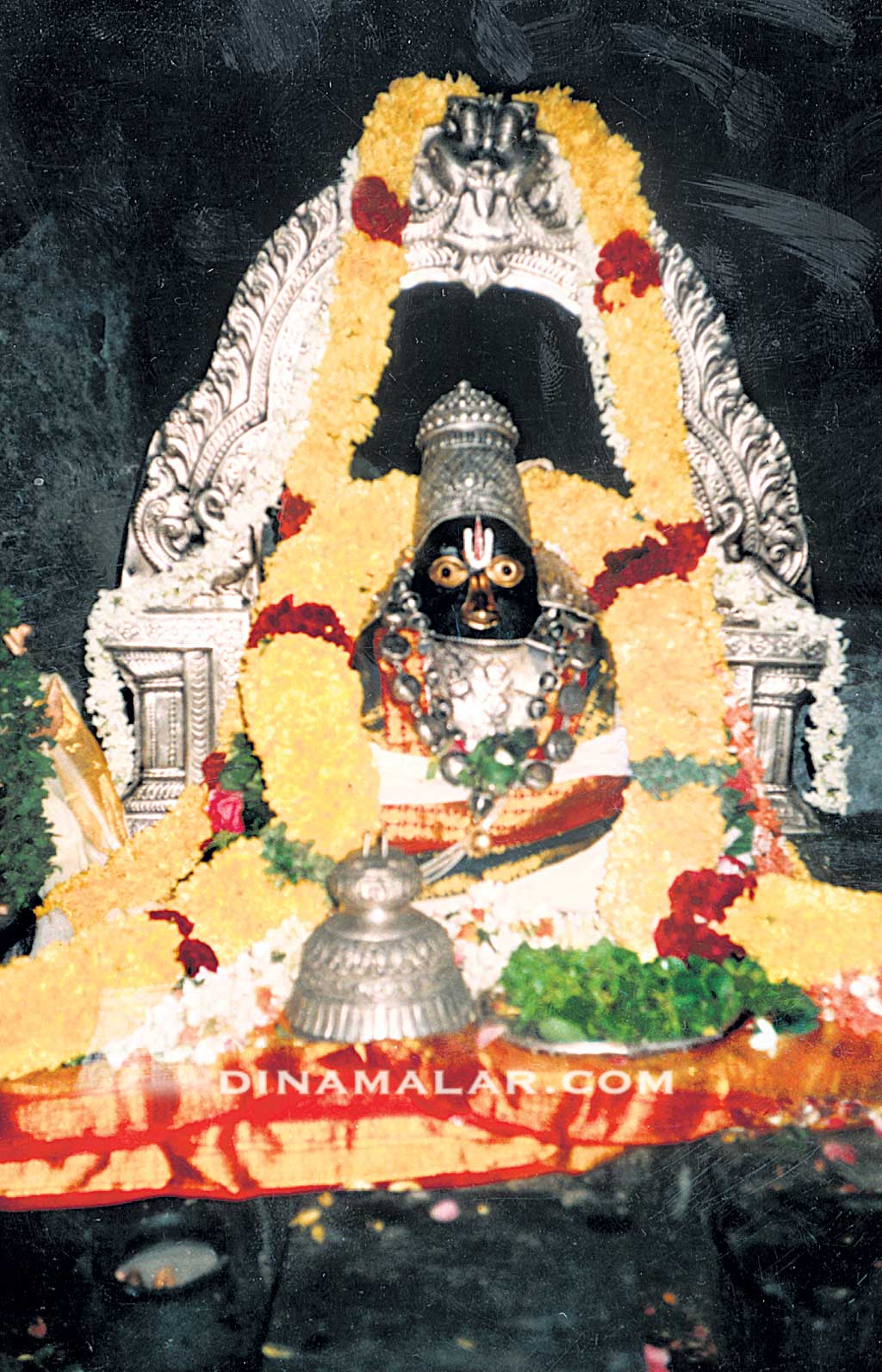
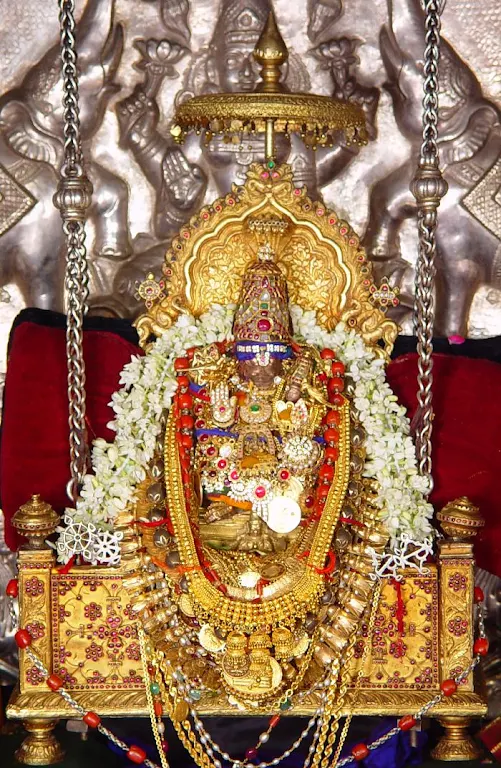
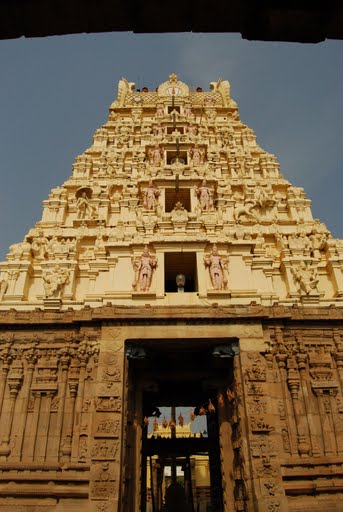
LOWER AHOBILAM TEMPLE
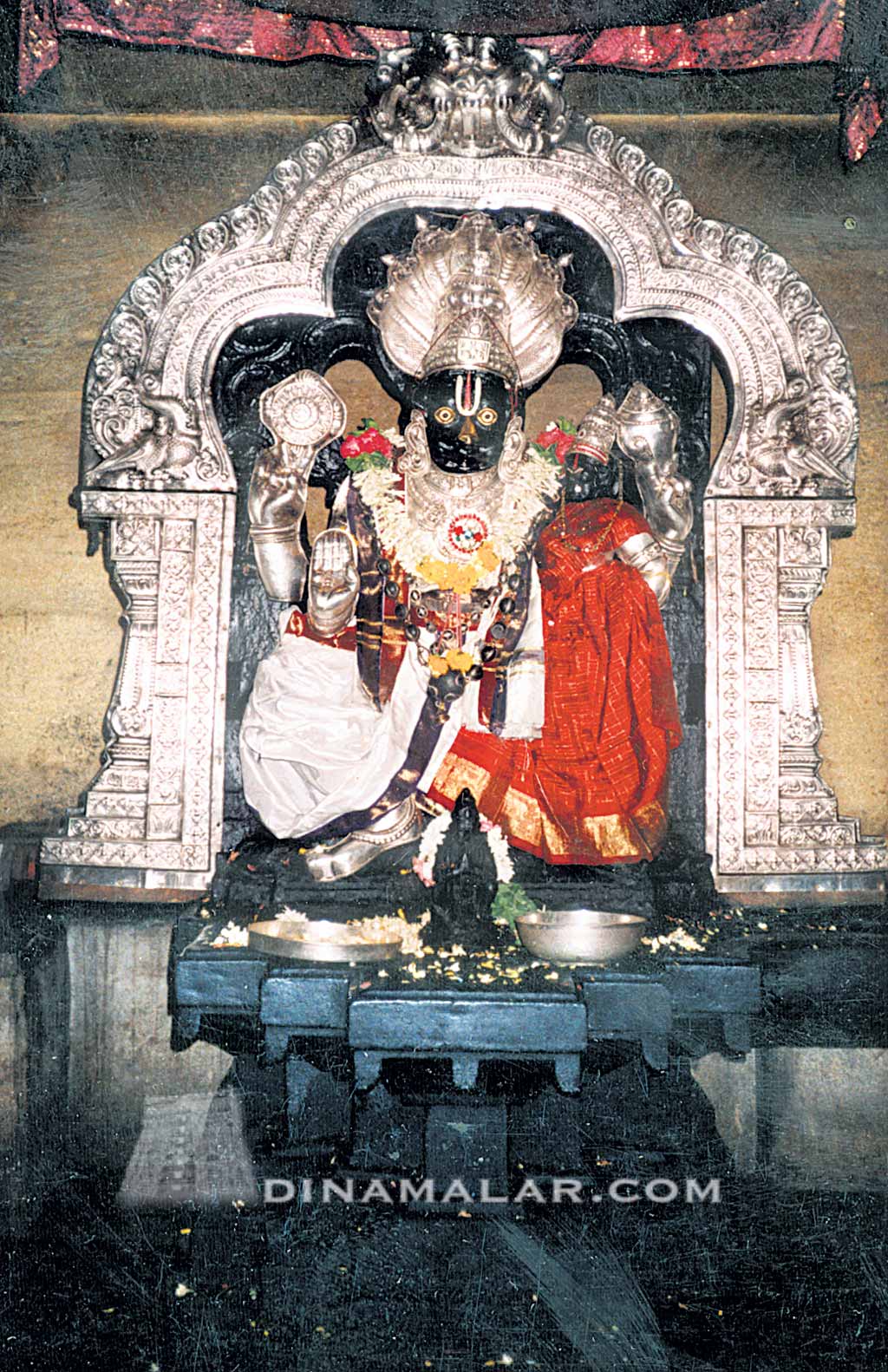
MOOLAVAR SRI LAKSHMINARASIMHA

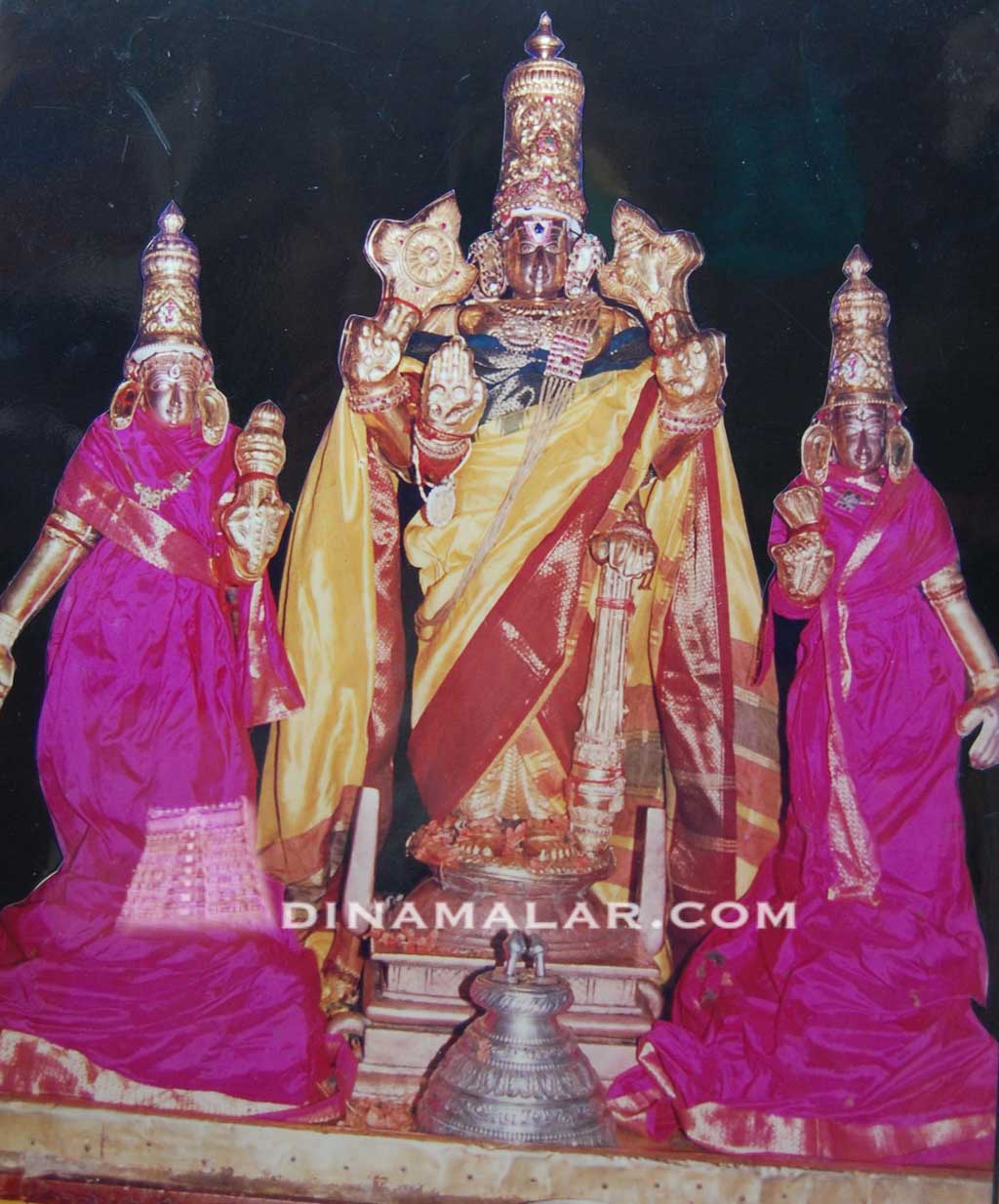
UTSAVAR SRI PRAHLADA VARADAN

There are Nine Sri Narasimha sannidhis in Ahobilam. Sri Prahlada Varadan is in Lower Ahobilam. By worshiping Him, we lose our heart and soul; such is His beauty. Pillai Perumal Iyengar was a devotee and a poet. He had composed 108 Thiruppati Andhadhi. In this he had presented one poem for each Divya Desam. In the poem on Ahobilam, the poet exposes an important character of the Lord, Sri Narasimha. The Lord simultaneously shows two feelings from the same face, on the child devotee Prahlada and Hiranyakasipu. He showers mercy and love on Prahlada and shows anger and hatred for Hiranyakasipu. The Lord in this Avatar had combined two impossible features - Lion head and human body. Similarly two emotions -anger and compassion- which can not appear at the same time from the same face, are exhibited by the Lord simultaneously. We can see this in the Sri Prahlada Varada in this sannidhi, from where today's [22nd April 2008] lecture is being made.
DIVINE EYES

 He stands with right lower arm showing protection to the devotees and the left lower arm is holding the mace. Upper arms are holding discus and conch. With compassion filled in one eye and anger in another, the choice is for us to select us as target for one of the eyes. If we go with a resolute belief that He will protect and bless us, then we will be in His view of the eye that is showering compassion. But if we go with doubts and disbelief of His avatar, then His eye filled with anger would view us. Just like in the Upper Ahobilam, the Lord graces with His two Consorts Sri Sridevi and Sri Bhoodevi. As told earlier, in the Brahmotsavam in Panguni, the Garuda sevai is on the last day. Sri Amruthavalli Thayar is in a separate sannidhi. She also graces the devotees with mercy; but there is a difference in the glances of the Lord and Sri Amruthavalli. Wnile the Lord exhibits mercy from one eye only, Sri Thayar graces compassion from both Her eyes. There is no place for anger and She is, therefore addressed as nithyam agyatha nigraha . Every Friday in the month of Aadi, Sri Thayar graces from the Oonjal [swing] mandapam. Here we can see beautiful sculptures and one can see all forms of Sri Narasimha. When we see so many Sri Narasimha in all these pillars here, it is remembered that while Sri Narasimha emerged from only one pillar, which Prahlada showed, He is waiting to emerge from all other pillars in this Universe! 
We will now see the 27th sloka:

iccha-dvesa-samutthena
dvandva-mohena bharata
sarva-bhutani sammoham
sarge yanti parantapa

"O scion of Bharata, O conqueror of the foe, all living entities are born into delusion, bewildered by dualities arisen from desire and hate."

In the last sloka He said that while He knew everyone, none knows Him. Why this is so was the question from Arjuna. In every birth, we earn papa and punya and as a result, we develop likes and dislikes. To satisfy these likes and dislikes, we involve ourselves in certain activities. These actions earn further papa and punya. This is a reiterative process and repeats every time. Therefore, every atman is born with likes and dislikes. During birth, this causes an illusion and so we miss the opportunity to understand the Lord. Iccha = likes, dvesha = dislikes. Both are associated with this prakruti or Universe. In worldly matters, we are interested in the results. Prahlada developed liking for the Lord; but that is in Godly matter, and what is told in this sloka is about worldly affairs. Samutthena = combination [ of likes and dislikes], dvandvamohena = [results] in twin feelings [ like profit and loss, happiness and sorrow, victory and defeat, etc.]. These twins are encountered by us because of the likes and dislikes. If we attain what we like we get happiness; if we do not get what we like we are sorry; if we get what we dislike, we are sorry; and, if we do not get what we do not like, we are happy. Similarly, by attaining what we like, we think we are victorious and feel defeated if we do not get what we like, and so on. This causes moham or illusion. Our ancestors have told janathi icchati yatate. Janati - we try to understand about something. Icchati - then we develop like or dislike on that object. Yaate - then we involve in actions or efforts to get it or avoid it. Thus the twins immerse us further in papa and punya. One may like to be in heaven and feels that one should involve in good deeds like donations, etc. If that one, spends one's earnings in an honest way, one attains punya and consequent heavens. So by involving in these twins we are in an illusion and we never come out of it. This illusion continues in every birth. Every birth is attached with all the papa and punya earned in the previous births. This is called vasana [वासना]. When an atman takes a body and is born, this vasana creates a breeze jata and all gyana is hidden. Sarvabhutani = all living beings, sarge = while born, sammoham = great illusion, yanti = get. So, likes and dislikes produce twins, which create an illusion and with that we are born. So at the instant of birth itself, all Gyana is lost . This is the reason none understands Sri Krishna. The result of every action or karma, sticks as vasana and continues in every birth. Only a very few people with the help of good Acharyas, try to understand Him. These twins and vasana are exceptions in this place. Sri Narasimha has a different twin of compassion and anger in His eyes. While all are born with the illusion, Prahlada was an exception. He is called Sriman in the garbha [womb], as he listened to the preachings of Narada to his mother Kayathu.
                                                                                                               (continued)

GITA 7.32

GITA 7.32
srirAma rAmeti ramE rAmE manOramE
sahasranAma tattulyam rAma nAmam varAnanE||
yatra yatra raghunAtha kIrthanam
tatra tatra krutamastukAnjalim|
bhAshpavAri paripUrNa lochanam
mArutim namatarAkshakAntakam||
SRI KARANJA NARASIMHASWAMY TEMPLE


In Ahobilam, Lord Sri Narasimha appeared to Hanuman, as Sri Rama. The spot, where He gave darshan like this, is the sannidhi of Sri Karanja Narasimha [कारांज ]. 


Today's [21st April 2008] lecture is from that sannidhiKaranja tree is also called punga maram or karungali maram in Tamil. Under a Karanja tree, the Lord is gracing the devotees. About one and half miles away in the forest, Hanuman was meditating on the Lord. When the Lord appeared before Hanuman, as Sri Narasimha, Hanuman was puzzled as to why he could not see the Lord as Sri Rama. When Sri Narasimha told that He was same as Sri Rama, Hanuman was doubtful. To dispel that doubt, the Lord appeared with the majestic crown He was wearing at the time of His coronation. But Hanuman could not see his Sri Rama in the dazzling brilliance of the crown and the face of theLord. The Lord, by the brilliance of His Third eye, revealed to Hanuman He was Sri Rama. But still Hanuman could not see the Bow, which Sri Rama is always associated with, and so the Lord immediately displayed a bow in His hand. Hanuman said that how he could come near the Lord, as he used to do when the Lord was Sri Rama? The Lord then indicated by pointing to His feet by His right hand. When Hanuman came near, the Lord showed His left hand in Abhaya [protection] mudra. Here the Lord Sri Narasimha appears with a Bow. The Lord appeared before Hanuman in Ghatikachalam or Cholasimhapuram, popularly known as Sholingar, nearArakkonam, in Tamilnadu. 
We will now proceed to sloka 26. This sloka came up to dispel a doubt in Arjuna, whether the Lord was not perceived now only or always?
vedaham samatitani
vartamanani carjuna
bhavisyani ca bhutani
mam tu veda na kascana

"O Arjuna, as the Supreme Personality of Godhead, I know everything that has happened in the past, all that is happening in the present, and all things that are yet to come. I also know all living entities; but Me, no one knows."

The main theme of this sloka is that the Lord knows all, but none knows Him. Aham = I [Sri Krishna], vedam = know, samatitani = past times, vartamanani = present times, bhavisyani = future times. We have already seen that the Lord can not be gauged or understood by the past, present and future. He can not be conceived as restricted to any particular place or form or time. So, He is beyond time, place and object; that is why He is called Sri Ananthan. When He says He knows the three times -past, present and future, it does not mean mere times, but He knows every person or object in all these three and He knows all their activities and their results. In Sri Vishnu Sahasranamam, He is called Bhootha bhavya bhavath Prabhu. He is the Lord of the three times and all those living in those three times. Bhutani = all living beings [of the past, present and future]. Arjuna's query was however not for this reply. He never asked whether the Lord knew all; but he asked whether all of them did not understand Him and was there or will there be, a time, when people understood or understand Him. So, what the Lord says that He knew all at all times is an additional information connected with the reply for Arjuna's question. Mam = [but] I [ Sri Krishna], veda = am understood by, na kascana= nobody. So, the Lord knows all and is interested in all of us. We, on the other hand, do not understand Him. The Lord takes lots of efforts to redeem every one of us. If a child is sleeping, the mother takes care of the child by driving away insects. Child comfortably sleeps, without the knowledge that the mother is taking care. After waking up also the child would remain unaware that the mother had taken care of. Nor the mother is going to tell the child that she took care of it. Because this task mother does without a return of reward; but, as a duty. Mother knows all the requirements of the child, even if the child does not know what it needed or who is to provide. We are all children of God and so He takes care of us by knowing all our needs and activities. Then one might ask that if that be so, then just as a mother has to look after the child because it is her duty, so also the Lord should look after us without our asking, as it is His duty. This is correct, but the child is advised to respect the mother as God [माथ्रू देवो भव]. Therefore, we should also respect God as God. Unfortunately, everyone thinks He is a mere Cowherd or another Person like them. In spite of His many deeds to protect the gopis, He is still not understood as the Protector. When He says nobody understands, nobody word indicates all those lived in the past, living in the present and going to live in future. People, therefore, go to all sorts of gods to get favours. Those devoted to these gods go to them, while His devotees reach Him at the end. They do not understand that those favours are also granted by gods with the power delegated to them by Sri Krishna. To get those favours, the devotees of those gods have to tread a very difficult path; and the favours are inferior and transient. So with hardship, they approach the gods to get temporary and cheap benefits. But Bhakti to the Lord is pleasant and results are unimaginably very great and permanent. The Lord expects only selfless devotion. Sri Narasimha appeared in Krutha yug, while Sri Rama avatar was in Tretha yug, thousands of years later. Hanuman was associated with Sti Rama. But He gave Darshan to Hanuman. If this sloka's intention was that Sri Krishna was lamenting that nobody knows Him, then all will cease to learn anything from Gita or Vedas or other scriptures. But the main import of this sloka is that Sri Krishna tells that a very infinitely small number of persons understand Him as everything and such a person is regarded as Gyani by Him. In 19th sloka, He told that a Gyani thinks Vasudevamidi sarvam and these slokas are all to explain the greatness of such Gyani.
                                                                                              (continued)

GIYA 7.31

GITA 7.31
Nammalwar praises the Sri Narasimha avatar in the pasuram engumulan kannan [எங்கும் உளன் கண்ணன் என்ற மகனைக் காய்ந்து இங்கில்லையால் என்று இரணியன் தூண் புடைப்ப (Tiruvaimozhi, 2.8.9)]. Sri Narasimha avatar is unique in the sense that an impossible combination of man and lion was enacted. This is called agatithagatana samarthyam. Another notable feature of this avatar is that just to prove the words of the child devotee, Prahalada, He appeared from the same pillar, pointed. Swami Vedanta Desika, prefixes Sri Narasimha with an adjective yadruschaya [यद्रुस्चाया] , meaning sudden. Prahalada chanted the Ashtakshara and taught the same to the children of demons. The two teachers Kanda and Marka, appointed by Hiranyakasipu, told him that Prahalada was not mentioning the name of Hiranyakasipu, but of Sriman Narayana. Hiranyakasipu's persuasion did not yield what he wanted and the devotion of Prahalada increased day by day. He adopted cruel methods on the child, like pushing into the fire, dropping in the ocean, etc. Prahalada was rescued everytime by Sriman Narayana. Finally, he confronted Prahalada to show Sri Hari and Prahlada told He was everywhere. Hiranyakasipu pointed to a pillar and asked whether Sri Hari was in that; Prahalada confirmed He was there. Hiranyakasipu hit the pillar and the Lord came out with an explosion. We are now in Upper Ahobilam where, in the Tamil month of Panguni, festivals are celebrated, followed by similar ones in Lower Ahobilam.
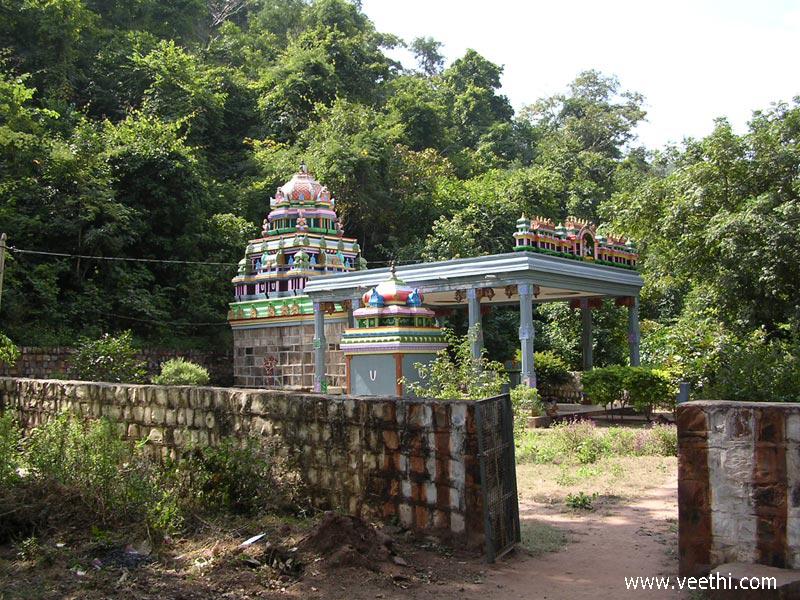
UPPER AHOBILAM TEMPLE

The Moolavar here is gracing with just two arms and Hiranyakasipu is lying on His lap. Child Prahalada is standing with folded hands.
UPPER AHOBILAM SRI MOOLAVAR

 Opposite this sanndhi, there is a historic place, where the 6th Jeer of Sri Ahobila mutt [Swami Shashta Parankusa Yatindra], to escape from alien invasion entered the cave in the ground and did not come back. There is also a sannidhi for Sri Chenchu Lakshmi ThayarChenchu means hunters of forests. Sri Mahalakshmi appeared in Chenchu community and married the lord. This event, Kalyanotsavam, is celebraed on the Seventh day of the festival every year.
SRI CHENCHULAKSHMI THAYAR

 Utsavar is Sri Jwala Narasimha, with Garuda at the feet. Normally, Garudotsavam is on 3rd or 4th day of the festival in other temples. But here, Garuda sevai is on the last day evening.
SRI UTSAVAR

 Just like the Sri Jwala Narasimha we saw earlier, here the Asura is on the lap of the Lord, Who graces with Ten arms. Two for holding Hiranyakasipu, two for tearing his chest, two for removing the intestine to get adored as garland, two for holding discus and conch and two for holding sword and mace. To satisfy Hiranyakasipu's many conditions for his death [he should not be killed in the air nor on land, neither inside nor outside, neither in day nor in night, not by weapons, not by any creation of Brahma,etc.] He killed him keeping hm on His lap, by nails, at the gate and in an evening. That is why Sri Narasimha jayanthi [avatar day ] is celebrated in the evening. It is believed that lord Shiva chants the Sri Nrusimha Mantra [mantra rajan] and remains here. In the idol, we can see the sharp nails also. Sri Narasimha is called Aja:. In Sri Vishnu sahasranamam, Divine names from 200 to 210 [ Eleven names] are dedicated to Sri Narasimha [amruthyu, sarvabruthu, simha, sandhatha, sandhiman, sthira, aja, dhurmarshana, sastha, visrudhatma and surariha]. Aja means unborn. But we have been hearing that He has taken many Avatars? He is not born like us. None of us is born out of a pillar. We are born because of karma, while He is born out of compassion and out of His own free will. 
Now, the 25th sloka:
naham prakasah sarvasya
yoga-maya-samavrtah
mudho ’yam nabhijanati
loko mam ajam avyayam

"I am never manifest to the foolish and unintelligent. For them I am covered by My internal potency, and therefore they do not know that I am unborn and infallible."

When the Lord appears as Sri Krishna or as Sri Rama, everyone thinks that He is also like them and never think that He had appeared out of sheer mercy. Sarvasya = for everyone, naham = I [Sri Krishna] am not, prakasa = exposing [Himself]. Only for the blessed Bhakta, He is available and perceivable. They think, yoga maya samavarta = associated with yoga maya. Swami Ramanuja says here, yoga maya means, the Lord assumes a body like ours and people think He is also like them. Swami Koorathalwan says the Lord as Sri Rama, wanders in search of Sri Sita as though He did not know Her whereabouts, but at the same time, He is able to dispatch Jatayu to Moksham, for which He knew the exact route! Loko = in this world, mudhoyam = fools, nabhijanath = do not understand, ajam = [the Lord is] unborn, avyayam = [and] indiminishable [in greatness]. They are all fools as they do not know that He is the Creator and not created; He is Cause and not the effect; He is not born to expend papa/ punya accumulated by karma, but to redeem us, out of pity for us. It seems when He killed Hiranyakasipu, blood flowed out and in that the Lord saw His reflection and became angry. When Brahma asked why He was still angry, when the demon had already been killed, the Lord replied His anger was because He saw another Sri Narasimha and how could He tolerate another equal to Him?! Near this sannidhi is Gajakundam, which gets water from Bhavanasini river. Bathing here will get us all our needs. There is also a 100 pillar mantapa, where the 1st JeerSwami Adi Van Satakopa] preached his disciples. With awe and wonder, we can admire the Lord here- because He is Aja. Is He a lion? or, a Man?
                                                                                                  (continued)

Saturday, August 1, 2015

GITA 7.30

GITA 7.30
sthithE manasi susvasthE sarIrE sathi yO nara:
dhAthusAmyE sthithE smarthA visvarUpam cha maamajam (1)
tathastham mriyamANam thu kAshtA paashaNa sannibham
aham smarAmi madh bhaktham nayAmi paramAm gathim (2)
This is Sri Varaha charama sloka. When our body, mind, intellect and vital organs are properly functioning and in our control, if we surrender at the Divine feet of Sri Varaha Perumal, then, when we are in our death bed, when we can not even remember His name nor our body and mind are in our control, Sri Varaha Perumal assures that He would remember and with a helping hand would take us to Moksham. Even when we lose our memory, the Lord says He would remember and guide us to Moksham. The Lord graces in Ahobilam as Sri Varaha Narasimha.
SRI VARAHA NARASIMHA SANNIDHI

 Today’s [17th April, 2008] lecture is from His sannidhi. Near this place is the sannidhi of Swami Ramanuja, in a small cave. Swami Ramanuja had visited Ahobilam.
SRI RAMANUJA

 With the blessings of Lord Sri Narasimha, he published his Sri Bhashyam, commentary on Brahma soothram, by Veda Vyasa. Inside we have the Lord as Sri Varaha and Sri Narasimha.
SRI VARAHA AND SRI NARASIMHA

 Both are the Lord’s avatar to kill the demon brothers Hiranyaksha and Hiranyakasipu. Unlike in many other places, Sri Varaha Murthy is not large and like in Sri Mushnam, the size is compact. As the great Boar, the Lord entered the ocean to rescue His Consort Sri Bhoodevi. Here we can see Sri Bhoodevi sitting on His long nose, as rescued. Normally, we see the Globe on His nose, but here the Thayar Herself is seated. Nearby is Sri Narasimha. Alwar says Sri Varaha is with strong teeth [to carry Sri Bhoodevi] and Sri Narasimha with sharp teeth [to tear off and kill Hiranyakasipu]. We will now see the 24th sloka of Seventh Chapter:
avyaktam vyaktim apannam
manyante mam abuddhayah
param bhavam ajananto
mamavyayam anuttamam

"Unintelligent men, who do not know Me perfectly, think that I, the Supreme Personality of Godhead, Krishna, was impersonal before and have now assumed this personality. Due to their small knowledge, they do not know My higher nature, which is imperishable and supreme."

Avyaya = never diminishing [in His greatness], anutthamam = with no equal or greater, mama = My [Sri Krishna’s], param bhavam = very great quality, ajanantha = is not understood or unaware of. Millions and millions of people are ignorant of His greatness. People are unaware of Shastras or God or atman. They are ignorant that the Lord is the King of Vaikuntha, He is the Lord of Ubhayavibhooti; He is the Creator; He is the repository of all auspicious qualities; He is the Consort of Sri; He is the motive Force in all; He is the Supreme Lord. They do not know that the Lord is so great. Not only that. They also have misunderstood Him. Avyaktham vyakthi apannam manyata = [they think] the Lord is born because of good deeds in the past [by Him]. We all have got this human birth because of our past good karma. Similarly, these people think that Sri Krishna might have done good things in the past and so He is born as Sri Krishna now! His supernatural feats like hoisting Govardhana giri or killing many demons are not considered as His great qualities, but He is regarded as a normal human being. There are many ordinary persons who possess certain superhuman powers and Sri Krishna could be like that. Abuddhaya = foolish people, mam manyante = consider Me [Sri Krishna]. They do not realise that Sri Krishna is born, not like us because of our past karma, but out of His own freewill and determination [sankalpam]. This has been clearly explained in Chapter 4. He appears in this world out of His compassion and nothing can force Him to take avatar. He has neither an equal nor a superior. Sri Krishna is not realised as Paramatma but regarded as another person like us. They are fools. Arivinaal kuraivilla, says Alwar, which might suggest that we have enough intellect. But Swami Nampillai, in his Eedu [commentary on Divya prabhandam] says that not only we are ignorant about Him and His greatness, but we are unaware of this ignorance also! Kimapibrahmatat kishora bhava dhrushyamSwami Vedanta Desika says in his Gopala vimsati. He was born among gopis and gopikas. He was chided and made fun of. Now everyone thinks that He is, after all, a gopi and never for a moment think He is the Para Brahmam. They do not think that such great Person has come down to us out of compassion. Our karma has made us ignorant of this. This ignorance, however, does not belittle Him. If we correctly understood Him, then we will not seek anything from anybody else. Just like here, in Simhachalam also the Lord graces as Sri Varaha Narasimha.
                                                                                                        (continued)

GITA 7.29

GITA 7.29
VIEW OF SRI MALOLAN SANNIDHI
Route Map

Nalla malai range is believed to be Serpent Adisesha. Its hood is Thiruvenkatam [Tirumala], Ahobilam is its body and tail is Srichailam, says Purana. With Adisesha spreading its hood over His head, Sri Malola is gracing. Earlier we saw Sri Jwala Narasimha, with cave like wide opened mouth and tongue like the flames of fire, and from there we have come down. Here with all anger vanished the Lord is gracing with Sri Mahalakshmi Thayar on His left lap.

 While the left arm is embracing the Sri Thayar, right arm is assuaging the fears of devotees and guaranteeing protection. Upper two arms are holding the Sudarshana and Panchajanya. The Lord is called Sri Malola. Ma means Mother, that is Sri Mahalakshmi Thayar, lola means playing wth Her. It shows the unique intimacy between them. In the pasuram nallainenje naam thozhudum (Periya Tirumozhi, 1-7-9), Thirumangai Alwar says Allimadhar pulgi ninra aayiram tholudaya [அல்லி மாதர் புல்கி நின்ற ஆயிரம் தோளுடைய ], that is Sri Mahalakshmi is embracing the Lord from His left. Alwar pats his mind, which is after the Lord as Sri Malola, and encourages the mind to worship the Lord! The Lord graces with a smile and blessing Prahalada. In Sri Vishnu Sahasranamam, two divine names come together - Narasimhavapu and Sriman. Narasimha vapu [नारसिम्ह वपु] means the body of lion and man. Sriman [श्रीमान] means Husband of Sri or Sri Mahalakshmi Thayar. So the Lord Sri Narasimha is the Husband of Sri Thayar. Another way to interpret it is, Sriman means the owner of Wealth and so Sri Narasimha is the owner of wealth, which is His great image. How such a fearful looking Sri Jwala Narasimha, has calmed down and looks amenable here? It is all because of the prayer of Prahalada. Nammalwar says azhagiyaan thane arivuruvam thane [அழகியான் தானே, அரி உருவம் தானே]. When we go with bhakti, like Prahalada, this Lion looks very beautiful. Here we see the Moolavar. Utsava Moorthy of this Lord is accompanied by Srimad Azhagiyasingar, pontiff of Sri Ahobila mutt and He graces all by touring all over the country. 

SRI MALOLAN IN SRI AHOBILA MUTT

In circa 1378, some 600 years back, Swami Srinivasacharya was born. He was the son of Kidambi Kesavacharya. They were in Melkote, near Mysore. Srinivasacharya went to Kanchipuram and learnt all scriptures from Swami Gadikasatham Ammal. When he was 20 years old, he was commanded by Lord Sri Narasimha to come to Ahobilam. The Lord in the guise of an elderly Brahmin, administered mantras and made Srinivasacharya a sanyasi [ascetic]. He was christened as Sri Satakopa yathi. This is the title with which all Azhagiya singars are decorated. At that time the Utsava Moorthy of Sri Malola, sprang up and reached the hands of this sanyasi and commanded that He should be carried to all places to bless the devotees [in sancharam]. 
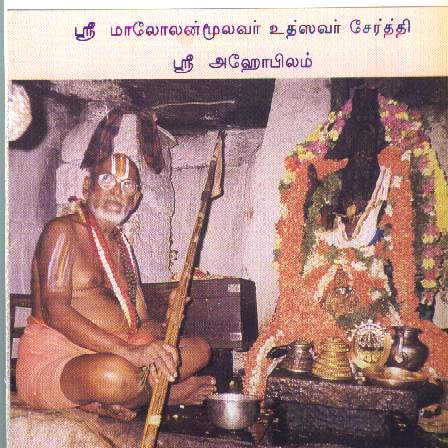
Srimad Ahobila Mutt Jeer worshiping a joint Darshan of Sri Moolavar and Sri Utsavar

We will now see the 23rd sloka:
antavat tu phalam tesam
tad bhavaty alpa-medhasam
devan deva-yajo yanti
mad-bhakta yanti mam api
"Men of small intelligence worship the demigods, and their fruits are limited and temporary. Those who worship the demigods go to the planets of the demigods, but My devotees ultimately reach My supreme planet."

Arjuna asks. Suppose one prays Varuna for rains and it is granted. Another prays Sri Krishna for rains and he also gets it. What is the difference between the results of both prayers? Sri Krishna tells that there is a great difference in the same result obtained by praying gods and Him. The results obtained by praying to gods suffers from two defects. One, they can grant only inferior rewards. They can never grant Moksham, the most superior reward. Secondly, they grant rewards by the sheer delegation of powers by the Lord and such rewards are not given independently by them. Whereas when Sri Krishna grants, it is by His independent nature and none persuades Him to do so. We can make two categories of devotees - intelligent and naive. Those who do not know Sri Krishna and He should be our supreme objective, are all naive or unintelligent group. The intelligent group, though, is aware of His greatness, they seek material and worldly benefits and do not approach Him for serving Him. Slightly better than this group is the category of devotees who seek to serve Him, but they think that they can do it by their own efforts. But the best among all devotees is he, who thinks that serving Him is the reward and He only should accomplish that for him. They neither go to others to seek Him nor seek Him for other rewards. Only His blessings should get their objectives realised and not their efforts. Sri Krishna discards those naive persons. Deva yaja yanti = those who worship other gods reach, devan = those gods [only], mad -bhakta = My [Sri Krishna's] devotees, yanti = reach mam api = only Me [Sri Krishna]. By worshiping these gods, those devotees go to them and after a tenure, have to come back. But those worshiping Sri Krishna reach Him in Vaikuntam and never return. His Eight great qualities are bestowed on these devotees. No more samsaram and all associated problems of life. Prahlada prayed the Lord to bestow him everlasting Bhakti in Him. When the Lord wanted to bless Prahlada with reward, Prahlada wanted that he should not seek rewards from Him! Whatever birth he might take, he should never miss the devotion to Him. Praying that Sri Malola's blessings should be showered on all, we will proceed further.
                                                                                                                          (continued)

GITA 7.28

GITA 7.28
Thirumangai Alwar calls Ahobilam as Singavel kunram [சிங்க வேள் குன்றம்]. Vel means young and energetic. Alwar says Sri Narasimha appeared with anger, which caused fear in the entire Universe, to kill Hiranyakasipu. He appeared at a spot and we are to listen to today's [15th April 2008] lecture from that spot.
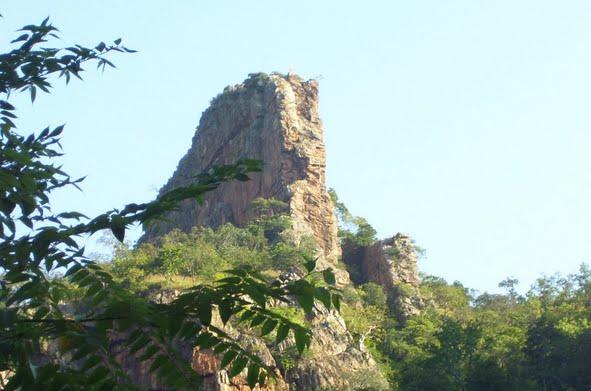
A VIEW OF UGRA STHAMBAM

This spot is called Ugra shambam. It is on a steep rock. Here, Sri Narasimha appeared as the pillar got split. Some consider this as the original spot of Sri Narasimha avatar and others feel, it is the spot where Sri Narasimha re-enacted His avatar, for Garuda. Because Garuda wanted to see Sri Narasimha here, this hill is called Garudachalam. When demon Suvamukha stole away Vedas, Devas complained and prayed for help and the Lord again appeared to kill that demon and recovered Vedas and so this place is also called Vedadhri.
Aho veeryam aho souryam aho baahu parakramah:
Naarasimham param deivam ahobilam ahobalam.
Aho balam = what a power!! When the Lord grabbed Hiranyakasipu and laid him on His lap, all Devas exclaimed Bahobalam! ahobalam!! Bilam means large cave. Either He opened the mouth which resembled a bilam or this place is situated amidst so many caves, and so it is Ahobilam. 

UGRA STHAMBAM

From Sri Jwala Narasimha, walking for about half an hour uphill, we can reach Ugrasthambam. There is a flagstaff nearby and people go around it, with care as the place is very narrow. From the foot of this hill, if we look up at the hill, it would resemble Garuda spreading wings. Appearing at the Ugrasthamba, Sri Narasimha chased Hiranyakasipu and grabbed him and laid him on His lap at the sannidhi of Sri Jwala Narasimha, to kill him. In Tamil, aal = man, ari = lion, so Alari = means Sri Narasimha. Lions of this place are great devotees of Sri Narasimha. Just as we would worship God by presenting flowers and fruits, lions worship by presenting the tusks of elephants they killed! This is what Alwar says. In those days travelling to Ahobilam was very difficult; Alwar says even gods find it difficult to reach that place. Now, thanks to the Jeer of Sri Ahobila Mutt, lots of facilities have been made and travelling is lot easier. 
We will now proceed to sloka 22. World is full of varieties, and desires and ambitions are different. Everyone may not be interested in Moksham or Sri Krishna bhakti. Only a few are interested in the Lord and the Lord does not want to leave the rest just like that, as they may become atheists. To bring them also under His feet, the Lord makes them to first have loyalty to gods, then believe in Vedas and finally they will reach Him. In order to do these, He has to devise certain methods. He empowers the gods who are all His body. These gods grant various small and temporary reliefs for various devotees. This way slowly they understand, the soul of these gods as Paramatman, and realise that He can grant much superior and everlasting happiness to them. Sloka 22:
sa taya shraddhaya yuktas
tasyaradhanam ihate
labhate ca tatah kaman
mayaiva vihitan hi tan


"Endowed with such a faith, he endeavours to worship a particular demigod and obtains his desires. But in actuality, these benefits are bestowed by Me alone."

Sa taya shraddhaya = such devotees sincerely, tasya aradhanam = by such devotion or worship, ihate [ईहथे= desires [to please them], labhate = gain [ the desired objectives]. But these gods are incapable of granting those desired objectives on their own. Just like the limbs of the master can not by themselves give any reward for the services of the servant, but only by the command of the soul. Similarly, these devotees do not worship these gods thinking they are the body of the Lord; but devotees think that these gods are granting independently. Mayaiva = only by Me [Sri Krishna], vihitan = granted, kaman = desires. But actually, the desires of these devotees are sanctioned by the Lord. Arjuna gets a doubt. If so, then why not the Lord directly grant? Why all these intermediaries? Sri Krishna tells that among people we have varieties according to the three gunas =Saatvikas, Rajasas and Tamasas. All are children of God and He has to take care of all of them. So people with Rajo and tamo guna also are cared for by these gods and after some time, they will realise and become satvikas and surrender to the Lord directly. It is also clarified that going after these gods is not a must and devotees can approach directly the Lord. In a saying, our elders cite an example. A child wants to eat mud. Mother tells the child not to do. If she beats the child for eating mud, out of sheer disobedience it may hate the mother. On the other hand, some mothers would allow the child to eat and suffer, when they will advise the harm and children also would realise their mistakes. The Lord's advice not to go after gods for inferior desires may not be heeded; but by allowing them to get those desires full filled, they are made to realise the temporary reliefs and to seek permanent happiness. Even these temporary ones are not granted by the gods on their own. We know all these gods hold on to those posts only for a tenure. If, suppose a person tries to please a god and as he is doing it, if the tenure of the god ends, who is going to accept his offerings and grant him his desires? If we want to have a big stud on our ears, then we have to wait to enlarge that hole to accommodate the bigger stud.
                                                                                                        (continued)