Saturday, August 1, 2015

GITA 7.27

GITA 7.27
SRI AHOBILAM

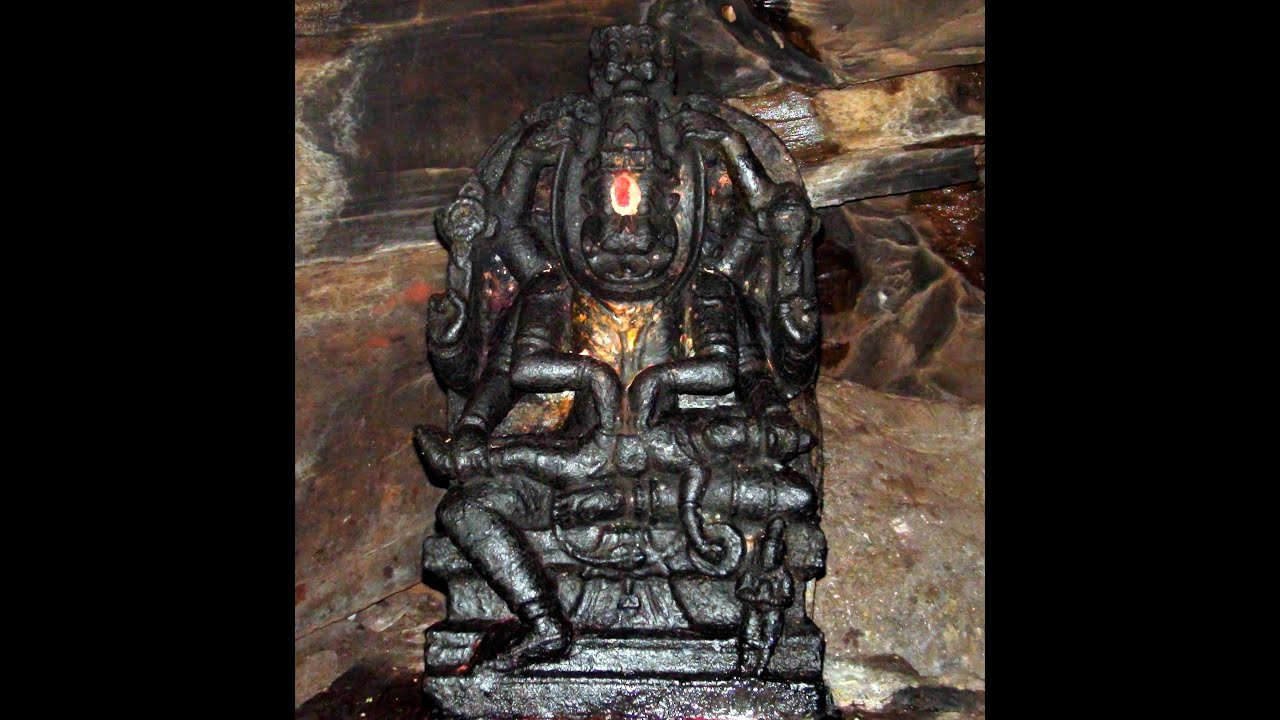
We have seen all the Kshetrams of Pandya region while reading Gitasloka by sloka. We have also seen many Kshetrams of Chola region. Now we are at one of the Northern Kshetrams in Andhra PradeshSri Ahobilam, aka AhobalamPanka Srotha Kshetram, Nava Narasimha Kshetram and Singavezhkunram in Tamil. Thirumangai Alwar has presented 10 pasurams on this Kshetram. It is some what difficult to reach this place and worship the Lord here. But a dedicated devotee may not mind any obstacles and the journey could be a happy one. This hill is amidst Nalla malai mountains range. We can come by train to Cudappah and from there by road to Ahobilam via Alaghadda, 15 miles away. Lower Ahobilam and Upper Ahobilam are there. Today's [14th April 2008] is from the sannidhi of Sri Jwala Narasimha, 4 KMs from Upper Ahobilam. Six of the Nine Sri Narasimha are in and around Upper Ahobilam and Three in Lower Ahobilam. This place is also known as Garudachalam or Garudadri. Garuda was delighted by Sri Jwala Narasimha. Garuda wanted the Lord to re-enact the scene when He, with anger, killed Hiranyakasipu, in Sri Narasimha avatar. Garuda bathed in the Bava nasini, a sacred river famous for eradicating all sins of those bathing in it, and meditated on the Lord. Granting his request, the Lord appeared as Sri Jwala Narasimha, with eight arms. Hiranyakasipu is on His lap.
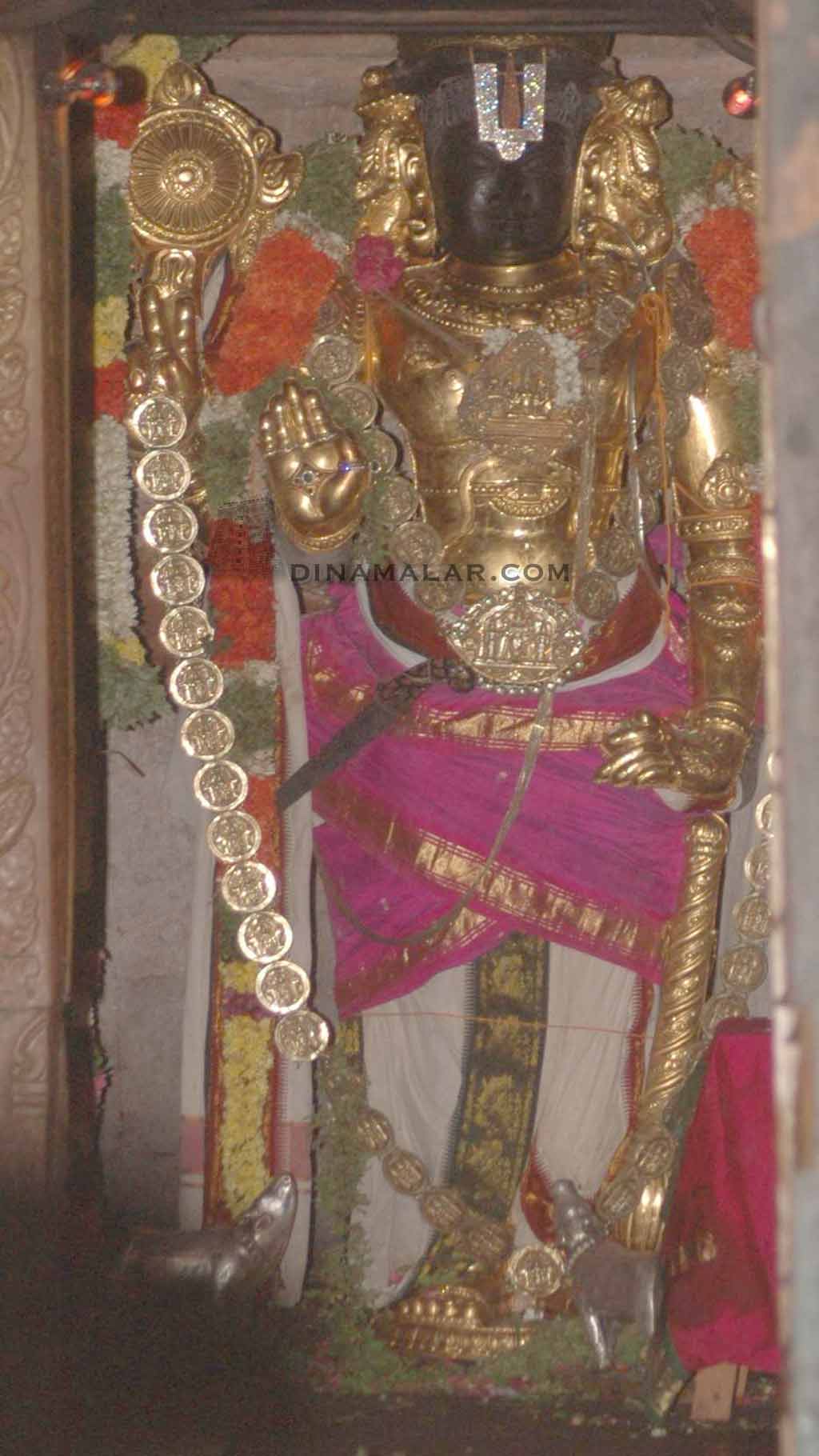
SRI JWALA NARASIMHA
Two arms are holding the head and feet of Hiranyakasipu. Two arms are opening the chest, two arms are engaged in taking out the intestine and wearing as garland and another two arms are holding thediscusa and conch. We can also see a statue of the Lord as He emerges from a pillar.

Standing by the sides are Hiranyakasipu and Prahalada. On to the left of Sri Jwala Narasimha, we can see the Sri Veera Narasimha, chasing Hiranyakasipu.
SRI VEERA NARASIMHA
We can see the 
Asura kula guru Sukracharya. From Upper Ahobilam to reach this place it takes about an hour, crossing rocks and climbing many steps. We will now see the 21st sloka. With the blessings of the Jeer, Srimad Azhagiyasingar, of Sri Ahobila mutt, we will see all the Nine Sri Narasimha in the coming days.

Till 19th sloka, Sri Krishna described the greatness of His devotees. Devotee, who considers Sri Vasudeva, as everything -vasudevamidhisarvam. But such a devotee is very hard to find. Such a devotee was Prahalada and we have come to this Kshetram to see Prahalada's favourite Sri Narasimha. From 20th sloka, in eight slokas, the Lord regrets that while He was there to grant anything, people swarm around other gods to seek favour. Though Sri Krishna could grant anything, He does not grant the cheap desires that easily nor quickly. But many people want such transient and temporary needs and so they seek other gods, who readily grant them. But, this power to grant such needs has been delegated by the Lord to these gods. The Lord resides in every god , and as the Controller and comanader inside, He makes them to satisfy the needs of people. Now the sloka 21:
yo yo yam yam tanum bhaktah
shraddhayarcitum icchati
tasya tasyacalam shraddham
tam eva vidadhamy aham

"I am in every demigod’s heart as the Supersoul. As soon as one desires to worship some demigod, I make his faith steady so that he can devote himself to that particular deity."

yo yo bhakta = such devotees , yam yam tanum = [approaching] such [gods who are the Lord's] body [or who are controlled by the Lord]. Shraddhaya =with dedication, arcitum = to do pooja, icchati = desires. Devotees approach the many gods , who are all the body of the Lord [just like soul is the master of the body] and desire to perform poojas to them to get their desires full filled. Tasya tasya = such devotees, acalam = unshakable, shraddhaam = faith in those gods, aham = I [ Sri Kishna], vidadhami = establish [ in them]. The Lord says that He ensures that these people have unfaltering faith in those gods. Arjuna got a doubt here. The Lord earlier told that all should worship the Lord as He alone is capable of granting anything and everything, then why should He encourage these people to go to these gods who can never grant the highest reward of Moksham? Sri Krishna is going to clear this doubt in this and the next sloka. Here we have to understand that all gods are body of the Lord. We can worship anyone, but none of them are independent. Inside them the Lord resides and controls and commands them. He delegates certain power to each of them, which they could grant to people approachng them. A servant serves the King. He is not intelligent enough to know that atman of the King is pleased by his services. He only knows that by serving, the King is pleased and he grants some money for his living. Actually, atman of the king is pleased and that atman directs the body to take out money and grant to the servant. Similarly, these gods are mere bodies of the Lord and He commands them to grant certain needs to those who sseethose gods. These people are expected to be loyal to those gods. These gods also do not have total knowledge that the Lord is in them and that they have drawn their powers only from Him. Here this hill, where the Lord Sri Jwala Narasimha is , is called Achala Meru chaya parvatam - shadow of the great Meru mountain. Nammalwar says that in infinite births we have been going after various gods for various needs. They grant only temporary satisfaction.
                                                                                     (continued)

GITA 7.26

GITA 7.26
We will conclude the detailed explanation of sloka 19, today [11th April 2008]. He is praised as Mahatma, who thinks Sri Vasudeva is everything - dharakam, poshakam and bhogyam. Mahatma means large hearted or broad minded. Their mind and eyes are one with the Lord. Broad minded means, whether we like or not, our mind will be after the Lord. Just like eyes close against obstacles involuntarily, our mind will be filled with His thoughts. Mind will be after Him, unlike the mind with us which runs after inferior pleasures. That is why our elders have been after such festivals so that mind also follows suit. In Alwars' case, the mind tells Alwar, that it is going to the Lord and if he cared he could accompany the mind. If he were to choose to go elsewhere, he could as well forget the mind, tells mind. This shows the great attractive force the Lord is able to exert. Broad mind also means the compassion feelings. When such a person reads that elephant Kuvalayapeetam tried to kill Sri Krishna, or Kamsa and Poothana tried to kill the Lord, his mind is pertubed as though his close kith and kin is affected. But many of us think we are learned and so our doubt would be whether Sri Krishna is God or a mere Child? Is He, Sri Para Vasudeva or Sri Gopalan? If we think He is Sri Para Vasudeva, then we are gyani; but if we think He is Sri Gopalan, then we are Bhaktha. When Gyana matures, it becomes Bhakti and not the other way. When Gyana matures, we will realize that the Lord is so near us as Sri Gopalan. A bhakta's mind is worried when he hears Sri Rama went to forests; Sri Krishna should get butter; He should come safely from the grazing area; and so on. Such a person, who is in deep sorrow if he is away from the Lord and happiest when with Him, is Mahatma. Do we need Gyana about Him or love [prem] for Him? Earlier when the lectures were done from Brindavan, it was told that near Nandagram, there is a place Uddhava shikha. When Sri Krishna left Brindavan and went to Mathura, to assuage the feelings of gopikas, Sri Krishna deputed Gyani Uddhava. When Uddhava came to teach them on meditation, he found that the gopikas had such a great love for Sri Krishna that they had surpassed the meditation he was to teach. Uddhava later, returned realizing he also should convert his gyana to Love. Mahatma thinks that he should safeguard Sri Krishna, while ordinary devotees like us think the He should protect us. But to find such a Mahatma is very difficult. There could be one or two among us like that. We will now move on to sloka 20. To understand that, the sannidhi where we are having lecture and the pasuram of this Kshetram are important. One would have noted that no Alwar's name was ever mentioned for this Kshetram. No Alwar has sung about the Lord here, perhaps the greatness of this Kshetram is beyond words! Very near this place, Mannargudi, on the way to Thiruvarur, is Velukkudi. Velvi + kudi = yagna place, has got transformed to Velukkudi, where the Lord is appearing as Sri Prasanna Venkatesa. We are at the sannidhi of Swami Manavala Mamunigal, where we can also see the portrait of Swami with his eight disciples called Ashta Dik Gaja. Swami
Sri Manavala Mamunigal
Swami
 Manavala Mamunigal was born in Tamil month Aippasi, in the star Moolam. He came to this place and composed poems in both Tamil and Sanskrit. He felt that Alwars would have certainly composed lyrics on the Lord here and, after great research, selected one beautiful song as in praise of the Lord here. The selected song is from Nammalwars Thiruvaimozhi, 4-6-10 : unniththu matroru deivam thozhaal.... Nammalwar worships the Lord here and transforms himself in the guise of a gopika and seeing the beauty of the Lord, faints. When 'her' mother is wondering what to do, 'her' friends advise that this 'girl' will not look at any, other than the Lord and so if 'her' mother could utter words in praise of the Lord of Dwaraka [Mannargudi is called Dakshina Dwaraka], 'she' will become normal! Here Alwar says the 'girl' would not look at others means, will not look to other gods for any favours. The Lord of Dwaraka in this pasuram is mentioned as vanduvarapathi. This can be split as van = prosperous, thuvara dwaraka, pathi = Leader; or vandu = bee, vara = not coming, pathi = place. Bees do not come to Champaka [shenbagam] flowers!

 Arjuna felt that he could not find any, thinking Sri Vasudeva is everything; people still go after so many gods for various needs. In reply Sri Krishna tells:
kamais tais tair hrta-jnanah
prapadyante ’nya-devatah
tam tam niyamam asthaya
prakritya niyatah svaya


"Those whose intelligence has been stolen by material desires surrender unto demigods and follow the particular rules and regulations of worship according to their own natures."

These people are under the influence of immemorial births. Anya devata = other [than Sri Krishna] gods, prapadyante= seek, svaya = their self, prakritya = natural habit [vasana], niyata = unable to break away [from that nature], tair tair = in each [ or such and such], kamais = desires, hrtha-jnana= lost the knowledge [ of Sri Krishna], tam tam = such and such [gods, other than Sri Krishna], niyamam = worship, asthaya = do. All other gods could give very cheap and inferior benefits; while the Lord is capable of granting the supreme, everlasting and suited to the receiver's happiness. Forgetting this, by the influence of time immemorial karma and births, people seek inferior pleasures only. Even for such pleasures, they could seek Sri Krishna, Who is capable of fulfilling any desire; but people throng to other gods for these desires also. A husband marries, in Hindu dharma, a woman and pledges in front of Agni, that he would protect her; but if the woman seeks the favour of others, then the husband is disgraced. This feeling is reflected by Sri Krishna. The Lord waits for everyone to realise this and to come to Him one day. From the Pasuram of Nammalwar selected by Swami Manavala Mamunigal, we have to understand that He is here to grant us whatever we need. We now take leave of this Kshetram.
                                                                                                          (continued)

Wednesday, July 15, 2015

GITA 7.25

GITA 7.25
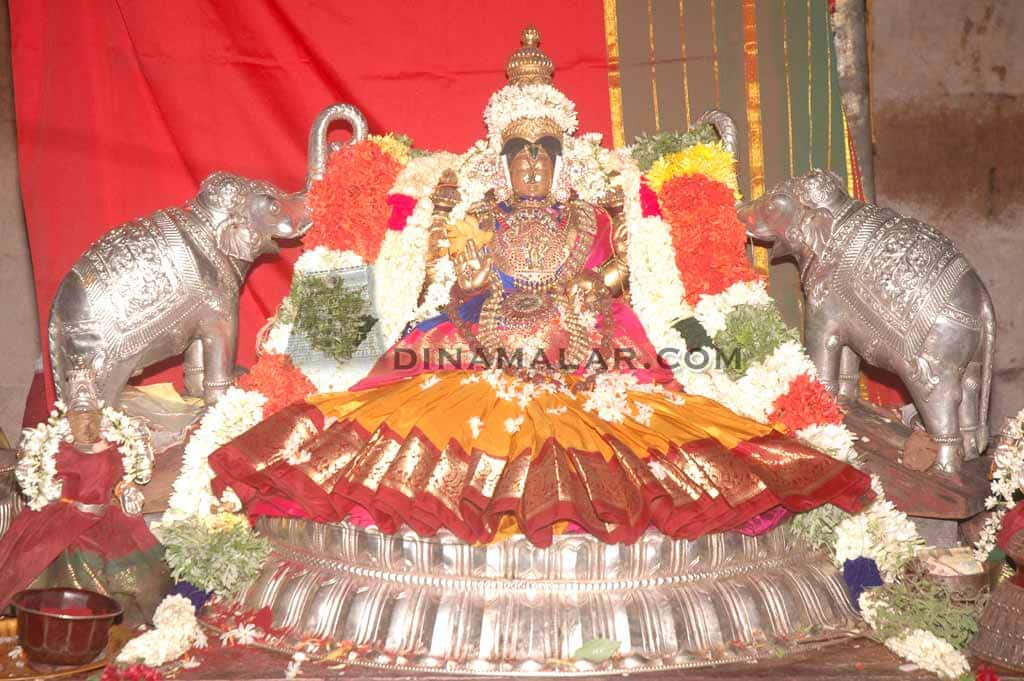
SRI SENGKAMALA THAYAR

We have been seeing the greatness of Sri Krishna. But the factor behind these is, like the lightning amidst black clouds, Sri Thayar. She stimulates His various qualities. Today's [10th April 2008] lecture is from the sannidhi of Sri Sengkamala Thayar, aka Sri Hemabjanayaki and Sri Rakthabjanayaki. Sage Brughu was once bound by a curse and to get relieved of it, he had to come to this Kshetram, bathe in the pond and meditate on the Lord. Accordingly, sage Brughu came here and meditated on the banks of another pushkariniThirupparkkadal [திருப்பாற்கடல்]. 
Tirupparkkadal

He prayed the Lord to bless Sri Mahalakshmi to be his Daughter and He should marry Her. He was granted this request and Sri Mahalakshmi appeared as his daughter and married the Lord. Present Sri Lakshmi Narayana sannidhi here is witness to that great event.
Sri Lakshmi Narayana Sannidhi
There is a 
mantap nearby, and the Lord starts most of His riding on His vehicles [வாகனம் ] in the festivals, from this mantap only. The main Brahmotsavam is in the Tamil month Panguni [March-April]. Kalyanotsavam of the Lord and Thayar are done in the mantap near Thayar sannidhi. Every Friday, abhishekam [திருமஞ்சனம்] is performed for Thayar. Because She emerged from a red lotus flower, She is called Sri Senkamalavalli [செங்கமலவல்லி] or Sri Rakthabja or Sri Hemabja Thayar. Earlier, we saw that the Lord appeared in 32 forms to the sages Gopilar and Gopralayar. Almost all these are depicted in the 18 day Brahmotsavam. It is unique for this Kshetram to have such a long 18 day brahmotsavam. Everyday, the Lord will appear in different forms to bless the devotees. One day He appears as Vennaiththazhi Sri Krishnan [வெண்ணெய் தாழி கிருஷ்ணன்]. Sri Krishna appears in the form of an infant carrying a pot of butter. On that day, to repeat the incident of the past Gokulam days, devotees will throw butter on the Lord, and even the archakas will be drenched in butter. Nearby this kshetram, is a place called Neyvasal [ நெய்வாசல்] and it got that name because the butter melting as ghee was flowing upto that! Near Thayar sannidhi, there is a mantap called Rohini mantap, from where the Lord graces like a King! He is Sri Raja Gopalan! By visiting these during festivals, devotees lose their mind in Him. As age advances, some of us develop an indifference to many worldly pleasures. Similarly, if we develop a taste for Sri Rajagopala, then we will find that all the worldly pleasures are available in Him and we do not need materials. The happiness we derive from Sri Vasudeva is everlasting and will never diminish nor slip away. But this resolution that Sri Vasudeva is everything, does not come to us easily. Because we have not developed that faith in Him. From the 4th sloka to 12th sloka, Sri Krishna told about His greatness - He is all Achit and all Chit, He is the asylum for all, He is the taste in food, He is the light of the Sun, He is the thermal power in Fire, etc., we are His properties, and so on. Initially in this Chapter He told that one among Millions only tries to understand Him and takes efforts and in Millions of such, one gets the real understanding. To get this true understanding, we have to accept He is our Master and Protector. Till 6th Chapter, we would have accepted all, as we think there was logic. But some may think that 7th Chapter is not scientific and is against rational thinking. But actually, just like we are able to accept atman is different from body but controls the body, Paramatman is in every atman and controls them. Why should temples be built? We could have been asked to meditate on the Lord in Vaikuntam. It would have been impossible as He is in a place not in our sight. But the Lord, as in temples, is easy to be meditated and we can accept that this Lord, as in a temple, is in our atman. It will give raise to sama darshan. Science means that which can be demonstrated or proved. In our religion also these are demonstrated and proved. Gopilar and Gopralayar, as also Brughu, proved that everything is Sri Vasudeva. How many persons have seen the Lord and wrote their findings? Valmiki, Vyasa, Sukhacharya, Parashara, Ramnuja, Shankaracharya, Madvacharya, Tulasidasa, Tyagaraja, Kabirdasa, Purandaradasa, the list is endlees- have all realized the Lord and wrote their findings. If we also develop faith, we can also see the Lord. We should think He is everything for us -food, water, shelter, and what not? We never for a moment think that all the experiences we have are due to Him. Upanishads say annam [food] is God and don't disregard as it is lifesaving for many. By constantly visiting temples and participating in festivals, we develop this faith. Once we understand that Sri Vasudeva is everything, then we are not mere atman but Mahatma

.                                                                                                                 (continued)

GITA 7.24

GITA 7.24
Today's [9th April 2008] lecture is from the kannadi arai [room of mirrors] in the inner corridor [prakaram] of the temple. Here, the 32 forms in which the Lord gave darshan to the sages Gopila and Gopralaya, are painted for us to see. In the 19th sloka, Sri Krishna told that a devotee is Mahatma, who views everything as Sri Vasudeva. Everything means whatever experience one could have in this Universe. Even if a single experience, one does not find in Sri Vasudeva, then one would leave Him and seek someone else. To show that He presents Himself as everything, without exception, the Lord is portrayed here. These are the forms in which He appeared long ago, to the sages. Later many kings and others have built the temple. We can see the images of Vijayaraghava Naik, Achutappa Naik and Shenbagavalli. These persons were responsible for constructing the temple. We will now see all the 32 scenes portrayed here:
  1. First He appeared as Sri Para Vasudeva, as He appears as Moolavar in the garbha gruha. We can also see Narada administering mantra, sages' meditation and the sages blessed with the grand view of the Lord. The Lord appears with Sri Rukmini and Sri Satyabhama.
  2. Sri Krishna as a Child kills the demon Poothana, who came in the guise of His mother and wanted to poison and kill the Child. Sri Krishna sucks away her life.
  3. Yasoda, getting the pleasure of feeding the Infant Sri Krishna.

  4. To show He is the Supreme God, He opened His mouth for Yasoda to see everything in this Universe. Yasoda fainted in seeing all the Fourteen worlds. We can infer that He is everything and we do not have to go anywhere else.
  5. Scene of the Lord as an Infant crawling on His knees.
  6. For the sake of a hand full of butter, the Lord dances before Yasoda -Sri Navaneetha Krishna. When all the other gods dance before Him, He dances to get a morsel of butter from a woman. After eating the butter, it seems, the Lord as a Child, would break the empty pot. Significance is that the Lord takes the butter - soul - into Him, and destroys the pot - body- which contained the butter.
  7. The Lord derived great pleasure in taking the cows for grazing. With a small whip in one hand and other arm resting on a cow, this scene was seen by the sages.
  8. Sri Krishna waits for Yasoda to churn curd to collect butter in a pot. When she goes out, the naughty Sri Krishna enters the kitchen and devours all the butter. Similarly, Sri Krishna implants Bhakti in us, without our knowledge.

  9. Sri Krishna, as a little Boy, steals the dresses of gopikas and hides them in a tree. Only when they come out throwing off their shyness and pray, He gave back their dresses. We also should shrug off our shyness and pray.
  10. Sri Krishna is playing the flute, to the delight of Brahma, Shiva and all the gods, gopis and gopikas.
  11. When all in Gokulam, complained to Yasoda about Sri Krishna stealing butter in their houses, Yasoda reprimands the Child by tying Him to a pounder base.
  12. As Sri Venugopala, He enthralls beasts, birds and trees.
  13. Like a well spread Lotus flower all the cowherd friends would encircle Sri Krishna. He distributes tasty 'dhadhyonna' or curd rice.
  14. As Sri Gopala, He milks the cows. He likes raw milk and immediately drinks th milk.
  15. He kills the demons Vatsasura and Kapisthasura, who came in the guise of a calf and wood apple [Tamil விளாம்பழம் ]. He killed Dhenukasura, who came as a donkey.
  16. Kalinga narthanam. To save all from the poison of the serpent Kalinga, Sri Krishna jumped into the river Yamuna and danced on the hoods of the snake.
  17. Seated with all gopikas on the same throne, He graced.
  18. Sri Madana Gopala, captivates everyone's mind.
  19. Rasakreeta. With each gopika one Sri Krishna and with each Sri Krishna, one Gopika, all danced in the forests of Brindavan.
  20. Once when all gopikas were chasing Sri Krishna, He sought asylum in Dhadhipanda, a sage, who hid Him in a large pot and told gopikas that Sri Krishna never came to him. When Sri Krishna wanted to get released from the pot, Dhadhipanda, demanded that he should be graced with many forms of the Lord and the Lord appeared in all the Dasa avatara.

  21. Sri Krishna gives eatables to all gopis and gopikas and enjoys. Similarly, He will give us all we need, once we approach Him.
  22. For seven days, the Lord kept the hill Govardhanam aloft and protected all the people from the fury of Indra, who showered excessive rains for seven days. We can conclude that He is our Protector from all ills.
  23. Brahma in a moment of ego tried to embarrass Sri Krishna by hiding all calves and His friends, but in the process, he was humbled and sought apology.
  24. In the company of all gopis and gopikas, Sri Krishna is singing and dancing to the delight of all.
  25. Sri Krishna posing with Sri Rukmini and Sri Satyabhama.

  26. When Sri Satyabhama's ego slightly surfaced, with the help of Narada, Sri Krishna showed that a bhakti dedicated Tulasi leaf was much superior to all the wealth.
  27. Sri Yadava Raja -King , graces the Royal assembly, after killing the deadly elephant Kuvalayapeetam
  28. As a King, Sri Krishna is enjoying music and dance in the Royal Assembly.
  29. Sri Krishna performed as an emissary of Pandavas and tried to persuade Dhridharashtra and others from a war.
  30. In the great Mahabharata war, Sri Krishna appears as Sri Gitacharya and preaches to Arjuna.
  31. A scene from Haridhra nadhi in Champakaranya Kshetram. Sri Krishna is running away with the thodu of a gopika so that she does not win the competition.
  32. Sri Srividya Rajagopalan. With a single cloth as dhoti and turban, the Lord as He graces in this Kshetram.
From all these episodes, we can realise that everything is Sri Vasudeva.
                                                                                                                  (continued)

GITA 7.23

GITA 7.23
Nammalwar in the pasuram 'kannan kazhalinai...' (Tiruvaaimozhi,10.5.1), says that worshiping the Lord as Sri Narayana or Sri Govinda or by other names, devotees are certain to get Moksham. Two maharishis Gopilar and Gopralayar, wanted to worship the Lord at Dwaraka, at the end of Dwapara yug. To meet the Lord in Person, they started their journey from South. Narada met them near this place and on enquiry he found that both were going to Dwaraka to meet Sri Krishna. But they were not aware that the Lord had finished his avatar and had departed for Sri Vaikuntam. When Narada conveyed this news, the two sages realising that they had missed a golden opportunity, fainted and fell down. Narada pitied on the two sages and after some time when they regained conscience, he consoled them and said that if they could do penance or tapas in this Champakaranya Kshetram, the Lord will appear and satisfy their quest. They bathed in a pond, which is now known as Gopralaya theertham. Then they started their meditation and after a long time, the Lord appeared before them. His first appearance is known as Sri Paravasudeva Thirukkolam
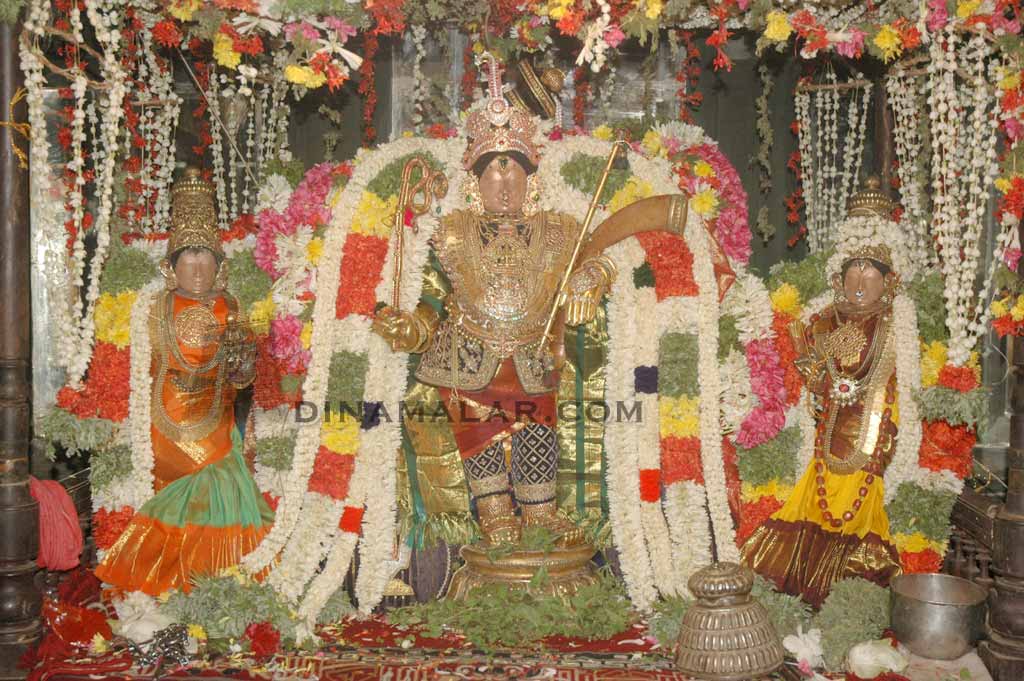
SRI PARAVASUDEVAN

He is the Moolavar in the Garbha graham. When the Lord asked them what more they wanted, the sages not satisfied with just one appearance of the Lord, wanted Him to appear in more forms. In Gita, the Lord says that He is flexible to satisfy His ardent devotees. The Lord told them to go around Him [pradhakshinam] and every time, He would appear to them in various forms. The sages started going around Him. They went round 32 times, and in accordance with His statement everything is Sri Vasudeva [वासुदेव सर्वं], He appeared in 32 forms and the last appearance was as Sri Rajagopalan. He is called Sri Vidya Rajagopalan. In Vedas, 32 vidyas are explained to attain Moksham. Each Vidya is a procedure to worship the Lord and reach Him. Prathardhana vidya, Shandilya vidya, Dhouma vidyaThahara vidya, etc., are some of them. Since the Lord appears as each Vidya, He is calld Sri Srividya Rajagopalan. When grazing the cattle, the Lord used to go with friends and usually He will have His arm around a friend's neck or on a shoulder. With right hand holding the whip needed to discipline the stray cows and calves, a peacock feather on His head, a single cloth used as dhoti and one end of which is used to cover the head as a turban, and left arm on another cowherd friend. After marriage, the Lord continued to have his left arm on His Consort Sri Satyabhama. 

Left foot is on toes, while the right foot is firmly on the ground. Yasoda, while dispatching the Lord for grazing the cows, would decorate Him with ornaments and key bunch. Alwar, in the guise of Yasoda, grieves that 'she' did not provide chappal and umbrella to protect the Child from Sun and rain. The Lord [Utsavar] here has a complete golden armour [தங்க கவசம்]. Renovation works have started and all are requested to participate. We can see the Lord as Sri Santhana Gopalan, as appeared to His parents Vasudeva and Devaki.
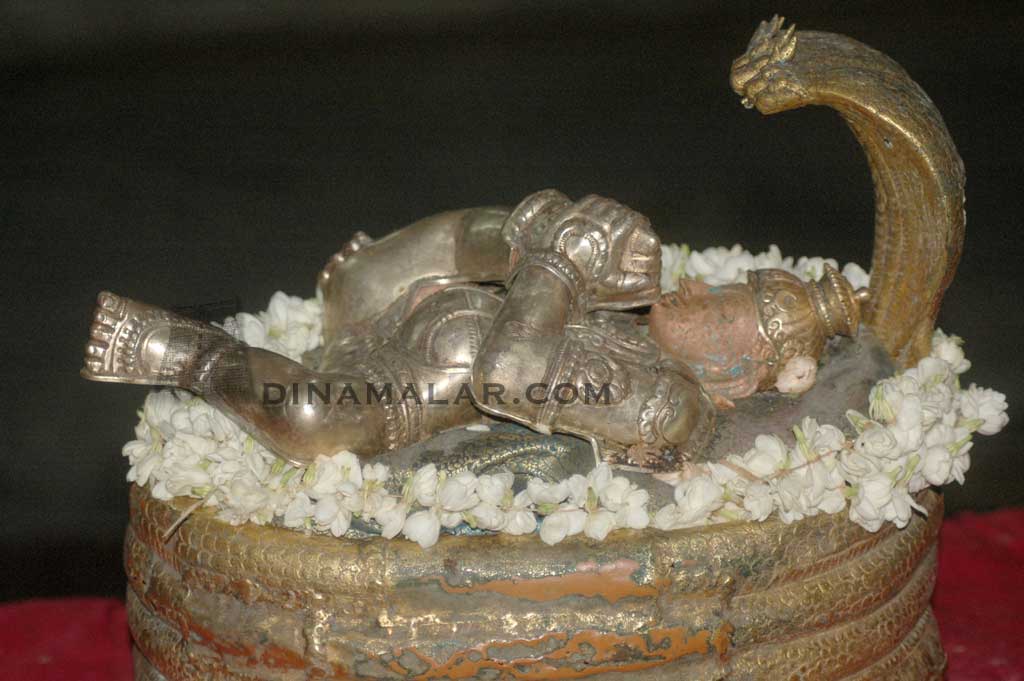
SRI SANTHANA GOPALAN

 By praying to Sri Santhana Gopala, childless couples are blessed with noble children. We have in detail seen the history of the temple and the Lord's appearance so as to suit the sloka that everything is Sri Vasudeva. A glance of the Lord here would convey all the meanings of the sloka 19 we have been seeing. Focus of the sloka is Sri Vasudeva and we can realise it by a visit to this temple. Om nama bhagavate vasudevaya [ ॐ नम: भगवते वासुदेवाया ] is called dwadasaakshari or mantra with 12 syllables. Narada administered this mantra to the two sages and, they, in turn, by meditating on this mantra were able to see the Lord. The Lord's name is in this mantra. So, he who understands everything is Sri Vasudeva, reaches Him. But such a person is very rare to be found. Such a person sees Sri Vasudeva in everything and sees everyone as Sri Vasudeva. Vasu means living in everything. Deva means to play. So He is in all and that is just a game for Him. Bhagavate means with the Six qualities - gyana, bala, Aiswarya, veera, shakti and tejas. Sri Vasudeva is pervading all without exception. Alwars have told that all the objects and the pleasure and comfort they give, are all Him only. In an earlier sloka, Sri Krishna told about four types of Bhaktas - those wanting to regain lost needs, those in need of new wealth, those wanting kaivalyam and Gyani, who wants only the Lord and nothing else. But in this sloka 19, He uses a word Gyanavan. Is he different? No. He is the same Gyani but the Bhakti has matured to a great extent. Prahalada saw the Lord everywhere. All the pleasures and comforts of this world are found by him in the Lord.
                                                                                                   (continued)