Wednesday, July 15, 2015

GITA 7.22

GITA 7.22
MANNARGUDI TEMPLE

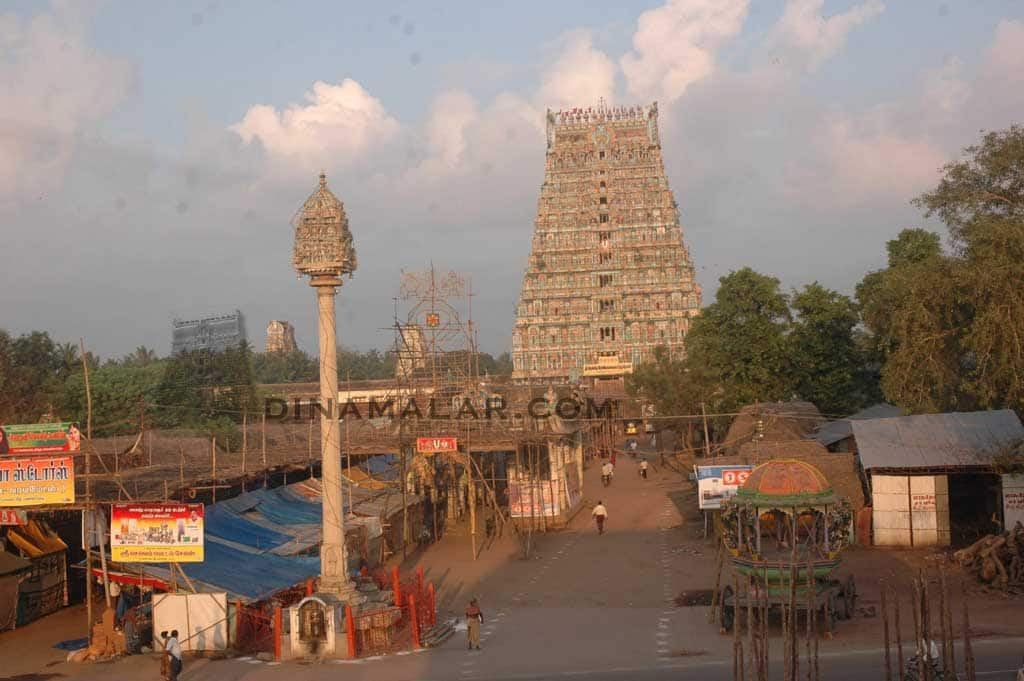
Mannargudi is also known as Champakaranya [चम्पकारण्य ] Kshetram, as once this place was a jungle of Champaka trees, the flowers of which are famous for the strong fragrance. The Lord also is known as Sri Champakesa and Sri Chapakaranya Nilaya. This place is also famous as Dakshina [South] Dwaraka. The Lord, of Dwaraka in Gujarat, is believed to be residing here. Haridra nadhi, the temple pond is 24 acres in area. The streets and town around the main temple are called Gopala samudram. Opposite the sannidhi is 53 feet tall Garuda sthambam or pillar. On top of this pillar is Garuda with folded hands. It is believed to have been erected by Thirumangai Alwar. To erect this, an inclined plane, supported by cotton bales, was prepared, starting from a place three kilometres away. Charam [சாரம்] in Tamil means inclined plane. So the place from which this charam started was called Charam kulam [சாரன்குளம்], which got transformed to present day Cherankulam [சேரன்குலம்]. Opposite the temple on one side is Sri Vanamamalai Mutt and on the other side is Sri Ahobila Mutt. The Main Gopuram is 154 feet tall. Corridors, fountains and the garden inside give a pleasant view. The area of the temple is 24 acres. The temple is enclosed by seven corridors [sapta praakaara]. After crossing the first corridor, we can see the 1000 pillar hall. Totally 16 Towers [gopuram] and 24 Canopies [vimanam] are there. 
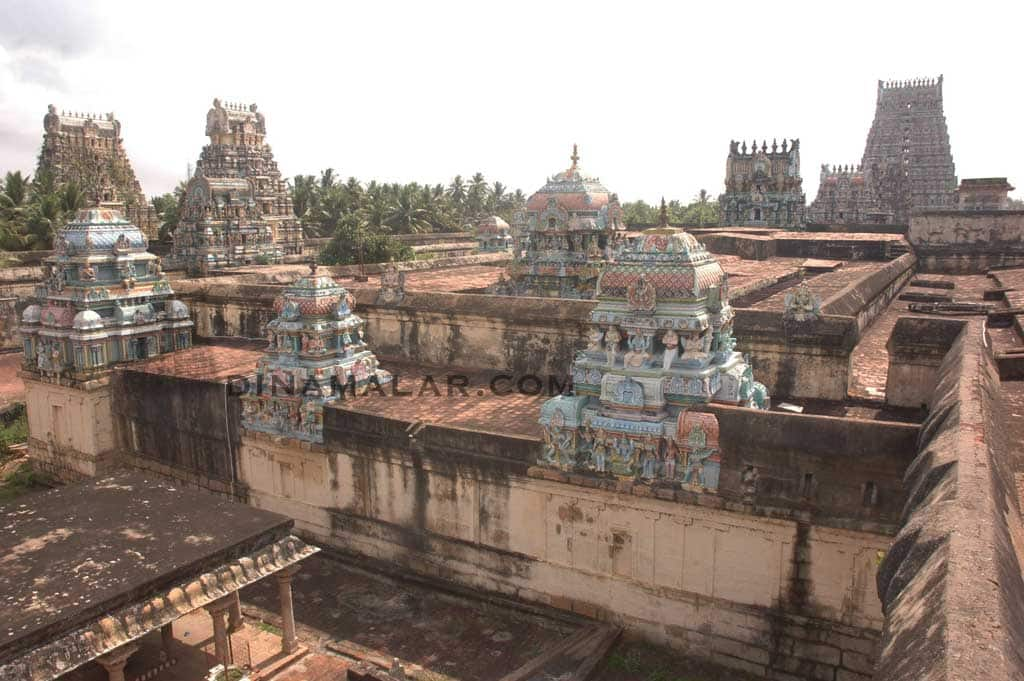
OVERVIEW OF TEMPLE

With that bird's eye view of the temple, we proceed to continue with the 19th sloka. This sloka is very important and so we have to study the meaning carefully and elaborately. Samsaram is terminated by Bhakti and how a Bhakta behaves, are mentioned here. Sri Krishna tells that after a multiple births only, a Bhakta reaches Him. How many births after? 10 or 100 or Million? Nobody can say. It could be in Billions also. But in one birth, that soul realizes Bhakti in Him. That slowly develops and matures over many births. Finally, in one birth, that soul realizes, Sri Vasudeva is everything and that knowledge and resolute way of life, makes that birth as the last and he reaches the Lord in Vaikuntam. Maturing of Bhakti will take many births difficult to assess. Here our ancestors have inquired and commented. Since it takes many, many births and consequent sufferings, does not the Lord have any mercy on the souls? Does He not have compassion on us? When we are considered as His children, is it not His duty to redeem us immediately and relieve us from the sufferings? He says that we have to have so many births even for Bhakti to dawn. After Bhakti is realized, one is not granted Moksham immediately; but one has to spend more births to have the Bhakti matured and reach the final stage. These do not appear to be the comforting words of a Person with mercy or compassion. This accusation is pointed towards the Lord by both Atheists and God believers in great distress. Reply is same for both. To get Bhakti in Sri Krishna, we have to destroy the papa accumulated over millions of births. Destroying papa is by the continuous performing of our duties - Karma yoga - without any attachment to results. This will take one to Bhakti. After spending many births, continuing Bhakti, one finally reaches the Lord. This procedure has to be followed. We may wonder, why all these lengthy and time consuming procedure? What is the loss for the Lord, if He grants Moksham straight away to all and relieve them of the sufferings? Bhagavat Bhaadarayana, aka Veda Vyasa and Krishna Dwaipayana, says this accusation can not be made on the Lord. Vaishamya naidrunye na papekshatvat - God does not have any mischievous objective. He is impartial and never tries to mislead anyone. Naidrunya - He can not be faulted as merciless. He is not breathing over our shoulder and guiding us in every step. He has given independence and sees what we choose. He has provided the basic requirements and infra structure equally to all. He has provided a body with all organs to acquire knowledge; He has provided all materials for all to enjoy; and He has created all scriptures and shastras to abide by. So it becomes the responsibility of anyone to choose and decide. If one takes a wrong route, then one starts committing papa and gets ruined. But, if one takes the right path, then also the Lord helps in one's progress in the right direction. Why can't the Lord, correct us in the initial step itself so that further wrong things are not done? If He did that, then the logic that atman has intelligence has no meaning. He is not like a Shepherd or a cart driver, maneuvering the animals at every stage. We are provided with intellect and thinking power and so it is expected we think and decide the path we have to follow. If a boat is provided to cross a river and one either by not knowing how to steer the boat or misuses it and gets drowned in the river, how can one blame the boat provider? If a lamp is given to read, but is used to burn away the house, can the lamp provider be accused? If a knife is given to cut fruits and enjoy, is it justified to kill others and blame the knife provider? The Lord has provided all basics so that we choose and take the right path. How can we blame the Lord for having wasted the opportunity or irresponsibly choosing the wrong path? He has not prevented anyone from choosing the right path and develop Bhakti to reduce the births. When in that birth, a person realizes everything is Sri Vasudeva only, he gets Moksham. Our papa is of two types. Sanchita or accumulated papa is a heap of bundles. We have not even unpacked any of them. Another is prarabda papa, is the one to which we are exposed. After finishing this, one more bundle from sanchita papa will be opened to have its effects. One gets Moksham, only when all the prarabda papa are expended completely.
                                                                                         (continued)

GITA 7.21

GITA 7.21
SRIVIDYA RAJAGOPALAN

Vasudevasuthandevam kamsachanoora mardhanam |
Devaki paramanandam krishnam vande jagatgurum ||
Worship Vasudeva's son, killer of Kamsa and Chanoora, Devaki's delight, Universal Guru Sri Krishna.
Sri Krishna was born as the son of Vasudeva (vasudEvA) and so is also called Vaasudevan (vAsudEvA). We are studying Bhakti yoga in 7th Chapter in Gita. We are to see 19th sloka. In this sloka, Sri Krishna tells that His devotee considers Sri Vaasudeva as everything in life - food, water, etc.- and he can not live without Him for a second. This intimate relationship is explained here:
bahunam janmanam ante
jnanavan mam prapadyate
vasudevah sarvam iti
sa mahatma su-durlabhah

"After many births and deaths, he who is actually in knowledge surrenders unto Me, knowing Me to be the cause of all causes and all that is. Such a great soul is very rare."

He calls that type of a devotee as Mahatma and is so difficult to find. There are many ardent devotees, but to find a devotee among them, who considers Sri Krishna is his life, breath and everything, is very rare. When planning from where this sloka could be explained, it became obvious that it should be from a kshetram of Sri Vasudeva and so we have come to this place, famous for its vast lake like pushkarini. It is Mannargudi.
HARIDRA RIVER PUSHKARINI

 The Lord here is Sri Para Vasudeva and also called Sri Sri Vidya Rajagopalan. In this pond, all sacred rivers' and ponds' waters are available. It is called Haridra Nadhi [Haridra river], though it is a very vast pond. In the centre of Haridra nadhi is a sannidhi of Sri Gopala. On the various banks of this pond, are the sannidhis of Sri Srinivasa, Sri Rama and Anjanea. Long ago, one could travel by boat to reach the sannidhi at the centre. Haridra nadhi and the Lord are closely connected. Haridra means turmeric [Tamil - Manjal]. Though the pond looks greenish blue, why it is called haridra nadhi? When Sri Krishna took avatar, it was His habit to bathe in this pond with gopikas and play. The Lord used to gargle this water, and that sanctified this water! Like Sri Andal praised Yamuna as thooya peru neer [sacred great water]. While bathing Sri Krishna and the gopikas used to cleanse their bodies with turmeric and also sprinkle turmeric powder on each other. Thus this was called Haridra nadhi. Sri Krishna as a Child used to like competition and He liked more to win in those competitions by hook or crook! Flouting the rules was a delight to Him. Once there was a competition as to who appeared first after a bath in Haridra nadhi and comes fully dressed with all ornaments in proper place. Sri Krishna and the gopikas plunged into the pond and started the competition. Everyone came up ashore and started picking up their respective dresses and wearing them. Ornaments were all collected and each started wearing them also properly. One gopika was very quick and she had almost completed all and about to wear the earrings and finish as first. Sri Krishna would not allow that girl to come first, and so He took one of her earrings [in Tamil thodu] and wore it on His ear. Males have a different type of earrings and they are called in Tamil kundalam. The girl could not find her one thodu and so she could not complete and was not declared winner. Sri Krishna, on the other hand, however, had His regular kundalam on one ear and a thodu on the other. Seeing this all gopikas cheered Him and declared Him as the winner. Beacause even this type of different rings on different ears gave the Lord a new look!! This is how Sri Rajagopala graces here. Yet another story also is there. Yasoda was in the family way and Nandagopa and Yasoda were discussing what child is going to be born. Yasoda felt a son would be born, while Nandagopa thought a daughter would be born. Were they to make and keep ready ornaments for a male child or for a female child? They decided to have both made ready. Later, Sri Krishna appered as their Child. While decorating the Child, Yasoda picked up the ornaments for a male child. But she felt that Nandagopa, perhaps, wanted to see a daughter and so to please him, she took some ornaments for female child. Thus on one ear the Lord was decorated with a kundalam and on the other a thoduSamudrika lakshanam, which details the requirements for a beautiful girl or a handsome boy, suggests that for a male to look handsome, he should have slightly female face. [the converse, females having slightly male face will be disastrous!]. Sri Krishna perfectly fitted in this and so both kundalam and thodu multiplied His charm. 
For the Gopikas, Nandagopa, Yasoda, Vasudeva and Devaki, Sri Krishna was everything; but it is so difficult to come across one such. Ignorant of Vedas and Shastras and living with daily eating and sleeping, such people are in Millions. Some among them know God, but have no interest. Out of these a few try to search atman and want to experience it. Further rare among them, are devotees who want to be associated with God only. Now, the devotees, who consider everything in life is Sri Vasudeva only, are the rarest among rare. Gyanavan = person fully matured in Gyana [Bhakti], bahunam janma = in many births [having practiced this bhakti], ante = finally, vaasudeva sarvam = [the gyana of] everything is Sri Krishna only, prabadyate = reach, mam = Me [Sri Krishna]. Iti sa mahatma = Such a great soul, su-durlabha = is very, very difficult[to find]. Such persons are there, but it is exceptionally difficult to locate them. Nammalwar, Perialwar, Sri Andal, Prahalada are all in this category. Alwar says in a pasuram on Thirukkolur [birth place of Madurakavi Alwar, near Alwar Thirunagari], that Sri Krishna is unnum soru [eating food], parugum neer [drinking water], thinnum vetrilai [chewing betel leaves]. Water is essential or Dharakam, to live; food is necessay for nourishment [poshakam ]; and chewing betel [pan], is luxury [bhogyam]. For Alwar all are Sri Krishna.
                                                                                            (continued)

Wednesday, July 1, 2015

GITA 7.20

GITA 7.20
Till the 12th slokaSri Krishna hinted His greatness. In the 13th and 14th sloka, He further told the prakruti acts as a screen and hides these greatness from realization by us. Then He told that surrender unto Him - saranagathi- is the only way to realize Him. In the 15th sloka, He indicated the Four types of persons, who never realized Him. In the 16th sloka, He described the Four types of devotees, who solicit Him. In the 17th sloka, He mentioned, how among these devotees, Gyani, who seeks only Him, is the most superior. Now we will see the 18th sloka:
udarah sarva evaite
jnani tv atmaiva me matam
asthitah sa hi yuktatma
mam evanuttamam gatim

"All these devotees are undoubtedly magnanimous souls, but he who is situated in knowledge of Me I consider to be just like My own soul. Being engaged in My transcendental service, he wants to attain only Me, the highest and most perfect goal."

When we worship the Lord and Sri Thayar, here, how can we ask for any material wealth, when He is available? This is what is explained in this sloka. We are listening to today's [3rd April 2008] lecture from the sannidhi of Sri Govindaraja, in Therazhundur.
Sri Govindarajan Sannidhi

 As told earlier, both the sannidhis of Sri Ranganatha andSri Govindaraja are outside the sannidhi of SriGosakha or Sri Aamaruviyappan. Around this sannidhi we can see a number of ponds. Alwar praises the multiple ponds and green fields spread out in this Kshetram.
Sarva evaita =all these [four types of devotees mentioned in sloka 16] are , udhara = generous or magnanimous. We may have a doubt here. How can Sri Krishna call all these devotees are generous? After all two types are devoted to Him to gain material benefits only. So, how can they be magnanimous? The Lord feels that at least for material gain sake, they have come to Him, stretching their hands, instead of going to all sorts of other persons and gods. The Lord is praised because He is able to shower on them bountiful. But, is it not bad to ask the Lord for such trivial things? For the starter or in the initial  phase of devotion, such requests are not bad. In fact, all have to run the family and live comfortably. So, there is no harm in requesting the Lord for material benefits. But, we should neither be greedy nor stop with asking only material wealth. We should slowly advance and reach the stage of Gyani. The Lord is happy that for some reason we approach Him for favours. In fact, these material benefits become a catalyst or encouragement to approach Him for higher things in life. Though, all these persons are generous ones, me matham = My [Sri Krishna's] opinion or policy is, jnani tu atmaiva Gyani [most superior devotee] is [Sri Krishna's] Soul. This is a bit difficult to accept. All scriptures, puranasAlwars and Acharyas have been telling that the Lord is our soul and never they have mentioned that the best of devotees is His soul. But, we have to accept these words as they have come from His mouth. Our intelligence says He is our atman; but the Lord's opinion is, a Bhakta is His atman - says Swami Azhagiya Manavala Perumal Nayanar. In his Tatparya ChandrikaSwami Vedanta Desika enquires into this and poses a question, how this policy, opposed to Vedas, has been told by the Lord? Answer is, that for the moment we have to keep aside all Vedas' pronouncements and we are listening to the Lord and have to accept what He says. Gyani always thinks of Him. Yuktatma = he [Gyani] wants to be always with [Sri Krishna]. He can not tolerate a moment of separation, like many AlwarsBhakta sees Him in everything and everywhere. They are so mad after the Lord that they send insects and birds as messengers and convey their plight of separation. Similarly, the Lord also can not think of separation from Mahatmas. Mam eva = I [Sri Krishna] alone, anuttamam gathim = nothing more is to be attained. He does not want anything else. Like the Cow and Calf, in this Kshetram, attaching themselves to the Lord and dependent only on Him, for all needs, we should also develop our Bhakti in Him. With a heavy heart, we will now take leave of the Lord here and move on to the next Kshetram

 DSC00253.JPG
DSC00237.JPG

GITA 7.19

GITA 7.19
Tirumangai Alwar Sannidhi

Thirumangal Alwar was the last of the Alwars. When he came to worship Sri Devadiraja, he was confused. The Lord was so great and he was after all a human, and so he started leaving the place without any poem on the Lord. Normally, Garuda sannidhi is in front of the Lord's sannidhi; but here Thirumangai Alwar sannidhi is in front of the Main sannidhi.  Today's [2nd April 2008] lecture is from Alwar sannidhi. This is at the end of the street near the temple pond, Darsa pushkarini and the Alwar is facing the Lord. 
Darsa Pushkarini

When the Alwar started leaving and came as far as the present sannidhi of Alwar, he realized something was pulling his feet towards the Lord. When he turned back to see the Lord, He appeared to Him as Sri Narasimha. Immediately, he got the feeling of a woman in deep love with the Lord and started singing poems on the Lord. There is a sannidhi of Sri Narasimha by the side of Alwar's. 
Sri Yoga Narasimha

Even now in the festival, the Alwar is dressed up like a woman -Nachiyar ThirukkolamAlwar sent bees as emissaries to tell the Lord about 'her' plight at the separation, in his Thirunedunthandakam. What we are to see in the 17th sloka and the Alwar's action of sending the bees as messengers, are the same in essence. Alwar prostrates to the six-legged bees, which have been collecting honey from flowers. Since bees are going to carry the message, Alwar has no hesitation to prostrate. He asks the bees to go to the Lord Aamaruviappan, the Lord of Devas, and to tell that they had come from Alwar. Bees wondered, how a small insect will be heard amidst all great persons near the Lord, such as Prahalada, Markandeya, etc? Alwar allays that fear by saying that if it shouted it came from His 'beloved' Alwar, He would  certainly  listen to. When the Lord called the bees near Him, Alwar tells the bees that they should just tell Him that Parakala 'Nayaki', is longing for Him and He should not further allow 'her' suffering! Bees said that they would go after a couple of days; but Alwar says that before that 'her' life would be gone! So, bees should go instantly. Alwar further reminds, the messenger of Sri Sita episode in Ramayana and bees are bound to get supreme reward. In Ramayana, Hanuman acted as an emissary of both Sri Rama and Sri Sita. When he went as a messenger of Sri Rama, the reward he got was a fire in his tail! But, when Hanuman came as the messenger of Sri Sita, he got an embrace of the Lord! So the bees as the messenger of Parakala 'Nayaki' will be rewarded properly. Then the Lord blessed the Alwar. This is the transaction between a Bhakta and the Lord. Naturally, such devotees stand much higher than those who approach Him for material wealth or atman anubhavam. These supreme devotees are called Gyani or jnani by the Lord. Now the 17th sloka:
tesam jnani nitya-yukta
eka-bhaktir visisyate
priyo hi jnanino ’tyartham
aham sa ca mama priyah

"Of these, the one who is in full knowledge and who is always engaged in pure devotional service is the best. For I am very dear to him, and he is dear to Me."

Tesham = among them [the four classes of devotees mentioned in the previous sloka], jnani = the person who seeks only association with the Lord, nitya yukta = always wanting to be with [Sri Krishna], eka bhakti = with the singular objective or devotion [only in Sri Krishna], visisyate = is the best [of all the four types]. Jnanaina = to this devotee or Gyani, aham = I [Sri Krishna], atyartham = most, priyam hi = loved. Ca mama = to Me [Sri Krishna] also, priya = [he is ] loved. We should see the subtle difference. For Gyani, the Lord is the most loved, while for the Lord, Gyani is a loved one. The Lord places Himself slightly inferior to the Gyani, in love. He feels that He is not able to reciprocate the love in the same degree. For Gyani, the Lord is the single entity to be loved. But the Lord has multiples of devotees. In reality, though, we can never equal the love and care of the Lord for us, but here, the Lord praises the devotee wanting Him alone, as the greatest. If devotees like the Alwar could think of sending insects as emissaries, we can judge the devotion they had for the Lord. Other types of devotees might forget the Lord after they got the material happiness or the atmanubhavam; this Gyani, on the contrary, is constantly devoted to Him. Bhaktas approach the Lord to cure them of the disease of samsara, as a patient would go to a doctor. But after the treatment, a Gyani, wants to remain always with Him. For the other three types of devotees, their objective is different from the means. Whereas for Gyani, objective and means are the same. He is phalam and phalapradhayina.
                                                                                                      (continued)

GITA 7.18

GITA 7.18

Near Sri Aamaruviappan sannidhi is a sannidhi for Sri Ranganatha. Today's [1st April 2008] lecture is from this sannidhi. Here, a unique feature is that Sri Ranganatha is in a reclining pose with His head on the lap os Sri Sridevi and His feet on Sri Bhoodevi. Lord Brahma is born as His child, and His Discus and Conch are kept near this child, as toys. The Lord, therefore, is gracing with only two arms. Koil, Thirumalai and Perumal koil are considered as very important Kshetrams by SriVaishnavas. They denote, respectively, Srirangam, Tirumalai (Tirupati) and Kanchipuram. The same Sri Devadiraja of Kanchipuram is gracing here in Therazhundur. In Tirupati, Sri Govindaraja Perumal sannidhi is there, and here also nearby there is a sannidhi for Sri Govindaraja. With Sri Ranganatha Perumal sannidhi, we can note all the three Kshetrams are represented in this place. Sri Devadhiraja is in standing pose; Sri Ranganatha is in reclining pose and Sri Govindaraja is gracing the devotees, seated. Though Poet Kambar was born here, he published his Ramayana epic from Thillai Chittirakootam [Chidambaram] and Srirangam [near Sri Thayar sannidhi]. So, at the request of the poet, Sri Ranganatha and Sri Govindaraja [of Thillai Chittirakootam] are gracing here. Thus this Kshetram is famous in many ways. There is also a sannidhi for Sri Rama and opposite to this is a sannidhi for Bhakta Anjaneya. There is also a sannidhi for Sri Ranganayaki Thayar. We will now see Sri Krishna describing four types of persons, who surrender unto the Lord. The 16th sloka:
catur-vidha bhajante mam
janah sukritino ’rjuna
arto jijnasur artharthi
jnani ca bharatarsabha

"O best among the Bharatas, four kinds of pious men begin to render devotional service unto Me—the distressed wanting to regain loss, the desirer of new wealth, the atman inquisitive, and he who is searching for knowledge of the Absolute."

He tells Arjuna to carefully listen to what Sri Krishna is going to tell. Chatur vidha = four types, jana = of people, sukritho = of good deeds, bhajante = surrender unto or pray, mam = Me [Sri Krishna]. He calls these people as sukritho or blessed ones, in contrast to dushkrito or bad deed people mentioned in the last sloka, while explaining the four types of people who never supplicate to Him. Arjuna asks who they were? We have to clearly understand these four types, as based on these Sri Krishna is going to tell more and so these categories must be well founded in our minds. We have already seen that entities are three:
  • Chit - entity with intellect, billions of atman.
  • Achit - matter without any intellect, all inanimate objects like materials, our body, stone, etc.
  • Isvara -Paramatman, God, possessing both Chit and Achit as His dependents and His property.
Some desire to possess material wealth or Achit. These persons are involved in the sensual pleasures of the sense organs, They are called Aishwarya aarthi. Here, there are two sub groups. One is those, who want to regain their lost wealth. They are called brasht-Aishwarya kaman. The Second type is those who want to have fresh wealth. These persons are called apoorva -Aishwarya kaman. 
Some others desire to be happy with atman anubhauam or experience. These persons consider materials as low and regard atman as superior and everlasting. They know atman is an embodiment of Gyana and Ananda, and so desire to have atman sakshatkaram and feel that pleasure is everlasting. They are called kaivalya aarthi.
Some others desire to be with God only. They are called Bhagavallabha aarthi.
Thus there are four types of people in devotion to Him.
Sri Krishna tells that all these people approach Him.
  1. Artha = regaining lost wealth.
  2. Artharti = need of new wealth.
  3. Jijnasu = to have atman anubhavam.
  4. Jnani = to associate with the Lord.
Their grades also are in the ascending order, and the person desiring to be with the Lord alone is the most superior. Instead of asking for trivial things, this person asks for Him alone.
                                                                                                          (continued)

GITA 7.17

GITA 7.17

Poet Kamban

Today's [31st March 2008] is from the sannidhi of Poet Kamban. He starts his epic Ramayana with the verse 'ulagam yavayum thamulavakkalum nilaiperuthalum neekkalum neengala alagila vilayattudai yaravar thalaivar annavarke sharan naangalae' - 'He, Who creates, sustains and destroys this Universe, and Who does these as a game, That Sriman Narayana, is our Leader'. His birth place is Therazhundur. Here Poet Kamban and his spouse grace. When talking of this place it is said as the birth place of Kamban and the place where the curse of 'kumba' Muni was nullified. We had seen that Mother Kaveri came to this place and meditated on the Lord. Sage Agasthya, known as Kumba Muni, while at Podigai Mountains [bordering Thirunelveli], found Tamil language equal to Sanskrit, in literature and culture. Agasthya proposed to marry Kaveri, but she refused and so he was angered and packed her in his kamandalam [water pot]. Because the river was packed, there was famine, and unbearable of this, Kaveri came out of the kamandalam, and started flowing. The sage was further angered and he cursed that whichever place the river touched should go dry. To nullify that curse, Kaveri came to this place and after a bath in Darsha Pushkarini, meditated sitting near the Lord, here. The Lord blessed her and the curse was nullified. Thus we can see Mother Kaveri, is seated in the garbha gruha, near the Lord. Sage Markandeya was a great devotee of lord Shiva and he prayed lord Shiva to grant him, Mukti [Moksham]. Lord Shiva directed Markandeya to this place and meditate on the Lord here. The Lord yielded to his prayers and granted Moksham. Thus in the garbha gruha, we can see Garuda, Markandeya, Prahalada and Kaveri, along with the Lord. Two worms were conversing and one said to the other that it would reach from this hill to another hill. The other worm, mocked and said that it would take so many months to reach that place and by that time its life would be over and so it was impossible to go to the other peak. Challenging this, the first worm got onto the body of a lion, which lived there. The lion jumped from this hill to the other hill and there the first worm, got down and from there spoke to the second worm that it had successfully reached the new place. Moral of this story is that if we can not do a thing, we can attach ourselves to someone else capable of doing and get the work done. By ourselves, we can not do yoga to reach Vaikuntam; while by just surrendering unto the Lord and clinging to His feet steadfastly, we can easily reach Vaikuntam. Kambar says this in his starting verse of Ramayana. In the 14th sloka, the Lord also tells that by surrendering unto Him, one could cross the Universe or samsaram. Arjuna wondered, then why all are not following this simple and easy method to cross? What prevents them? Sri Krishna tells four types of people do not come to Him and these are told in the !5th sloka:
na mam duskritino mudhah
prapadyante naradhamah
mayayapahrta-jnana
asuram bhavam asritah

"Those miscreants who are grossly foolish, who are lowest among mankind, whose knowledge is stolen by illusion, and who partake of the atheistic nature of demons do not surrender unto Me."

Four categories of people do not recognize Sri Krishna. Duskritino = sinned persons, na prapadyante = do not surrender unto, mam = Me [Sri Krishna] :
  1. Mudha = fools, who do not know about Sri Krishna. They are ignorant of the greatness of Sri Krishna, while they might know all other subjects. They are not aware that He is the Master and all are to serve Him.
  2. Naraadhama = lowest among human beings. These people know the greatness of the Lord; they know He is the Master; they also know what their position in relation to God. Yet, they never feel it proper to surrender unto Him or pray to Him. Such people, we see in our own family and friends' circles. They are not atheists, but they have no interest in temples and devotion. It is also possible, that some in this category, might think the Lord is at a very high level for them to approach or might be fearing that their papa might stick to the Lord.
  3. Mayaya apahrta-jnana = people carried away by delusion and false words. These are persons who have studied all Vedas and Puranas; but they believe God has no form, He has no gunas [qualities]. He is nothing. These words cause delusion and confusion in some persons, and so they also do not go to the Lord. They are carried away by instances like the Lord stole butter and that He married thousands of Gopikas, etc. They do not realize, that what all we think ours, are all His properties and so there is no question of stealing by the Lord. He is the only Male and all atman are His wives.
  4. Asuram bhavam asrita = attaining wicked character. Persons like Ravana and Hiranyakasipu, were well learned but they had developed evil character. They considered God as their enemy. Ravana wanted to abduct Sri Sita and so sought the help of Maricha, who advised Ravana to desist from that scheme. At that time Ravana tells Maricha, that he knew the prowess of Sri Rama, yet He would not change from his contempt for Sri Rama. If Sri Rama were to kill Ravana, who says that he would rather fall backward and not in the front, as that could be interpreted as a surrender to Sri Rama.
                                                                                                            (continued)