Wednesday, March 4, 2015

GITA 3.31

GITA 3.31
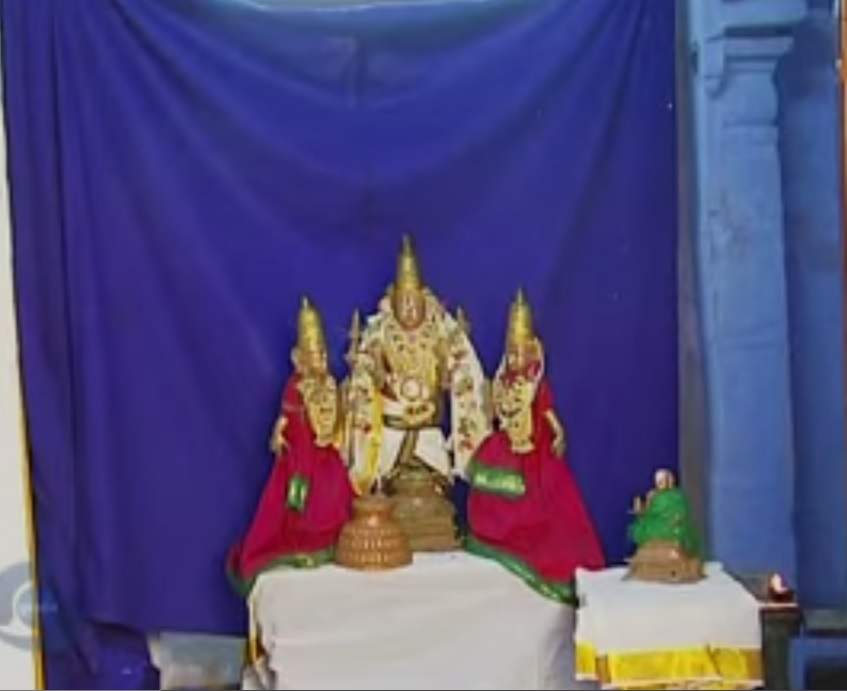
We are at the sannidhi of Swami Nathamuni near the South gopuram. To preach the people, the Lord took various avatars. Then He ordered the birth of various Alwars, who were immersed in the devotion to the Lord. After this, Acharyas came on the scene to explain the Nalayira DivyaPrabandham of the Alwars. Among the Acharyas, Swami Nathamuni is the first. He was born in 823 A.D., in the Tamil month of Aani and in the star Anusham. Born as Ranganatha, he brought to light all the 4000 verses of Divya Prabandam, by meditating on Nammalwar and chanting Kanninunsiruthambu, 12000 times at the tamarind tree in Alwar Thirunagari. He taught these to his nephews Melaiagathualwan and Keelaiagathualwan, to be sung in proper metre. In this sannidhi, Sri VeeraNarayana Perumal of Kattumannar koil is the moolavarSwami Alawandar and Swami Thiruvarangaperumal Araiyar also are in this sannidhi. This sannidhi is maintained properly by Sri Poundareekapuram Srimad Andavan and his disciples. We will see 31st sloka:
ye me matam idam nityam
anutisthanti manavah
sraddhavanto 'nasuyanto
mucyante te 'pi karmabhih
One who executes his duties according to My injunctions and who follows this teaching faithfully, without envy, becomes free from the bondage of fruitive actions.

"Those persons who execute their duties according to My injunctions and who follow this teaching faithfully, without envy, become free from the bondage of fruitive actions."

Here the Lord praises the one who realises that the Karma yoga is propounded by vedas and shastras, and practices this Karma yoga sincerely. ye manava= these persons, itam me matam = in this My (Sri Krishna's) faith, nityamanustinthi = continuously follow and practice. Matam does not mean the normal Vaishnavam or Saivam, but His religion or faith of Karma yoga. Here He talks of the person who practices the Karma yoga which is mentioned in Vedas, which are the Lord's commands, and Karma yoga now mentioned to all of us in Gita using Arjuna as an excuse. Arjuna felt that he, on behalf of all of us, may not be in that category to follow and practice Karma yoga in the daily routines, and so he showed disinterest. So Sri Krishna tells another category of a person who has faith in Sri Krishna, but unable to practice. This is sraddha. A desire to practice. Arjuna feels this type of person also is difficult to find and so Sri Krishna tells a third category of a person who is at least not jealous or have aversion for Karma yoga. All these three categories - one who practices, one who is desirous of following and the one who is not envious of Karma yoga- will be relieved of the papa and punya acquired over so many births. How is this possible? We may ask. By not being envious appears to be easier and so why not do that and get the reward of Moksham? There is also another question. How can the reward be same for all the three types? Practically rewards are granted according to the efforts put in. But these are all examples of this world where rewards are ordered by human beings . In the Order of Sri Krishna , He has full rights to award as He wishes and there is none to question, and worldly rules do not apply. So we have to find a way to be in anyone of these three categories. Actually by remaining nonenvious, slowly we will get a desire, and later on, we will also practice. His blessings are for all of us to adopt any of these. In Ayarpadi, that is Gokulam, during Sri Krishna's avatar, all the gopikas [milk maids] fasted and followed rituals. Whereas Sri Andal, Who did not live in those days, imagined Her to be a gopika and in Her imagination did those rituals. We, on the other hand, know only recitation of the Thiruppavai of Sri Andal. All the three - GopikasSri Andal and ordinary persons like us who only recite Thiruppavai- get the same blessings from Sri Krishna. This is how Swami Parasara Bhattar explained. This is like Dharma, whether done or spoken or heard, will grant equal benefits. It is also like the Ganges, whether bathed or drunk or seen, removes all our sins. On these lines Swami Alavandar also in his Sthotra Rathnam says that he should be rewarded not by seeing his actions but because he is the grandson of Swami Nathamuni, who is connected with NammalwarViswaksena and Sri Lakshmi.

                                                                                                  (continued)

Tuesday, March 3, 2015

GITA 3.30

GITA 3.30
We are at the sannidhi of Sri Parthasarathy. It is apt that the Gitacharya sannidhi is between the Lokacharya Swami Pillai Lokacharya sannidhi and Jagadacharya Swami Ramanuja sannidhi. We will see the 30th sloka from here. How come Sri Parthasarathy is in Srirangam? He was standing in Tiruvallikeni or driving chariot in Kurukshetra. How is it He is here? In Badarikashram(Badrinath), He, as Sriman Narayana, preached Tirumantram to, again, Himself, as the Disciple Sri Nara. In Kurukshetra, He as Sri Gitacharya, preached Gita, to Arjuna as the disciple. In Vishnu Loka, Sriman Narayana preached the great Dwayam mantra to Sri Mahalakshmi Thayar. Tradition records that Sri Ranganatha preached all the Three great mantras - Tirumantram, Dwayam and Charamasloka (of Gita), to Sri Ranganayaki Thayar, in Srirangam. Therefore, in a way, Charamasloka and so, the Gita, originated here! Thus, Sri Parthasarathy is gracing here, with Arjuna. In this sannidhi, the Lord as Sri Parthasarathy is standing and Arjuna, with his chariot, is attentively listening to the preaching, with folded hands! On the sides, the Lord of Badarikshram is gracing as Sri Nara and Sri Narayana. We will now have a view of Sri Utsava Moorthy.
 
Here, He is gracing with Four hands, with Lotus and Gada in the upper arms and with Conch and Discus, reversed, in the lower two arms. That is, He is holding the conch in the right hand and Discus in the left hand. If the discus were held in the right hand, it could be used for destruction; but, holding the Discus in the left hand, indicates that this Avatar is meant for preaching! 
Now, sloka 30: 
mayi sarvani karmani
sannyasyadhyatma-cetasa
nirasir nirmamo bhutva
yudhyasva vigata-jvarah
Therefore, O Arjuna, surrendering all your works unto Me, with mind intent on Me, and without desire for gain and free from egoism and lethargy, fight.
In this sloka, the Lord tells that abandoning everything, surrender all deeds unto Him. Arjuna should realize that he was not the doer, but the Lord. Arjuna does but he does, impelled. In this sloka a doubt is being clarified. How can the Three gunas impel anyone to act? Are they not inanimate entities? Jeevatma is the karta or doer. This has been clarified in Brahmasutras by Vyasa. But here, normally people think that the atman is responsible for the action. This is ahankaram or ego. That is, persons think that they are independent and so, independently perform actions. Sri Krishna is trying to remove that wrong assumption. 
We have already seen that all our actions are propelled by the three gunas which are associated with Prakrit or this world. But these are abstract and so, we also saw that the Lord induces these gunas to act on our actions. Thus, the Lord is the prime mover. Therefore, it is wise to surrender the rewards of all our actions at the feet of the Lord. This is the main point in this 3rd Chapter. While doing any karma, we should think we are not the doers and we should not desire for any benefits from that action. Adyatma-cetasa = understanding the true nature of atman, mayi = unto Me (Sri Krishna), sarvani karmani = actions impelled by the Three gunas and actions not impelled by them, sanyasya = surrender. After understanding the true nature of atman from shastras, relinquish all actions unto the Lord. That is, we should understand that He is the doer of all our actions. This is called kartrutva buddhi tyagam. That is we relinquish the notion that we are doers. Because, this action of ours is granted by the Lord. He is the Prime Mover. 
In Mahabharata it is recorded that after Sri Krishna left this earth, Arjuna could not even lift his bow, Gandeepa! Even small people could easily defeat Arjuna! Because, Sri Krishna was the Power, with which Arjuna could wield his bow! Nirasir = without desires (in the results of actions), nir mamah = relinquishing the feeling that we are doing the actions. Here Two things are to be sacrificed - one, result of the action, and two, feeling that we are the owners of the action. These are phala tyagam and mamakara tyagam. Thus, three tyagams or sacrifices are indicated:
1. Kartrutva tyagam = Action is not performed by me.
2. Phala tyagam = Not aspiring for lowly results but to please the Lord and to reach Him. 
3. Mamakara tyagam = relinquishing ownership of the action. 
All these can happen, if we do any action with the notion that it would please the Lord. Then no wrong doings can ever happen. Vigata-jwara = free from the fever of reactions of the papas, yudhyasya = fight. The fear that by fighting, Arjuna thought, he would incur papas, is the fever affecting Arjuna. Because, Arjuna assumed that he was the doer. Once he relinquished this thought and understood that the Lord was the doer, the fear of any papas would vanish. The bow and the arrows are the real killers of anyone in the battle. But at no time they think that they are responsible for the act, because it is Arjuna wielding them and so responsibility is of Arjuna and not of the bow! Similarly, if Arjuna decided that the Lord was the doer, he can act freely without any fear of incurring any papas! Sri Krishna emphasises this by the word mayi. We should dedicate all our actions to the Lord and be free from any punyas or papas. 
                                                                                     (continued)


the actions with detachment.

GITA 3.29

GITA 3.29
srImath krishNa samAhvAya namO yAmuna sUnavE
yath katAkshaika lakshyANam sulabha: srIdharas sadhA
periyavAchAn piLLai                            nampiLLai

This sloka is about Vaishnava Acharya Sri Periyavachchan Pillai. He was the disciple of Nampillai and has made commentary on Naalayira Divya Prabhandam. We are at the sanndhi of him at Srirangam. This is situated at the North gate of the temple. Near this, is the karuthurai mandapam, which got the name, as the Lord from this mantapam, conversed with Sri Thayar (in the sannidhi near this mantapam) and then agreed for the Divine Marriage! (karuthu in Tamil means opinion). Periyavachchan Pillai also reflected the opinions of Alwars, in his commentary and so it is appropriate his sannidhi is also near this mantapam. He is well known as the Emperor among commentators (vyakyana chakravarti). He has written commentaries for Srimad Ramayana (tanisloki), for the Three rahasyas, for all the stotras of Acharyas and for the Nalayira Divya Prabhandam. He was born in the star Rohini in Avani month, same as the birthday of Sri Krishna! It may be recalled that while on a visit to Tirukkannamangai, in this Gita lecture series, it was mentioned that Tirumangai Alwar sang in praise of the Lord of that Kshetram and desired the Lord to be Alwar's disciple. The Lord agreed, but said it would be in a different time! Alwar born in star Karthikai in month Karthikai, was born as Nambur Varadacharya and was known as Nampillai. His disciple was Periyavachchan Pillai, considered as incarnation of Sri Krishna! 
Now, we will see Gita sloka 29:
prakrter guna-sammudhah
sajjante guna-karmasu
tan akrtsna-vido mandan
krtsna-vin na vicalayet
Bewildered by the modes of material nature, the ignorant fully engage themselves in material activities and become attached. But the wise should not unsettle them, although these duties are inferior due to the performers' lack of knowledge.

Prakrter guna-sammudhah = body which has emerged from prakruti, and the gunas, always associated with prakruti, surrounding and influencing atman, unaware that atman has no deeds by itself, sajjante - get involved, guna-karmasu = in actions impelled by the Three gunas.Sri Krishna does not differentiate as higher or lower. The wise and the ignorant are all impelled by the Three qualities and perform deeds. But the wise, realizes this, and so does not get involved in the actions. But the lower persons are those who do not realize this and assume they are responsible for the deeds. It is reiterated here that everyone does deeds; but the wise, knows that the deeds are result of the influence of the Three qualities. So, he is detached from those deeds, and therefore, the results of the deeds or the joy or sorrow resulting from the actions, will not have any impact. The ignorant does not have this realization and so thinks he is the author of the deeds and gets more and more involved in such deeds. So, prakruti or this Universe, along with its natural Three qualities, surrounds the atman. Thus actions by atman are influenced by these Three qualities. Mandan = dull headed, akrtsna-vidah = not realizing the true nature of atman, krtsna-vin = the realized wise people, na vicalayet = should not confuse. The realized wise should not confuse the ignorant, but try to make them understand that deeds are influenced by the Three qualities. Our acharyas and Alwars have taught us to chant the Divine names. We should try to practice and visualize the Lord. But an expert in this, like our Acharyas and Alwars, are able to visualize the Lord always. They could have simply kept silent and enjoyed the visualization for themselves. If they, already experts and having visualized, kept quite without chanting the Divine names, we, the ignorant, will not have a person to follow and try to get the visualization. The realized ones should nurture good habits in others. If we do not practice good ones, our children will not be able to follow and get refined. Our children will observe how we handle our elders and behave accordingly. Therefore, Arjuna, who is knowledgeable or krtsna-vit, should not set himself as an example for abandoning his karma! The atman realized ones should ensure that the ignorant persons are induced to do their duties without attachment.
                                                                                                       (continued)


GITA 3.28

GITA 3.28
sri rAma rAmEti ramE rAmE manOramE
sahasranAma tatulyam rAma nAmam varAnanE
This sloka is chanted by everyone at the conclusion of Sri Vishnu Sahasranamam. By chanting the name, Sri Rama, we feel sweetness in the mouth and our papas get removed. For the sake of Sri Sita and His devotees like monkeys, He performed many Super Human deeds. Even though we were not fortunate to have lived during Sri Rama's avatar on this earth, Sri Rama is gracing in many sannidhis in Srirangam temple. Among them is Sri Mela Pattabhi Rama sannidhi. There are Two Sri Pattabhi Rama sannidhis, one is Mela (West) Sri Pattabhi Rama sannidhi and the other is Keezha (East) Sri Pattabhi Rama sannidhi. We are at Mela Sri Pattabhi Rama sannidhi.  In this sannidhi, Sri Rama is gracing along with Sri Sita, Sri Bharata, Sri Lakshmana, Sri Shatrugna, Sri Hanuman and Sri Vibheeshana, as during the Pattabhishekam (Coronation). 
This idol was worshiped by Sri Ramanuja's Acharya Sri Periya Nambi (Sri Maha Poorna). This, more than 1000 years old sannidhi, is also cared for by Sri Periya Nambi sannidhi. Here, we also see a painting of Sri Rama, Sri Sita and Sri Bharata, when Sri Rama gave His Padukas. Sri Bharata comes to Chitrakoot, to plead and request Sri Rama to return to Ayodya and accept the Kingdom. But Sri Rama is firm in His exile and offers His Padukas (Sandals) to Sri Bharata and asks Sri Bharata to rule the Kingdom with them. This scene is depicted in this sannidhi.
This incident and the Gita sloka 28, we are to see have a relationship, and we will see that now. Sri Bharata accused his mother's deeds and criticized Dasarata for not correcting Kaikeyi to withdraw her two varans. Sri Rama refutes Sri Bharata's arguments and some of them are to be studied carefully. Both Kaikeyi and Dasarata behaved in their natural traits. Dasarata promised to fulfill two varans (demands) of Kaikeyi, promised to her in a battlefield, out of his rajo quality and out of love for Kaikeyi. Kaikeyi used the opportunity after a very long time. She could have forgotten those promises, but she was impelled by her rajo quality. Dasarata could have either corrected her or refused to honour the promise, but he was impelled by his quality. In all these three incidents, if satva quality was dominant, things would not have turned differently. Had he pondered carefully, Dasarata could have avoided making promise to Kaikeyi. She also if had not listened to others and was not slave to rajo quality, could have avoided in asking to fulfill the promises with evil demands. Thus everyone is impelled by the rajo and tamo qualities embedded in this body. In the last sloka we saw that because of this, the soul gets ahankaram (ego). As a continuation we will see sloka 28. We should remember that Sri Rama advised Sri Bharata to return and rule Ayodya, remembering that everyone was acting at the influence of these qualities. One who does not realize that he is impelled by these Three qualities (satva, rajo and tamo gunas), indulges more and more in such deeds. In the 28th sloka, Sri Krishna is going to praise the person who has realized that actions are impelled by the Three qualities. In 27th sloka, He talked about the ignorant person, who did not realize that deeds were due to the influence of the Three qualities. In 28th sloka, Sri Krishna talks about the person who has realized the influence of the Three qualities. Sloka 28:
tattva-vit tu maha-baho
guna-karma-vibhagayoh
guna gunesu vartantanta    
iti matva na sajjate
One who is in knowledge of the Absolute Truth, O mighty-armed, does not engage himself in the senses and sense gratification, knowing well the differences between work in devotion and work for fruitive results.
Hey! Arjuna, tattva-vittu = one who has truly realized, guna-karma-vibhagayoh = (the Three) qualities and deeds (influenced by them) and their divisions, guna = (the Three) qualities, gunesu = the deeds arising out of each of them, vartanta = are established, iti matva = realizing this correctly, na sajjate = (that person) does not get involved (in those deeds). Each quality  behaves in its nature. The realized person knows this and keeps himself away from such deeds. He never assumes that he was responsible for such deeds. In the last sloka, person who thinks he was responsible for actions, was described as ignorant or foolish. In this sloka the realized person is praised. We know the Three qualities. Satva guna induces to act according to shastras, to do good things, etc. Rajo guna induces anger, passion, greed, etc. Tamo guna induces sleep, ignorance, laziness, etc. Everyone has a mixture of all these Three qualities. We observe these in our every action. We behave differently at different times. Depending upon, which quality dominates us at any given point of time,we can be branded as Sri Rama or Ravana or Kumbhakarna! Atman, by nature, does not do these actions in such ways. Its nature is to serve God. Therefore, when an action is performed, we should realize that it is not the nature of atman, but influence of the Three qualities. Therefore, when we do an action, the realization that we did not do those actions, will make us to get detached from the actions we do. We get attachment only when we think that we have done those deeds. Sri Krishna advises to do actions without thinking we are doing those actions. This way we will get detached from those deeds. 
                                                                                                             (continued) 


GITA 3.27

GITA 3.27


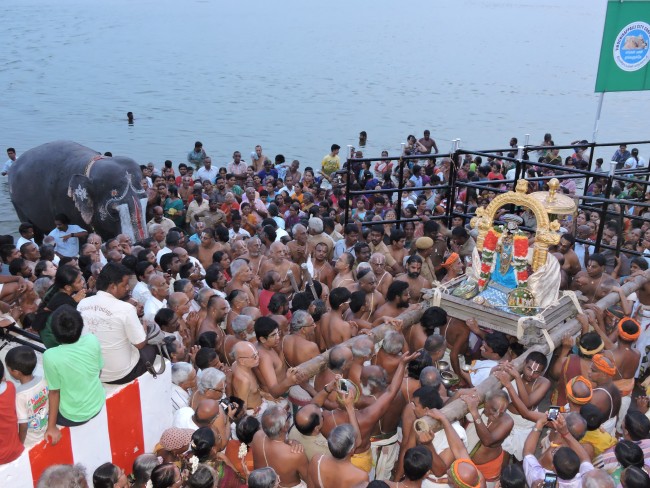
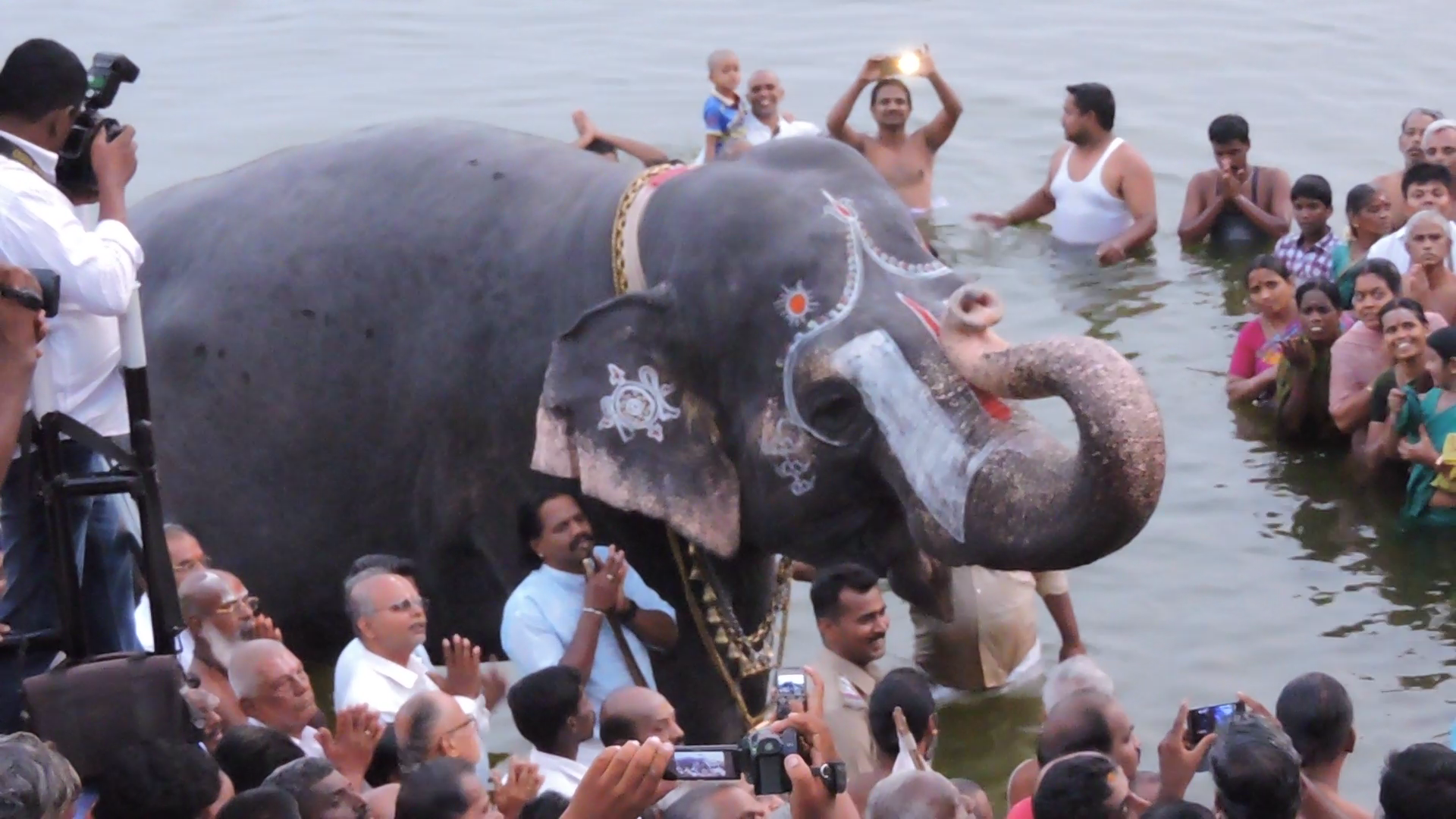
We are at an important ghat in the river Kaveri at Srirangam, and is called Amma mandapam. This river starting from Karnataka province flows west ward and appears as a garland around Srirangam. The river water is clear. One Alwar says the Kaveri water is mucky or unclear, why? When she [Kaveri] flows from West, she brings her Daughter, Sri Ranganayaki, lots of wealth and so, is in an exuberant mood and so, she is confused. When leaving Srirangam, the agony of parting away from her Son-in-law Sri Ranganatha and her Daughter, makes her look mucky! The Lord SriRanganatha arrives at this ghat during Padhinettam Perukku, on the 18th day of Tamil month Aadi (July-Aug) and on the full moon day of Tamil month Chitrai (Apr-May). During the latter festival, Gajendra Moksham is enacted.

 We can see how the elephant and crocodile of this story and the 27th sloka are related:


prakrteh kriyamanani
gunaih karmani sarvasah
ahankara-vimudhatma
kartaham iti manyate
The bewildered spirit soul, under the influence of the three modes of material nature, thinks himself to be the doer of activities, which are in actuality carried out by nature.

"The spirit soul bewildered by the influence of false ego thinks himself the doer of activities that are in actuality carried out by the three qualities of material nature''.

Till now Sri Krishna has been advocating Karma yoga, as that is habitual to us, it is easier to follow and can be done by those who have not been able to control the senses. Now, in the next four slokaHe says that all our actions are propelled by the three gunas or qualities. Instead of thinking that we are doing our actions, but we are induced to act by the three qualities, and nurturing a detachment, will make us wiser. Aham= I, kartha = am doer, iti manyate = like this believes, ahankaram = this feeling [that I am the doer], vimudhatma = makes him foolish. He advises Arjuna that no individual can claim to be the sole doer of any action, as many others are in the team, that does the action. We do alright. But there is a force behind that. The three gunas induce us to do any action. But these are abstract qualities, and so how satvarajo and tamo gunas could induce? If we analyze further, God commands the three gunas which surround us to act. God is like a charioteer, with the three qualities as reigns, drives us, the horses. But when an action is thought as done by us, we develop interest in that. Daily we see news paper and if someone achieves a distinction in sports or other activities, we simply read the item and forget it. But if the achiever happens to be us, then we preserve the news paper cutting and see frequently, as we develop interest only when the action is done by us. When we do not think an action is not by done us we get detachment and this keeps us away from the papa and punya associated with that action. We can draw this lesson from the story of Gajendra. That elephant was grabbed by the crocodile, and for 1000 years it thought it could get freed from the crocodile, by its power [ahankaram]. But when it realised that there was another force motivating the crocodile and its sufferings are also propelled by that force, the elephant cried out for the help of that Force, Sriman Narayana, and it was saved. Prakrutie gunaihi = this world with all the three gunassarvasaha= always and by all means, kriyamanani = getting done, karmani = all actions are there. Our body is made from this Prakriti and so is always associated with the three qualities. So all our actions are induced by these. But when he thinks that he is the doer, he is foolish not to realize the motive of the three gunas. Such realization will come if one knows that the atman and body are different. So like the elephant, we should discard the ahankaram feeling. Atman can not do anything by itself, but with the association of the three qualities, and this feeling alone will make us wiser to attain Moksham.
                                                                                                  (continued)